
To learn more about our editorial approach, explore The Direct Message methodology.
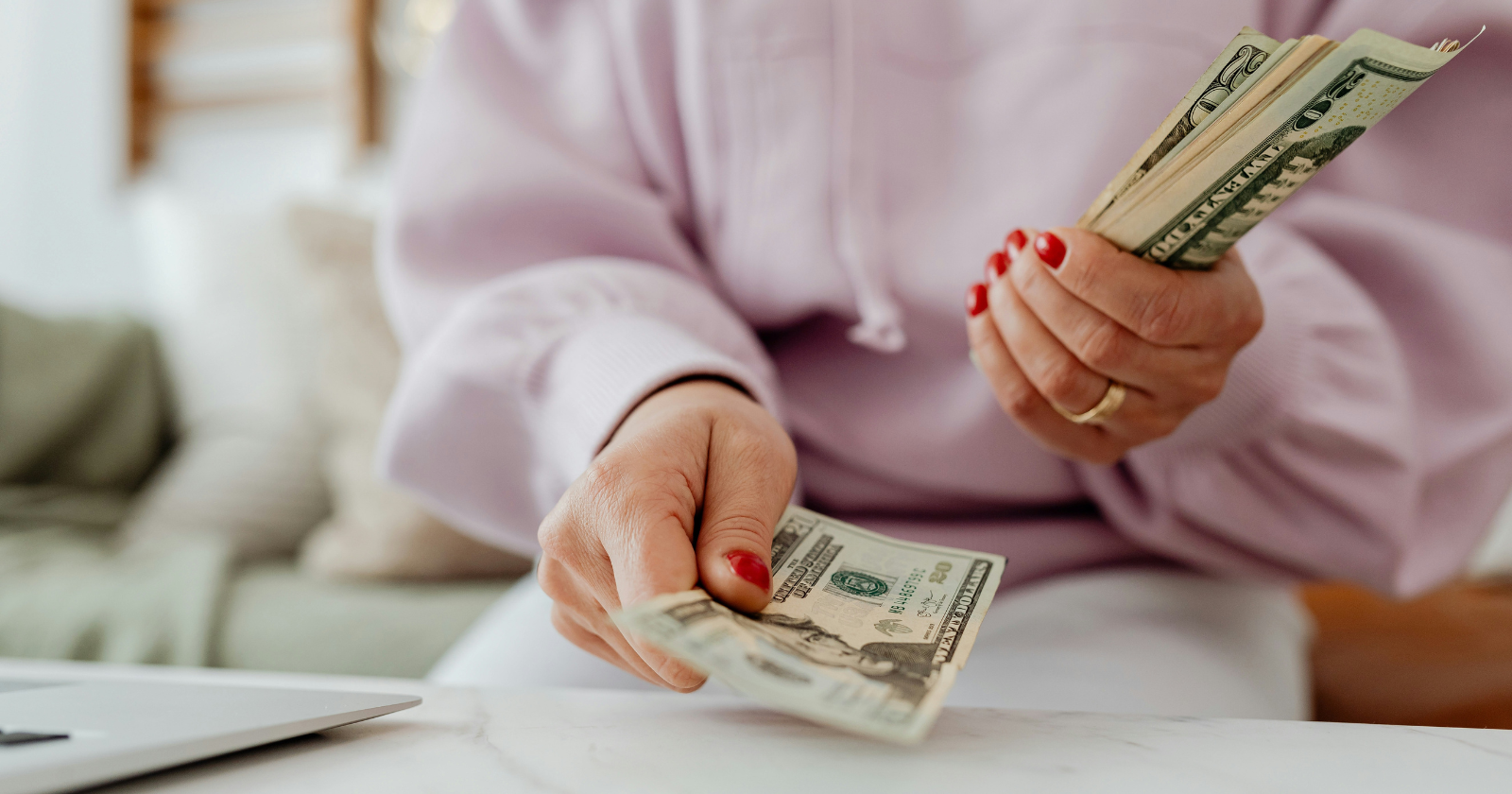
I still carry cash. Not a lot of it, but a small fold of bills tucked behind my metro card, ready for the moments when I want to feel like money is actually moving somewhere. My husband thinks it is mildly old-fashioned. And maybe it is. But when I hand over a note and get coins back, something registers in my brain that a tap of my phone never quite manages. The transaction feels finished. Real. Like I actually made a choice.
There is a growing group of people who feel the same way, and they are not technophobes or conspiracy theorists. They are people who have noticed something quietly important: digital payments are so frictionless they can make spending feel like nothing at all. And that ease, while convenient, comes with a cost that rarely shows up on your bank statement.
The psychology behind physical money
Research has consistently shown that spending cash tends to feel more painful than spending digitally. A study has found that people who paid with cash reported more awareness of the cost. There is even a name for the reluctance people feel when handing over physical money: the “pain of paying.” It sounds like a flaw. Actually, it might be a feature.
When spending has a slight friction to it, when you count out notes, when you see the pile get smaller, you tend to make more deliberate decisions. Not because you are suddenly a financial genius, but because your brain is processing the exchange differently. The physicality of cash creates a moment of pause that a contactless card simply does not.
Why convenience is not always the win we think it is
We have been told for years that removing friction from our lives is progress. Faster checkout. One-click purchases. Auto-renewing subscriptions. It all saves time, yes. But some friction is doing useful work. It is the kind of resistance that makes you stop and ask whether you actually want something, or whether you are just buying it because the path was already cleared for you.
I noticed this in my own spending. I live a fairly structured life and I track things carefully, but I still found that my most mindless purchases happened on my phone. A delivery order I did not really need. An item added to a cart at 11pm that I forgot about until it arrived at the door. Cash does not fix this entirely, but when I started using it more deliberately for day-to-day small purchases, something shifted. I was less likely to spend impulsively on small things, which meant the spending I did do felt intentional rather than accidental.
Cash as a budgeting tool, not a statement
Some people use cash in a very practical way. They pull out a fixed amount for groceries, or a set amount for eating out, and when it is gone, that category is done for the week. No tracking app needed. No spreadsheet. Just a physical limit that makes itself obvious the moment you open your wallet.
This is sometimes called the envelope method, and while it has been around for decades, it still works because it respects the way human psychology actually operates. We are not naturally good at abstract numbers. We are much better at concrete things in front of us. A pile of notes is concrete. A bank balance is abstract, especially when the number changes invisibly in the background all day.
The ritual of it matters more than we admit
There is also something worth naming that has nothing to do with budgeting at all. Carrying cash can feel good. The small weight of it in a wallet. The specificity of having the right coins for a market stall or a tip. The act of paying someone directly, face to face, with something tangible.
When I am at the Saturday market near my neighborhood and I buy something handmade from someone who made it themselves, I like paying in cash. I cannot fully explain why it feels more respectful of the transaction, but it does. The exchange feels like an exchange. Something passes between two people rather than between two devices.
We live in a world where most of what we consume is abstract: streaming, subscriptions, digital content, invisible services. Cash is one of the few remaining places where the act of paying has a texture to it. That is not nostalgia. That is just noticing what gets lost when everything becomes seamless.
When seamless stopped meaning better
Every friction point removed from a transaction is also a moment of awareness removed from a decision. Cash doesn’t make you more disciplined — it just puts the choice back in your hands long enough to notice you’re making one.
It is not about rejecting technology
To be clear, none of this is an argument against digital payments. They are fast, trackable, and genuinely useful. I use them all the time. But the idea that cash is outdated, or that only distrustful people still use it, misses the point entirely.
People who carry cash are often making a deliberate choice about how they want to experience money. They want spending to register. They want a budget that they can feel as well as calculate. They want the occasional satisfaction of handing something over and having the transaction feel complete.
Our relationship with money is deeply emotional, not just rational, and that the tools we use to manage it shape how we feel about spending, saving, and even our own sense of control. For some people, cash is one of those tools. Not a relic. A choice.
Final thoughts
There is a certain kind of self-awareness that comes from paying attention to how you spend, not just how much. Cash supports that kind of attention in a way that is simple, tactile, and surprisingly effective. If carrying a few bills in your wallet makes you a little more intentional with where your money goes, that is not a step backward. That is just knowing which tools work for you and using them without apology.
The goal was never to go fully cashless. The goal was to spend in a way that reflects what you actually value. Sometimes that means tapping your phone. And sometimes it means counting out the right amount and handing it over, and feeling, even briefly, that the choice was yours.