
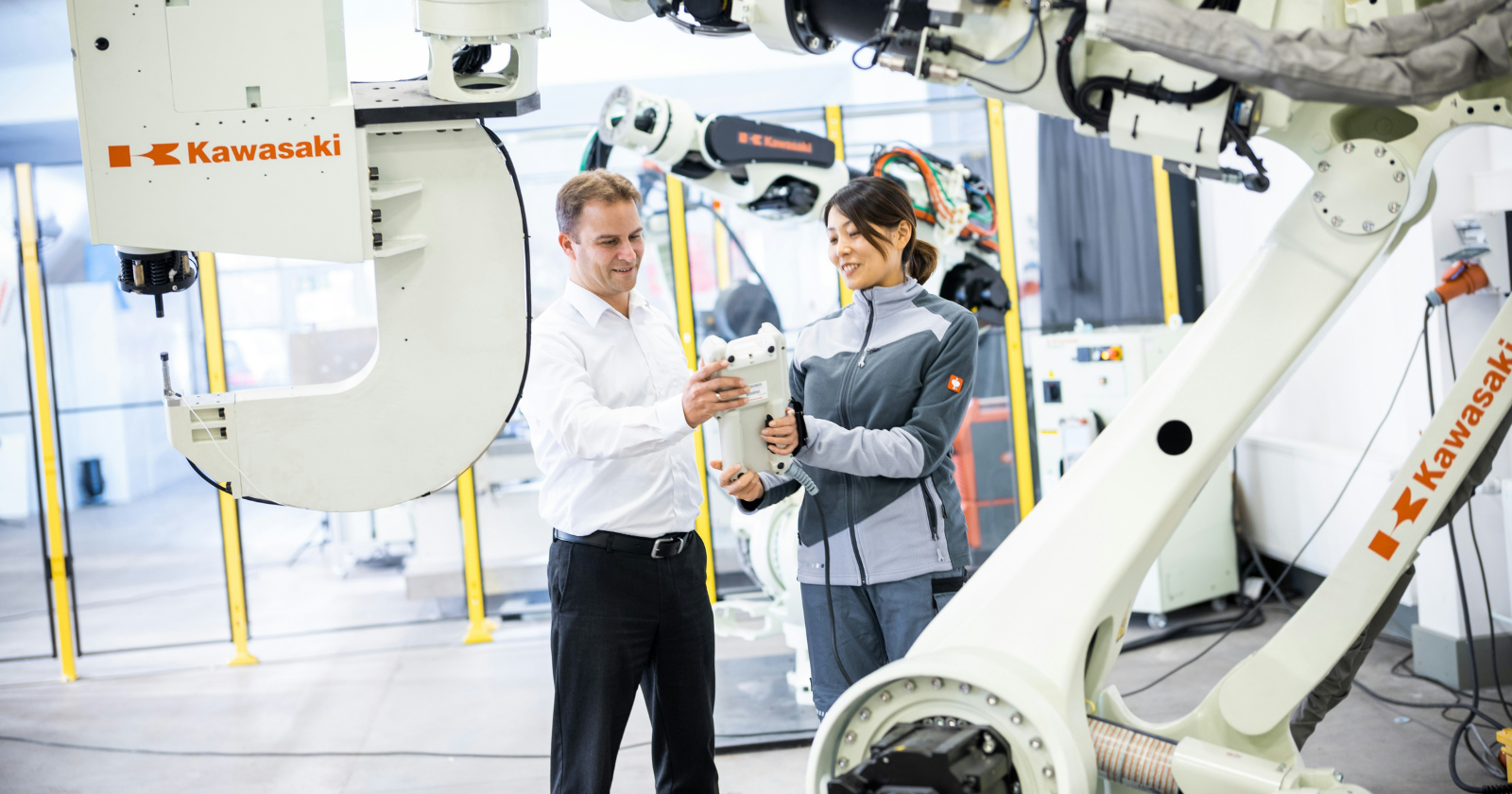
Picture a man who has run the same welding station for twenty-two years. He knows the precise angle of his wrist, the rhythm of the bead, the smell of a clean weld versus a weak one. His coworkers come to him with questions. Newer hires watch how he moves. On the floor, he is not just an employee — he is a standard.
Then, on a Monday, a robotic arm arrives and does it better, faster, and without a pension. By Tuesday, the company has issued a press release about operational efficiency. By Wednesday, the man is sitting at a workforce development desk being told he has great transferable skills.
This is not a hypothetical. Versions of this scene have been playing out across manufacturing floors, logistics centers, construction sites, and processing plants for a generation. And as automation accelerates — not just into manual labor but into knowledge work, creative industries, and professional services — the scene is acquiring a larger cast.
What we have systematically failed to ask is not the economic question. The economic question gets asked constantly. The question we avoid is the psychological one: what happens to the person who organized their sense of self around work that no longer exists?
The Self That Work Built
Manual labor carries a particular relationship to identity that white-collar disruption does not fully share. When your work is physical — when it lives in your hands, your back, your learned perception of materials and machines — the boundary between the job and the person becomes genuinely difficult to locate. A craftsman is not someone who performs a craft. He is the craft. That distinction matters enormously when the craft disappears.
Social identity theory, a foundational framework in organizational psychology, holds that professional roles contribute substantially to a person’s core self-concept. This is true across occupations. But for workers who have spent decades in a single trade, the fusion tends to run deeper, because the identity was forged not in credentials or titles but in accumulated physical mastery. You can’t revoke a welding certificate from someone’s nervous system. What you can do is make the nervous system irrelevant — and that is precisely what displacement does.
Research published in the International Journal of Qualitative Studies on Health and Well-being found that among workers who lost roles to automation, erosion of professional identity emerged as a dominant psychological theme — with many experiencing what the researchers described as a symbolic loss of autonomy and relevance that went far beyond financial insecurity.
Participants did not primarily describe anxiety about money. They described a sensation of personal invalidation: the feeling that a machine doing your job faster is not a technological event but a verdict on your worth as a human being.
What I’ve found analyzing behavioral patterns in disrupted labor markets is that this psychological dimension gets systematically underweighted in corporate transition planning. Companies manage headcount. They process redundancies. What they rarely do is reckon with the fact that for the person leaving, the redundancy is not headcount — it is personhood.
The Reskilling Reflex That Misses the Point
Every major institutional response to automation displacement converges on the same answer: reskilling. Learn to code. Train into healthcare. Develop new competencies for the jobs of tomorrow. The logic is superficially sound and politically convenient: acknowledge the disruption, propose a pathway, declare the problem solvable. It also has the significant advantage of costing governments far less than structural economic intervention.
The problem is that the evidence for reskilling as a solution is considerably weaker than its ubiquity in policy discourse would suggest. A Brookings Institution analysis of major U.S. worker retraining programs found that key federal training initiatives showed no statistically significant positive impact on earnings or employment in the thirty months following enrollment — and that workers who entered retraining programs sometimes fared worse in the near term than similar displaced workers who did not participate, due to the opportunity cost of time spent in training rather than seeking immediate work.
Perhaps most troubling, many workers who did complete retraining ended up in lower-wage service roles that were themselves vulnerable to the next wave of automation — moving from one displacement risk to another, often at reduced pay.
None of this is to say that skills development is worthless. It isn’t. The point is more precise: reskilling is a labor market instrument being applied to a psychological wound. A man whose professional identity was built over two decades in a specific physical discipline is not, in any meaningful sense, a skills portfolio awaiting reallocation. He is a person whose self-understanding has been structurally disrupted in ways that a community college certificate program is simply not designed to address.
The conventional wisdom that treats this as primarily a training problem has had the effect of individualizing a systemic failure. If you don’t reskill successfully, the implicit logic goes, the deficit is yours. This is not only empirically contested — it is psychologically corrosive. It adds shame to an already destabilizing experience, and shame is precisely the emotion that makes adaptation hardest.
The Verdict That Isn’t
Being replaced by a machine is not a judgment on your value as a worker or a person. But until the systems that surround displacement treat it that way, the man at the workforce desk will keep experiencing it as one.
This is the paradox at the center of the automation conversation that almost no institutional voice is willing to name: we have built a response infrastructure for displacement that, in its design, confirms the displaced worker’s worst fear about themselves. The fear is that the machine didn’t just take the job — it revealed that the job was all there was.
The reskilling framework, by rushing past the loss and straight to the next opportunity, structurally validates that fear. It says: what you were doesn’t matter; what you become next is the only question worth asking.
What Honest Support Actually Looks Like
The path forward does not require abandoning skills investment. It requires placing skills investment inside a broader understanding of what displacement actually does to a person. That means building genuine psychological support into transition programs — not as a supplementary wellness offering but as a central design principle. It means creating space for the specific grief of losing not just income but competence, status, mastery, and community. It means recognizing that the welder’s twenty-two years of embodied knowledge represents real human achievement, regardless of whether a market currently prices it.
It also means being honest with displaced workers — and with the public — about what reskilling can and cannot deliver. Telling a fifty-three-year-old machinist that the digital economy awaits him is not encouragement. It is a form of cruelty dressed as optimism. Honest support starts by acknowledging the actual landscape: that some transitions will be long, some will be incomplete, and some workers will need support structures that go well beyond a training certificate.
During my time working with companies navigating workforce transformation, the pattern I observed most consistently was this: organizations that invested in genuine acknowledgment of loss — formal recognition of long-service workers, peer support networks, honest timelines — produced better reemployment outcomes than those that rushed to skills programming. The psychological groundwork mattered to the practical result. You cannot retrain a person who has been told, implicitly, that their past meant nothing.
The man at the welding station deserves more than a brochure. He deserves a framework that takes seriously the thing that was actually taken from him — and that understands recovery is not just about the next job. It’s about whether the next job is lived by someone who still knows who they are.