
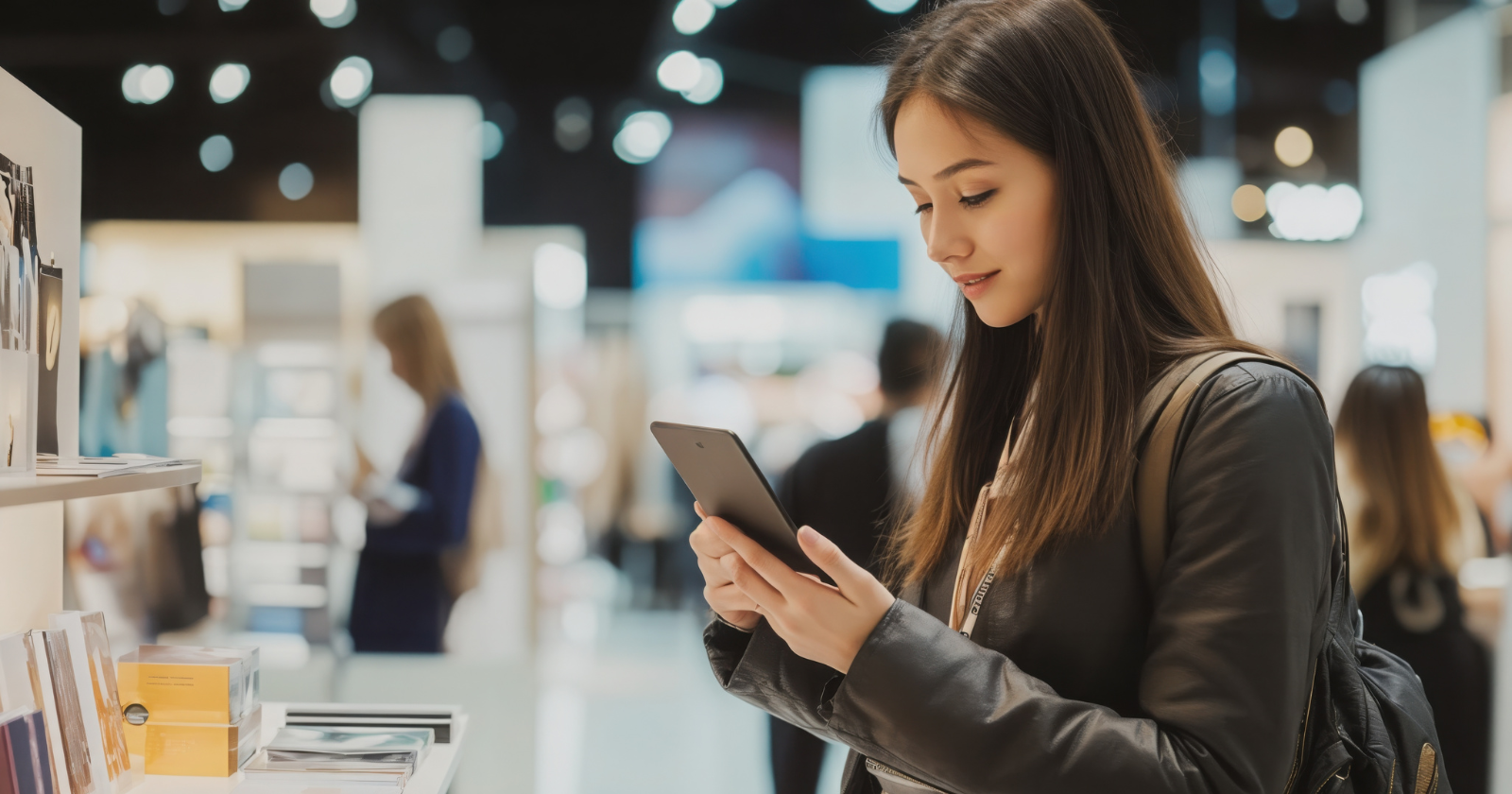
This article was published in 2026 and references a historical event from 2017, included here for context and accuracy.
To learn more about our editorial approach, explore The Direct Message methodology.
In 2017, Amazon announced plans to open a bookstore in Manhattan’s Time Warner Center. The move seemed counterintuitive for a company that had spent two decades systematically dismantling physical bookstores.
Yet by 2026, Amazon operates several hundred brick-and-mortar locations across multiple formats, while digitally native brands like Warby Parker have built fleets exceeding 250 stores.
The pattern reveals something fundamental about retail that took corporations nearly a decade to accept: consumers were never asking permission to shop across channels.
The 2017 story wasn’t about Amazon’s retail innovation. It was about watching platform operators finally acknowledge what their own customer data had been screaming for years: people shop however they want, and retailers either accommodate that reality or lose sales to competitors who will.
When consumer behavior contradicts corporate ideology
By 2017, online retailers had built their identities around disrupting traditional retail. Amazon’s founding premise involved eliminating the inefficiencies of physical distribution.
Warby Parker, Bonobos, and Casper positioned themselves as tech-forward alternatives to outdated brick-and-mortar models. Their venture capital pitches emphasized asset-light operations and infinite shelf space.
Meanwhile, consumers ignored the either-or framing entirely.
They browsed products on phones while standing in stores. They researched purchases online, then drove to locations to see items in person. They ordered products for in-store pickup to avoid shipping waits. The behavior patterns existed years before retailers acknowledged them as legitimate shopping methods rather than edge cases.
When traditional retailers launched click-and-collect services in 2014, the response proved the point. Within one holiday season, 69% of shoppers who used the service purchased additional items while picking up in-store.
That wasn’t retailer innovation creating new behavior. That was retailers finally offering what customers had been trying to do anyway, then discovering the economics were better than either channel alone.
Research now shows that omnichannel customers deliver 30% higher lifetime value than single-channel shoppers.
But this metric doesn’t measure retailer cleverness. It measures the penalty retailers paid for years of restricting customer shopping preferences to match corporate channel strategies.
The “30% higher value” represents customers who were always willing to spend more if retailers would just let them shop the way they wanted.
The tension crystallized when companies had to explain store openings to shareholders who’d invested specifically in online-only models.
The real admission wasn’t “physical stores have value.” It was “we were wrong about what customers actually wanted, and our ideology cost us revenue.”
The retail apocalypse that customers never experienced
The noise surrounding 2017’s clicks-to-bricks movement centered on corporate strategy debates while consumers were already living in an omnichannel reality.
Media coverage portrayed every store opening as either vindication of traditional retail or proof that digital had “failed.” Industry analysts debated whether Amazon’s physical expansion signaled weakness in e-commerce.
This framing missed what was actually happening at the consumer level. Brick-and-mortar locations still represented almost 90% of U.S. retail sales — roughly $3 trillion out of $3.4 trillion — despite years of predictions that physical retail was in decline.
But more importantly, consumers were increasingly treating online and offline as complementary parts of a single shopping experience, not competing alternatives.
The question was never whether physical retail would survive, but when retailers would stop pretending consumers wanted channel separation.
The real distortion came from treating “online” and “offline” as retailer strategies rather than consumer tools. When shoppers used click-and-collect, they weren’t participating in a multichannel retail strategy.
They were solving a personal logistics problem using whatever combination of purchase methods worked for their schedule and preferences.
The consumer view has proven decisively correct while corporate resistance now looks absurd in retrospect. Marketing campaigns using omnichannel approaches report 494% higher order rates than single-channel campaigns.
Retailers offering curbside pickup see conversion rates increase 25.9%. Companies with strong omnichannel engagement retain 89% of customers compared to 33% retention for single-channel operators.
These aren’t metrics measuring retailer innovation. They’re measurements of how much revenue retailers left on the table by refusing to acknowledge consumer shopping preferences.
The performance gap exists because one group of retailers fought against customer behavior while another group accepted it.
What consumers were telling retailers all along
Strip away the corporate narrative and Amazon’s 2017 physical expansion represented surrender to consumer demand, not strategic foresight.
Customers in urban areas wanted same-day access to products without paying premium shipping. They wanted to touch books before buying them. They wanted the convenience of returns without shipping logistics.
Amazon’s internal metrics simply quantified what consumers had been demonstrating through their shopping patterns.
The economics worked because consumers were already behaving this way wherever retailers allowed it. When established retailers opened new brick-and-mortar locations, their web traffic increased 37% and online sales rose 6.9% in the store’s trade area.
This wasn’t stores driving online traffic. This was retailers finally giving consumers the channel flexibility they wanted, resulting in customers spending more across all touchpoints.
Physical locations aren’t retail’s past competing with its future. They’re retailers finally acknowledging that consumers never wanted channel separation in the first place, and building infrastructure that matches actual shopping behavior rather than corporate ideology.
This consumer-driven reality has become impossible to ignore. BOPIS spending exceeds $120 billion annually, representing nearly 20% of multichannel e-commerce sales. Retailers using three or more channels increase consumer engagement 250% compared to single-channel operators.
The physical-digital integration isn’t about corporate innovation. It’s about corporations catching up to how people were already shopping whenever possible.
How retailers learned to follow consumer behavior instead of fighting it
The 2017 wave of physical store openings by online retailers marked the point where corporate resistance to consumer shopping preferences became economically untenable. What followed wasn’t strategic innovation but reluctant acceptance of consumer-led omnichannel behavior.
Warby Parker, which opened its first store in 2013, now operates over 250 locations and targets 900 stores.
The company didn’t discover that physical stores work better. They discovered that customers prefer trying on glasses in person, and fighting that preference with home try-on programs and virtual fitting tools couldn’t overcome the fundamental consumer desire for immediate tactile validation.
Stores reduce customer acquisition costs because they give consumers what they wanted all along, eliminating the marketing spend required to convince people to shop in less preferred ways.
Amazon’s evolution tells a parallel story of consumer preference overwhelming corporate strategy. The company operates several hundred physical locations across multiple formats, but the expansion wasn’t visionary.
It was acknowledgment that certain product categories require physical interaction no matter how sophisticated the digital experience. Consumers were already shopping this way at competitors. Amazon just decided to stop losing those sales.
The pattern extends across digitally native brands.
Glossier’s flagship stores generate higher revenue per square foot than the average Apple store because they give beauty customers what they always wanted: products to test before buying, which Instagram photos and online reviews couldn’t provide.
Bonobos pioneered “guideshops” not as retail innovation but as accommodation to male customers who wanted to see clothing fit in person before committing to online purchases.
Wayfair opened its first 150,000-square-foot megastore in 2024 after recognizing that no amount of digital innovation would convince people to buy mattresses and couches without physical validation.
These aren’t stories of retailer innovation creating new shopping behaviors. They’re stories of retailers finally building infrastructure that matches how consumers wanted to shop from the beginning, then discovering that accommodating consumer preferences generates better economics than fighting them.
The most successful omnichannel operators simply stopped telling customers how they should shop and started building systems that support how customers actually shop, regardless of whether it aligns with founding ideology or investor pitches.