

Most people assume a friendship has to break in order to grieve it. That there needs to be a fight, a betrayal, a clear moment where one person wronged the other and the relationship cracked along the fault line. This assumption protects us from something far more confusing: the grief that arrives when a friendship is still technically intact, when no one did anything wrong, when both people would still say kind things about each other at a dinner party, but something between them has gone quiet in a way that neither can name or fix.
This is grief without a story — and that’s precisely what makes it so disorienting. Human beings process pain through narrative. We need a beginning, a middle, a villain, a lesson. The friendship that drifts offers none of these. There’s no inciting incident. There’s no one to blame. And without a story, the grief floats, unattached to anything solid, refusing to resolve into something we can name, mourn properly, and set down. What I want to argue is simple and uncomfortable: this storyless grief is not a lesser grief. It is, in many ways, a harder one — because it never gives you permission to begin.
Nadia, a 38-year-old physical therapist in Portland, Oregon, describes it like this: she and her closest friend from college, a woman named Sara, still text on birthdays. They still comment on each other’s Instagram posts. Last Thanksgiving, Sara sent a photo of her kids in matching sweaters and Nadia replied with three heart emojis. And then Nadia sat in her kitchen for twenty minutes afterward, feeling a weight she couldn’t explain to her husband, because what do you say? My friend texted me. It made me sad. The sentence doesn’t make sense unless you’ve lived inside it.
What Nadia is experiencing has no clean vocabulary. Romantic breakups come with an entire cultural infrastructure: songs, films, therapist scripts, the sympathetic head-tilt from coworkers. Research on friendship dissolution points out that there are clear societal scripts for how to break up with a romantic partner. But there are no normative scripts for how to go about ending a friendship. And when the friendship hasn’t even ended — when it’s simply become a lighter version of what it used to be — the absence of a script becomes almost unbearable. You can’t grieve what hasn’t died. But you can’t stop feeling the loss of what it used to be. You’re stuck in a doorway, unable to walk through it in either direction.
Some friendship researchers describe this pattern as a downgrade, where the relationship continues but with reduced intensity. Research on friendship patterns suggests that many friendships fade gradually rather than ending abruptly, with friends remaining connected but no longer as close as before. The pattern starts early. But no one tells you that the downgrade is often more disorienting than the breakup, because at least a breakup gives you permission to mourn.

The specific grief Nadia feels has a shape. It’s not anger. It’s not resentment. It’s the sensation of standing in a room that used to fit perfectly and realizing the furniture has shifted by inches — so everything looks almost right but nothing is where your body expects it to be.
Consider what actually happened between Nadia and Sara. Nobody cheated. Nobody lied. Sara had twins at 31 and moved to a suburb outside Minneapolis. Nadia stayed in Portland, got promoted twice, started climbing on weekends, dated a series of people Sara never met. The shared references thinned. The inside jokes required more setup. Phone calls that used to last two hours became thirty-minute exchanges where both women worked hard to sound like themselves — which is exhausting in a way that friendship isn’t supposed to be.
And this is where the storylessness does its particular damage. If Sara had betrayed her, Nadia could construct a narrative: she trusted someone, that person failed her, she learned a lesson about boundaries. The story would hurt, but it would hold. It would give the pain a container. Instead, Nadia is left with a sequence of events that don’t add up to anything. Sara had children. Nadia got promoted. They lived in different cities. Each fact is benign. Together, they produced a loss that Nadia carries daily but cannot explain to anyone, including herself, without sounding like she’s complaining about nothing.
This pattern — the slow drift — shows up frequently in studies of how friendships end. When two people are assigned different schedules, different cities, different life stages, they have less contact and fewer shared experiences. Through no one’s fault, they drift apart. The description is accurate. What it misses is the particular cruelty of a drift: you can feel it happening and still be unable to stop it, the way you can watch fog roll in and know it’s going to erase the view. And because there’s no villain in the fog, you can’t even be angry. You can only watch.
Derek, 45, a high school band director in Tulsa, lost his closest friendship this way. His friend Paul moved to Chicago for a corporate job when they were both 29. They kept up for a while. Fantasy football league. Annual trips to see a college basketball tournament. But Derek noticed something shifting around the time Paul’s first marriage ended. Not that Paul pulled away, exactly. More that Paul started building a new self — one shaped by Chicago winters and therapy and a social circle that spoke a different emotional language — and Derek couldn’t follow him there without abandoning the self he’d built in Tulsa.
They still talk. They’re still friends. Derek can’t explain why the word “friends” now feels like it’s wearing a costume. And he can’t explain it because there’s no story to tell. “We grew apart” is not a story. It’s a euphemism for something that resists narration — two people changing at different speeds in different directions, the gap between them widening so gradually that by the time either notices, the distance has already become permanent. If Paul had done something — said something cruel, forgotten something important — Derek would at least have a scene to replay, a moment to point to. Instead he has a decade of slowly diminishing phone calls, each one slightly shorter than the last, none of them the one where things changed, because things never changed. They just faded.
Researchers who study how friendships shape identity across the lifespan note that there’s a different bond that we have with friends. They help us shape our identity throughout our life. We use our friends as sort of a mirror and a guide. When the mirror stops reflecting something you recognize, the disorientation isn’t about the friend. It’s about the version of yourself that existed in that reflection.
That’s the part nobody prepares you for. The grief isn’t only for the other person. It’s for who you were when that friendship was alive. Nadia doesn’t just miss Sara. She misses the 24-year-old who sat on Sara’s dorm room floor eating cold pizza and talking about nothing consequential for four hours on a Wednesday — the person who had that kind of time and that kind of unguarded presence. Losing access to the friend means losing access to the version of yourself that only existed in their company. And you can’t even narrate that loss properly, because the version of yourself you’re mourning wouldn’t have had the vocabulary for it either. She was too busy being alive inside the friendship to describe it from the outside.
The cultural conversation around friendship tends to treat these slow dissolutions as natural and therefore painless. People grow apart. That’s life. Move on. But research tells a different story about what friendships actually carry. Surveys show that the majority of U.S. adults say having close friends is extremely or very important for a fulfilling life. Friendships aren’t accessories. They’re architecture.
And when architecture shifts, even slowly, even without anyone swinging a hammer, you feel the floor tilt.
There’s a concept worth naming here: the emotional contract. Every close friendship operates on one, though it’s never written down. The contract includes things like: I will know the real version of you. You can call me when it’s bad. We don’t perform for each other. When a friendship drifts, the contract doesn’t get formally terminated. It just stops being honored, silently, by both parties, who are each too polite or too confused to acknowledge that the terms have changed. This is why the grief feels so illegitimate. No one broke the contract. The contract just became irrelevant, and irrelevance is harder to grieve than violation — because violation at least gives you a plot.
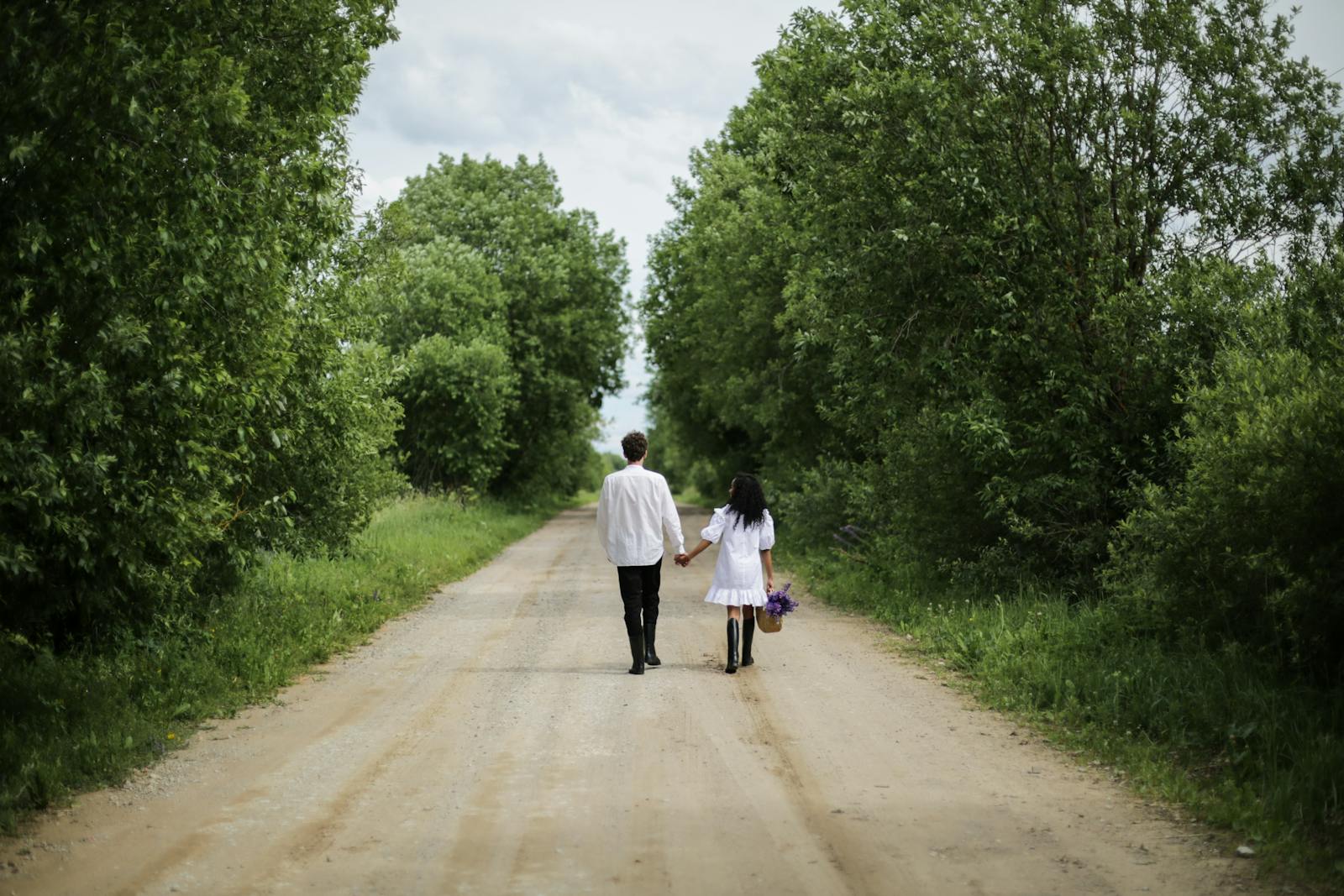
A study of adults aged 20 to 28 found that physical proximity was one of the top reasons friendships ended, affecting casual friendships most but rippling into close ones too. Research notes that in its initial stages, friendship is built on similarity and proximity. When proximity vanishes, maintaining the bond requires deliberate effort that both people must choose to make, and choosing effort where there was once effortlessness changes the nature of the relationship. It turns friendship into a project, and the people grieving these drifts often say the same thing: it shouldn’t feel like work.
But every relationship requires effort. Researchers observe that people are often willing to work through conflict in romantic relationships, because they accept conflict as inevitable there. But in friendships, that acceptance doesn’t exist — conflict feels like evidence that something is already broken. The irony is that the absence of conflict in a drifting friendship is precisely what makes it so hard to address. There’s nothing to work through. There’s just a gap where warmth used to be. And a gap is not a story. A gap is the absence of a story, which is why you can’t tell anyone about it without trailing off mid-sentence, gesturing vaguely at a feeling that refuses to become words.
This connects to something larger about how people locate their identity as they age. The version of yourself that existed inside a particular friendship was real. It wasn’t the whole you, but it was a legitimate expression of you — one that laughed at certain jokes, remembered certain references, cared about certain things in a particular order. When the friendship fades, that version doesn’t die exactly. It just has nowhere to live. And you carry it around like a language you’re fluent in but no one speaks anymore.
Derek doesn’t talk about missing Paul. He wouldn’t know how. In his world, men don’t eulogize friendships that are technically still alive. He just watches basketball alone now and tells himself it’s more convenient. There’s a gendered dimension to this silence. Research suggests that women tend to hold their friends to higher standards in terms of loyalty and emotional support, and that they report more sadness, rumination, loneliness, and stress following a friendship dissolution than men do. Women’s friendships are more often structured as intense one-on-one bonds, which means the loss of a single close friendship can feel disproportionately large. Men’s friendships tend toward denser networks — a structure that provides more redundancy but less depth. But the grief exists in both cases. The difference is that women are more likely to recognize it as grief, while men are more likely to experience it as a vague diminishment they can’t source — a room that got darker but none of the bulbs went out.
Research from The Conversation documents how the pandemic exposed foundational differences that had always existed beneath friendships but never needed to be confronted. Political divergences, different risk tolerances, incompatible assumptions about civic life — these things had always been there, papered over by shared routines and physical proximity. When the routines vanished, the paper tore. Not dramatically. Not in fights. Just in silences that got longer until the silences became the relationship. And once again: no story. No inciting incident. Just a slow, mutual retreat that neither person chose and neither person can narrate.
The grief that comes after a clean ending, whether romantic or platonic, shares this specific quality: it resists narrative. And because our entire culture processes loss through narrative — through the country song, the therapy session, the friend who says tell me what happened — a grief without a story is a grief without a home. It floats. It attaches to other things. It shows up as irritability, as nostalgia, as a sudden heaviness when a birthday text arrives. But it never gets to be itself, because itself has no name.
Nadia tried to explain this to her therapist. The therapist suggested she reach out to Sara and talk about how she was feeling. Nadia couldn’t articulate why this felt impossible. It wasn’t pride. It was more that the conversation would require naming something that both of them had been cooperating to not name, and naming it would make it real in a way that the current ambiguity, painful as it is, at least allows her to pretend might reverse itself someday. The ambiguity is a kind of hope. A terrible, thin, exhausting kind of hope, but hope. And even the therapist’s well-meaning suggestion revealed the problem: tell her how you feel assumes there’s a “how you feel” that can be articulated, when the whole essence of this grief is that it can’t. It’s pre-verbal. It’s the ache of something that was never supposed to need words because, when it was working, it never did.
Advice for dealing with friendship dissolution echoes the language of bereavement: learning to accept the negative feelings, allowing yourself to feel that grief and worry, then allowing it to inform your choices as you move forward into other relationships. The framing is generous but it still assumes an ending. What about the friendships that refuse to end? The ones that linger like a low-grade fever, present enough to notice, not acute enough to treat?
There’s something about our culture’s insistence on clean categories that makes this particular grief invisible. A friendship is either alive or dead, good or toxic, worth keeping or worth releasing. The idea that a friendship can be genuinely loved and genuinely over at the same time — that you can feel guilty about your own growth because of what it cost you relationally — doesn’t fit neatly into any advice column’s framework. And that’s exactly why it needs to be said plainly: the reason this grief is so disorienting is that it has no narrative arc. No beginning, middle, and end. No lesson. No moral. Just two people who loved each other in a particular configuration of time and circumstance, and then the configuration changed, and the love didn’t disappear but the container for it did.
Research suggests that friendship instability is more common than we might expect. If instability is the norm from the very beginning, then the expectation of permanence in adult friendship is itself a kind of fiction we’ve agreed to believe. And perhaps the grief of outgrowing a friendship is partly the grief of realizing that the fiction was always a fiction, that the “forever” in “best friends forever” was aspirational, not contractual.
Nadia doesn’t want Sara back, exactly. She wants the version of the relationship back — the one where calling felt natural rather than obligatory, where silence between them was comfortable rather than loaded. She wants the thing that existed before either of them became who they are now. And the unbearable part is knowing that the only way to get that back would be to undo the very growth that made her who she is.
That’s the paradox at the center of this grief. You became a person your old friendship can’t hold. And you wouldn’t undo the becoming. But you didn’t expect the becoming to cost you this.
Derek still owns a basketball jersey Paul bought him in 2011. Nadia still has a photo strip from a college photo booth tucked into the frame of her bathroom mirror. These small artifacts carry a specific weight. They’re evidence that something was real, that the friendship wasn’t imagined, and they function almost like proof of life for a version of the self that no longer has a witness.
Because that’s what a close friend is, finally. A witness. Someone who watched you become yourself and whose presence made the becoming feel less solitary. When the witness leaves — even gently, even without anger — the past gets a little less real. Your memories still exist but they’ve lost their corroboration. And you can’t tell the story of losing a witness, because the whole point of a witness is that they helped you know what was true without having to put it into words.
This is why the grief of the friendship that technically never ended is not a lesser grief. It is a grief without the mercy of narrative — without the villain who makes it legible, the betrayal that makes it speakable, the clean ending that makes it finite. It is, instead, a grief you carry in the present tense, for something that is still technically happening but has become its own ghost. And the hardest part is not the carrying. The hardest part is that no one — not your therapist, not your partner, not the culture at large — has given you a single word for what you’re carrying, so you set your phone face down on the counter after typing three heart emojis, and you go on with your day, and the grief goes with you, nameless and therefore permanent, asking nothing of you except to be felt.