
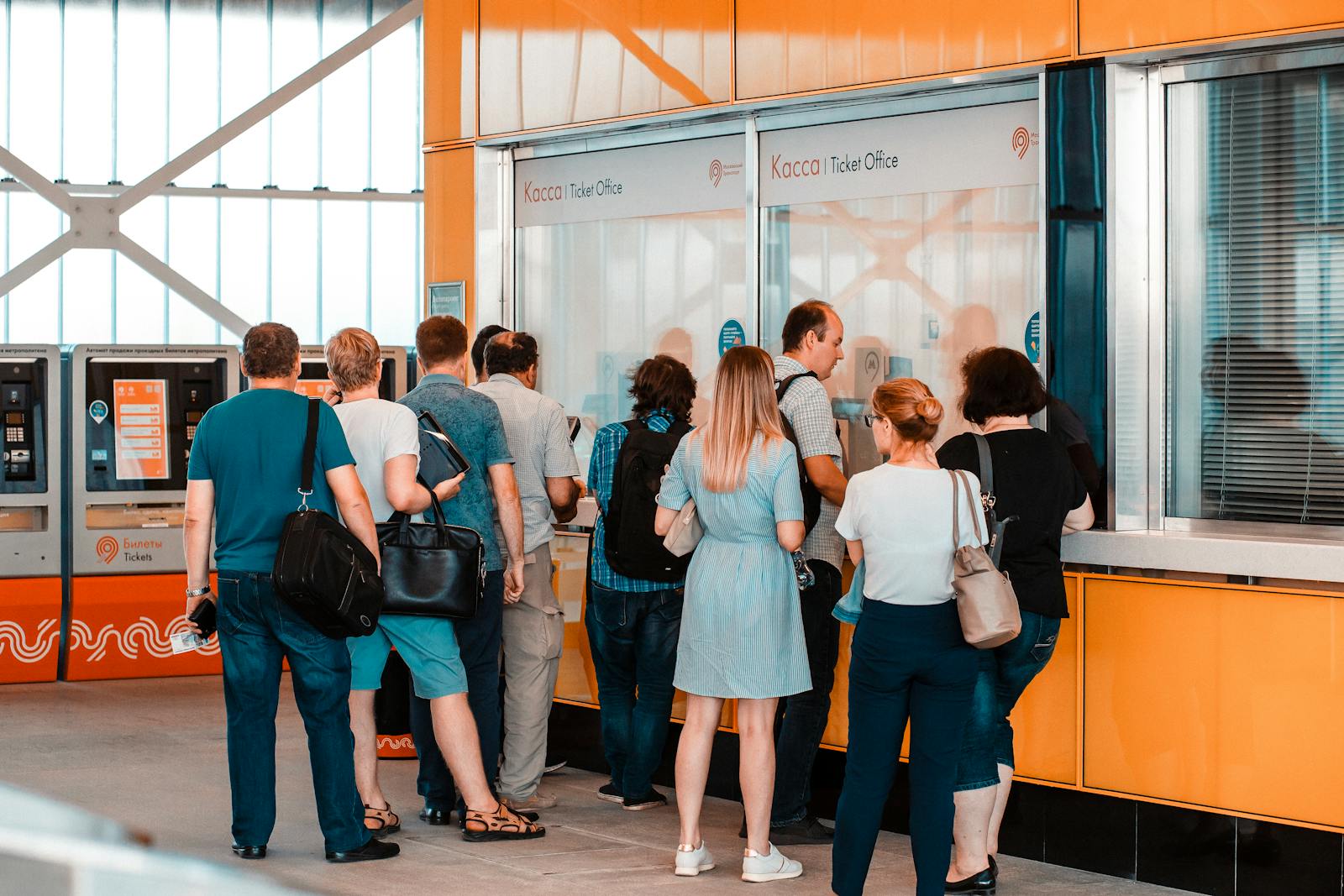
In March 2024, a college student in Phoenix tried to buy two tickets to see Olivia Rodrigo at the Footprint Center. Face value: $89 each. By the time Ticketmaster’s checkout page loaded, the total had climbed to $261.44 — a 47% markup split across a “service fee,” a “facility charge,” and an “order processing fee” of $5.50 that appeared to do nothing except exist. She paid it. Everyone pays it. That’s the point.
The Department of Justice’s antitrust lawsuit against Live Nation-Ticketmaster, filed in May 2024, lays out a market dominance that didn’t arrive through a single dramatic act of monopolization. It arrived at $1.72 per ticket — or $3.50, or $8.95 — in surcharges so individually trivial that no single concertgoer had reason to revolt. Multiply those charges across the roughly 500 million tickets Ticketmaster processes annually, and you get a company that extracted an estimated $3.4 billion in revenue in 2023 partly by being too small to notice on any given receipt.
That normalization is the story — and the mechanism behind it was more deliberate than most consumers ever realized.
Start with the venue contracts. The DOJ complaint describes how Ticketmaster locks arenas into long-term exclusive ticketing agreements — often seven to ten years — by offering upfront payments that venue operators can’t easily refuse. The Footprint Center in Phoenix, the Moody Center in Austin, the Climate Pledge Arena in Seattle — all operate under Ticketmaster exclusives. When a mid-size promoter in Nashville, speaking to The New York Times, described trying to book acts at non-Ticketmaster venues, the math was blunt: “There basically aren’t any. Not at the scale you need.” The promoter, who asked not to be named because his company still does business with Live Nation, said the choice was simple — use Ticketmaster or don’t promote concerts.
This is where the vertical integration compounds the problem. Live Nation doesn’t just sell tickets. It promotes roughly 40,000 shows per year. It operates over 265 venues worldwide. It manages artists. When a band’s management company, booking agent, and venue operator all trace back to the same corporate parent — or depend on that parent for future business — the negotiating leverage available to anyone who objects to fee structures effectively collapses. As Senator Amy Klobuchar noted during the 2023 Senate Judiciary hearing, the company functions less like a marketplace and more like a tollbooth positioned at every point on the highway.
But the crucial innovation wasn’t market dominance itself — it was how the fee structure made that dominance invisible to the people paying for it. Consider a real breakdown from a $95 face-value ticket to a Live Nation-promoted show at a Ticketmaster-contracted venue: the buyer sees a $19.50 service fee, a $4.50 facility charge, and a $2.50 order processing fee. Each line item appears modest. None of them are itemized in a way that reveals how the money flows — how much returns to the venue as part of the exclusivity deal, how much funds Live Nation’s promotion arm, how much is pure margin. A 2018 GAO report found that fees averaged 27% of ticket face value across major platforms, with Ticketmaster’s averaging slightly higher, but the report also noted the near-impossibility of tracing fee revenue through Live Nation’s integrated business structure.
The normalization happened in three stages. First, the fees became universal — when every ticket on every major platform carries surcharges, surcharges stop registering as unusual. Second, the fees became fragmented — splitting a 30% markup into four or five separate line items makes each one feel minor. Third, and most importantly, the fees became invisible at the point of decision. For years, Ticketmaster displayed base prices in search results and added fees only at checkout — a practice so effective at suppressing price sensitivity that the FTC’s 2023 proposed rule on junk fees specifically targeted it. By the time a buyer sees the real price, they’ve already selected seats, entered payment information, and psychologically committed to the purchase. The abandonment rate at that stage is negligible.
This is a monopoly that functioned not by charging prices so high they provoked outrage, but by distributing its extraction so evenly across so many transactions that the pain never concentrated enough to generate political pressure — until a Taylor Swift tour broke the system visibly enough for Congress to care. The question now, with the DOJ case moving forward, is whether a market this thoroughly captured can be unwound through litigation, or whether $1.72 per ticket, repeated five hundred million times, has already built something permanent.