
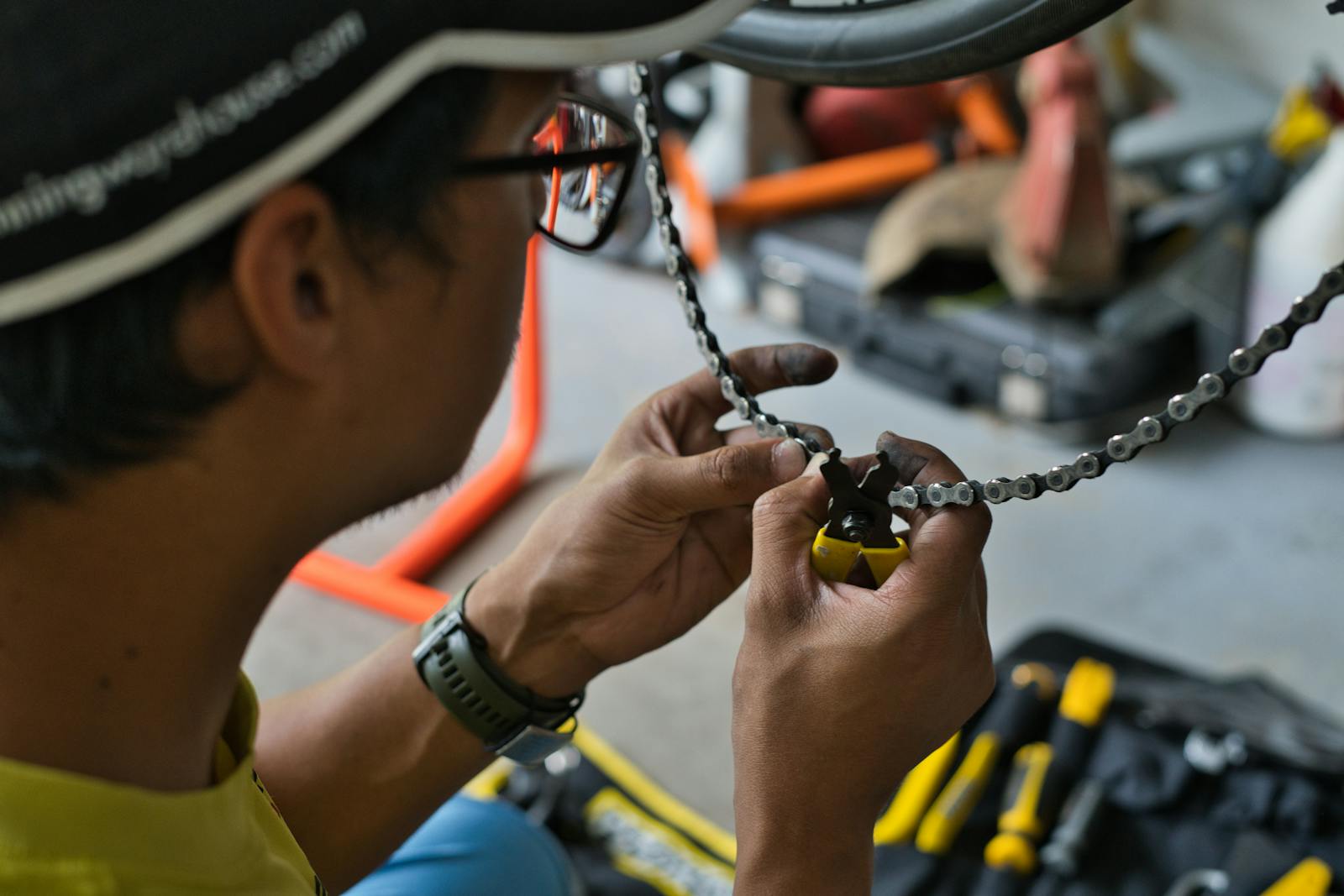
The conventional wisdom about electric bikes goes something like this: they are the scrappy, democratic future of urban transportation, cheaper than cars, greener than rideshares, and accessible to anyone with a credit card and a shipping address. That story is incomplete. For a growing number of owners, the ebike sitting in their garage has become an expensive piece of unserviceable technology, refused by every local bike shop in town, with no manufacturer to call and no mechanic willing to touch it.
Dara Simmons, 34, a graphic designer in Portland, Oregon, bought a $900 ebike from an online marketplace in 2023. She commuted on it for eleven months before the rear hub motor started cutting out at intersections. She wheeled it into three different shops. All three declined to work on it. One mechanic told her it was a liability issue. Another said he couldn’t even identify the battery manufacturer. The third simply shook his head and said the parts didn’t exist in any catalog he could access.
Dara’s bike still sits in her hallway. She sometimes moves it to vacuum.
Her experience is not an outlier. It is the emerging norm. As Wired recently reported, the ebike repair crisis has become a structural problem with no clean solution, rooted in the collision between pandemic-era consumer demand and a total absence of national regulatory standards.
The American bicycle industry spent over a century building a repair culture. Bikes broke, and bikes got fixed. Shops stocked standardized parts. Mechanics learned universal skills. A derailleur from 1987 could be adjusted with the same Allen key as one from 2015. The economics of bicycle ownership assumed repairability as a baseline.
Ebikes changed that equation. Not all of them. But enough of them.
During the COVID-19 pandemic, demand for personal transportation surged. Online retailers flooded the market with cheap, high-powered electric bikes built from proprietary components, often without safety certification and sometimes without even a domestic point of contact for warranty claims. These weren’t the integrated, UL 2849-certified models from established manufacturers. They were assembled from mismatched parts by companies that vanished from the internet within months of selling them.
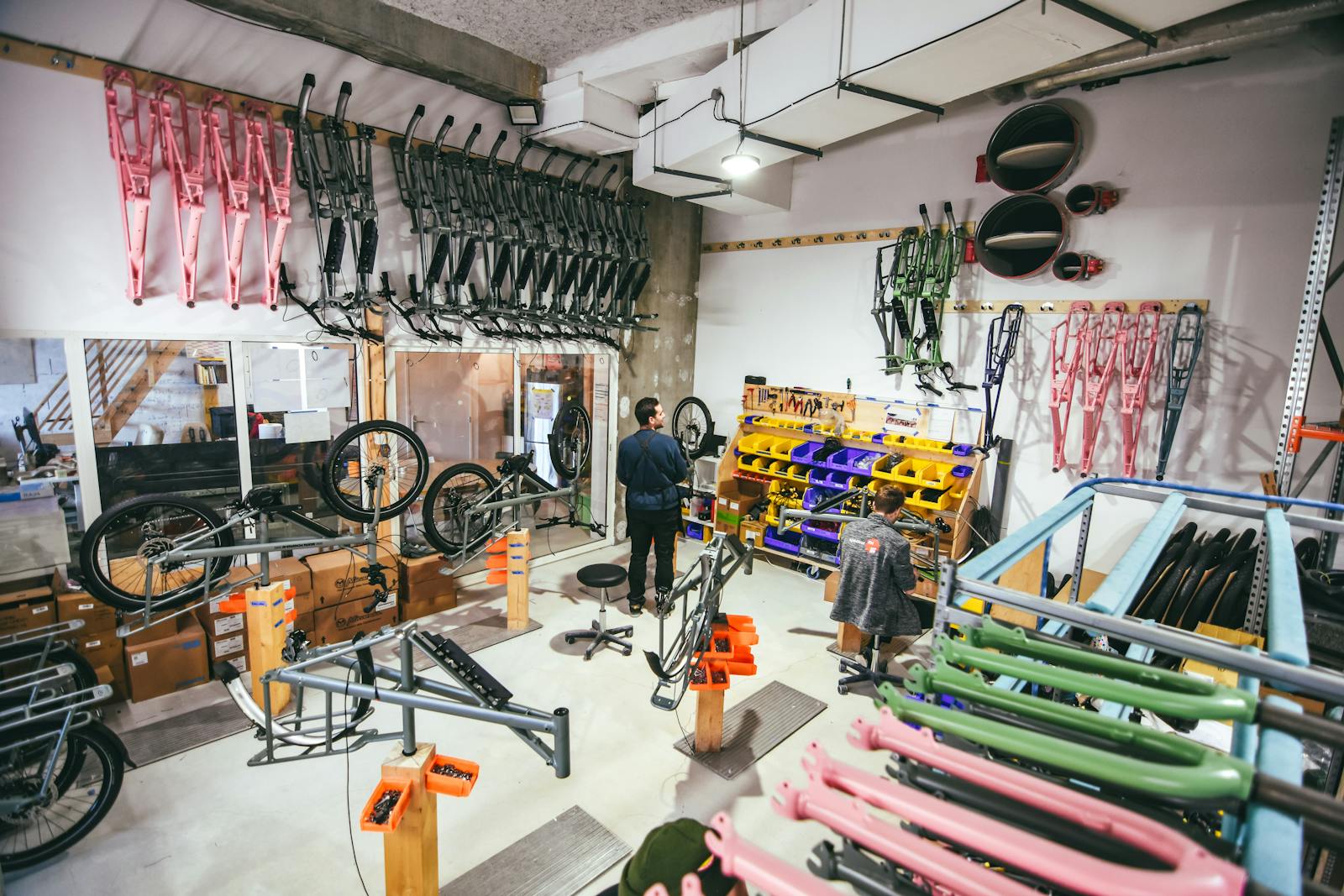
Mike Hardt, the owner of Hardt Family Cyclery, estimates he has turned away hundreds of repair requests due to safety concerns related to the lack of national ebike regulation and the challenges of working on bikes that fall outside standard classifications.
That analogy lands harder than it first seems. The gap between a street-legal Class 3 ebike and the souped-up models rolling off container ships from overseas is not a matter of slight variation. It is a category difference. PeopleForBikes, the industry advocacy group, defines an ebike as a low-speed electric vehicle that closely resembles a traditional bicycle in equipment, handling, size, and speed. Forty-six states classify ebikes into Class 1, 2, or 3 based on maximum motor-assisted speed and how the motor is powered. Class 3, the fastest category, caps at 28 mph.
Many of the bikes sold online blow past that threshold. They are functionally mopeds or motorcycles, wearing bicycle costumes.
Cory Oseland, who manages the Ski Hut, explained that bikes outside the three standard classes often contain parts and equipment not typically found in the traditional bike industry, creating service challenges.
Consider what this means for someone like Terrence Blake, 52, a warehouse supervisor in Reno, Nevada. Terrence doesn’t care about regulatory classifications. He cares that the battery on his ebike, the one he bought for $700 to avoid paying $400 a month in gas, no longer charges past 60 percent. He cares that the branded controller attached to his handlebars corresponds to no known company with a website or a phone number. He cares that the bike shop two blocks from his house told him that if they opened up his battery pack, their insurance would be voided.
Terrence is not reckless. He’s resourceful. He looked up YouTube tutorials on battery reconditioning. He joined a Reddit forum where people share teardown photos and wiring diagrams for discontinued Chinese-manufactured controllers. He ordered a replacement battery from a third-party seller who promised compatibility. It arrived with different connector pins.
The psychology here is familiar. Behavioral economists call it the sunk cost trap, but that framing misses the emotional texture. What Terrence feels is something closer to betrayal by convenience. The purchase was easy. The unboxing was easy. The first ride was exhilarating. And now the object that was supposed to simplify his life has become a problem that no amount of money can straightforwardly solve. It mirrors a pattern explored elsewhere in the context of personal boundaries: the discomfort of discovering that something you chose in good faith has quietly become a trap.
The injury data confirms the physical dimension of this problem. Hospital records show that ebike-related injuries jumped more than 1,020 percent nationwide from 2020 to 2024. That figure is staggering. It reflects both the rapid adoption of ebikes and the reality that a significant share of these vehicles are operating outside any coherent safety framework.
Not every ebike is a ticking liability. That distinction matters. Reputable manufacturers build integrated systems where the battery, motor, and software are designed to work together, tested and certified under the UL 2849 standard. Companies like Liv Cycling produce models with traceable supply chains, serviceable parts, and real warranty support. The problem is not the technology. It is what happens when the technology is sold without accountability.
Nadia Yoon, 28, a physical therapist in Denver, rides a certified Class 1 ebike she bought from a local dealer. When her display screen cracked, she walked into a community bike cooperative, and a volunteer ordered the replacement part from the manufacturer’s catalog. It arrived in four days. Cost her $45. Her experience and Terrence’s exist on the same timeline, in the same country, involving the same category of product. The difference is entirely about what was bought and from whom.

Matt Moore, general and policy counsel at PeopleForBikes, noted that the quality and serviceability of ebikes tends to correlate with their price point. But that phrasing, while accurate, obscures a systemic failure. Consumers are not comparison-shopping in a regulated marketplace. They are choosing between products that look nearly identical in online listings, where the certified $2,500 ebike and the uncertified $600 ebike occupy the same search results page, described with the same adjectives, photographed at the same flattering angles.
This is a design problem. Not in the engineering sense but in the information architecture sense. The interface through which people discover and purchase ebikes does not distinguish between safe and unsafe products. The marketplace treats them as equivalent until the moment something breaks. At which point one product enters a repair pipeline, and the other enters a landfill.
Some states have begun responding. In January, New Jersey passed a law restricting the definition of low-speed electric bicycle to Class 1, reclassifying Class 2 and 3 as motorized bicycles that require insurance and registration. The legislation was a recognition that the old categories had been overwhelmed by the market’s reality. But one state’s rules do not constitute a national framework. And the patchwork of state-by-state regulation creates its own absurdities: an ebike that’s legal in Massachusetts might be a motorized vehicle in New Jersey.
The repair question sits at the center of a larger tension about what ownership means when the product is partly digital. An ebike is not just a bicycle with a motor bolted on. It is a software-managed system. The controller talks to the battery management system, which talks to the motor, which talks to the display. When any link in that chain uses proprietary code from a manufacturer that no longer exists, the bike becomes a closed system that no independent mechanic can open.
This is the same force reshaping everything from tractors to smartphones: the right-to-repair question, applied to a two-wheeled vehicle that a 16-year-old can buy with a debit card.
For a century, as Moore pointed out, the American bicycle industry sold durable products designed to be repairable with extensive warranties. That tradition was built on open standards, interchangeable parts, and long-term relationships between shops and riders. The pandemic-era ebike boom didn’t just add motors to bicycles. It imported a consumer electronics business model into a mechanical repair culture, and the two have proven almost entirely incompatible.
Think about what Dara, Terrence, and Nadia each wanted. They wanted to get to work without a car. They wanted affordable transportation. They wanted to feel a little wind on their commute. Those desires are reasonable. The market responded to those desires with a flood of products, some of which delivered on the promise and some of which were designed only to survive the sale.
A similar dynamic plays out in conversations about affordable living, where the gap between what sounds possible and what actually works in practice keeps catching people off guard. The pattern repeats: optimism, purchase, friction, abandonment.
And the abandonment phase is where the environmental story turns dark. A traditional bicycle, when it reaches end of life, is mostly steel and aluminum, recyclable and benign. An uncertified ebike with a failing lithium-ion battery pack is a different category of waste. Improper disposal of lithium batteries causes fires in recycling facilities. The product that was supposed to be the green alternative to driving can become a genuine hazard when it can’t be maintained or safely disassembled.
The deeper question is about friction by design. Reputable ebike manufacturers build friction into the purchase, intentionally. They sell through dealers who can educate the buyer, fit the bike, and provide ongoing service. They price their products to support that supply chain. The cheap online models eliminate all that friction. They remove every barrier between impulse and ownership. And then they transfer all that eliminated friction to the back end, where it arrives as irreparability, as unanswered warranty claims, as a $700 paperweight leaning against a hallway wall.
This resembles a pattern that behavioral psychology identifies in other areas: the belief that removing difficulty from the front end of a decision eliminates difficulty altogether, rather than simply deferring it.
Terrence eventually gave up on fixing his bike. He drove his truck to work for three months, spending the gas money he’d been trying to avoid. Then he bought a used, certified ebike from a local shop, for twice what he’d paid the first time. He calls it the most expensive lesson he’s learned since his divorce. He laughs when he says it, but the laugh is thin.
Dara moved hers to a storage unit. Nadia is still riding.
The question that hangs over all of this is not whether ebikes are good or bad. They are plainly a useful technology when implemented within a functioning support structure. The question is whether the American marketplace, as currently configured, can distinguish between a product and a promise. Because right now, millions of consumers are buying what they believe is transportation and receiving, instead, a consumer electronics device with pedals, sold by a company with no obligation to ensure it works past the first season.
No regulation compels them to do otherwise. No marketplace interface warns the buyer. No insurance framework protects the shop that might attempt a repair. The entire burden of discernment falls on the individual consumer, who is asked to understand regulatory classifications, battery chemistry, and supply chain provenance before clicking the purchase button. That is not a consumer failure.
That is not a consumer failure. That is a system that has decided not to protect its participants.
The ebike sitting in Dara Simmons’ hallway still has a full charge indicator on its display, a small green light that blinks when she plugs it in. Everything about the interface suggests the machine is fine. The screen works. The lights turn on. Only when she tries to ride it does the truth reveal itself: the motor stutters, the pedal assist cuts out, the thing that was sold as freedom has become dead weight that still, somehow, glows.