
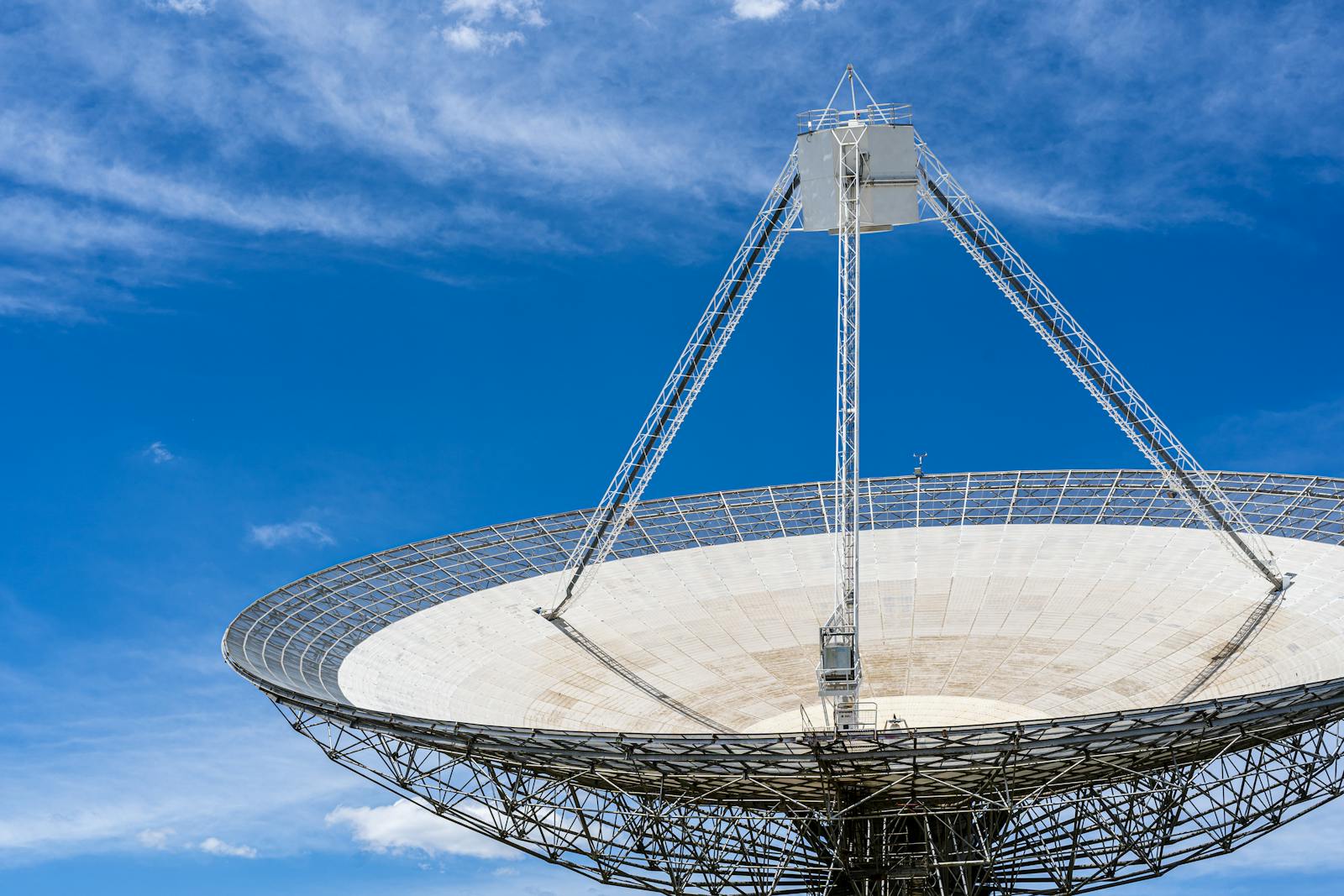
Priya Nair, 34, a product designer in Portland, was halfway through dinner when her partner asked a question she couldn’t stop thinking about for days afterward. They’d been talking about Apple’s satellite strategy — the kind of shop talk that passes for romance when two people in tech share a meal — and he said, simply: “What happens when there’s literally nowhere left to be unreachable?” Priya put down her fork. She designs interfaces for a living, which means she thinks constantly about what happens when friction disappears. And the answer, she’s learned, is that people don’t behave the way you’d expect. “We assume connectivity is a pure good,” she told me later. “But every designer knows that removing a constraint changes the system in ways you can’t predict.”
That unpredictability is exactly what makes the latest move in satellite-to-smartphone connectivity worth examining — not as a telecom story or a corporate acquisition story, but as a story about what happens to human behavior, human solitude, and human expectation when the last dead zones on Earth disappear. Amazon announced it would acquire satellite operator Globalstar in a deal reportedly valued in the billions, positioning itself as the iPhone’s primary satellite connectivity provider. The move represents years of quiet maneuvering by Apple, which appears to have favored a partner it could shape rather than one that might shape it. But the deal’s true significance isn’t orbital mechanics or spectrum licensing. It’s the end of disconnection as a default condition — and the beginning of disconnection as something you’ll have to actively, perhaps expensively, choose.
For people like Priya, the implications cut deeper than convenience. Satellite-to-smartphone connectivity promises to eliminate the last dead zones on Earth. The backcountry hike where you lose signal. The rural stretch of highway where a breakdown means walking to the nearest town. The developing-world village where a cell tower has never been economically viable. All of those gaps are about to close.
But closing gaps has consequences that go beyond convenience.

Marcus Delgado, 41, runs a small outfitter in Durango, Colorado, guiding backcountry trips for stressed executives who specifically pay to be unreachable. His clients book weeks in advance, pay a premium, and sign waivers acknowledging they’ll have no cell service for days. Some wilderness tourism operators have built their business model around offering disconnection from digital communication as a premium experience. When Apple introduced Emergency SOS via satellite, Marcus noticed a shift. Clients who once embraced the silence started asking about coverage. More recently, when Apple expanded satellite capabilities to include image texting and third-party app access, the requests became demands. People wanted to go off-grid but stay tethered. The contradiction didn’t bother them at all.
The Amazon-Globalstar merger accelerates this tension on a global scale. Globalstar currently operates satellites in low-Earth orbit, with plans to expand under its C-3 system. Amazon’s own Project Kuiper constellation has deployed satellites and aims to reach several thousand when its initial build-out is complete. Combined with Globalstar’s spectrum assets and existing Apple relationship, the merged entity creates something neither company could achieve alone: a satellite network designed from the ground up to serve the world’s most popular smartphone.
The strategic logic is sharp. Apple needed a satellite partner that wouldn’t become a rival. SpaceX’s Starlink, with thousands of satellites in orbit including satellites dedicated to direct-to-device mobile service, was an obvious candidate. Reports suggest Apple and SpaceX held discussions during Globalstar’s sale process. But partnering with Elon Musk’s company would have placed Apple’s satellite roadmap inside someone else’s orbit, both literally and figuratively. Amazon, a company Apple already trusts as a retail partner and cloud provider, offered control without capitulation.
Amazon has stated the deal positions it to deliver satellite connectivity at a scale the industry hasn’t seen. The company has indicated that Amazon Leo, its consumer-facing satellite service, is scheduled to launch in the coming years. Globalstar stockholders will reportedly choose between cash or Amazon stock in the transaction, according to Reuters.
The numbers tell a corporate story. The human story is stranger.
Consider Tomoko Arai, 28, a marine biologist conducting reef surveys off the coast of Okinawa. Her research takes her to remote atolls where the nearest cell tower sits hours away by boat. For the past two years, she’s used a satellite messenger, a bulky brick-shaped device that sends text-only updates to her lab back in Osaka. When she heard that her iPhone might soon handle the same function natively, her first reaction was relief. Her second was a question she couldn’t quite articulate: would her colleagues expect real-time updates from the middle of the Pacific? Would the solitude that makes her fieldwork productive simply evaporate?
Tomoko’s worry is not irrational. The proliferation of IoT connectivity in industries like cruise tourism has already demonstrated how ubiquitous coverage reshapes expectations. When Carnival Corporation wired its ships for constant connectivity, passenger behavior changed almost overnight — not because people wanted to be online during their vacations, but because the people back home now knew they could be reached. The mere existence of a signal creates a social obligation to use it. Satellite-to-smartphone connectivity threatens to extend that same obligation to the last places on Earth where absence was its own excuse.
This is the tension the corporate press releases never address. Apple frames satellite connectivity as a safety feature — and it genuinely is. The hiker who breaks an ankle in a canyon with no cell service, the sailor whose engine dies fifty miles offshore, the aid worker in a disaster zone where towers have collapsed — for all of them, satellite messaging is a lifeline, full stop. But technology rarely stays confined to its intended use case. The same satellite link that sends an SOS will also deliver a Slack notification. The same network that helps a lost climber will also let a boss text an employee on a camping trip. The infrastructure doesn’t distinguish between emergencies and intrusions.
Marcus, the Durango outfitter, is already adapting. He’s considering a new tier of trips — ones where clients voluntarily surrender their phones at the trailhead, stored in a signal-blocking pouch that only Marcus can open. He’d charge more for it. “I’m basically selling people the willpower they can’t provide themselves,” he said, laughing. But the laugh had an edge. He knows that disconnection is becoming a luxury good, something only people with enough money and enough job security can afford. The minimum-wage worker whose boss expects a reply within minutes doesn’t get to put her phone in a Faraday bag and hike into the Weminuche Wilderness. Universal connectivity, like most universal things, will be experienced unevenly.
The geopolitics deserve attention too. A satellite network jointly controlled by Amazon and Apple — two of the most valuable companies on Earth — concentrating connectivity infrastructure in American corporate hands raises questions that governments are only beginning to ask. The European Union, India, and China have all signaled interest in developing sovereign satellite communication capabilities, partly out of concern that dependence on U.S.-controlled constellations creates strategic vulnerability. The Amazon-Globalstar deal doesn’t just eliminate dead zones. It determines who controls the switch.
Back in Portland, Priya has been sketching interface concepts in her spare time — not for work, but as a thought experiment. What would a “satellite mode” look like on an iPhone? Not airplane mode, which is binary, but something more nuanced: a setting that allows emergency signals through while blocking everything else, or one that lets a user define which contacts can reach them via satellite and which can’t. She thinks Apple will eventually build something like this, because the company has always understood that the value of a feature sometimes depends on the ability to turn it off. But she also knows that the default matters more than the option. If satellite connectivity ships as always-on, most people will never touch the settings. The dead zone will be dead, and so will the quiet it once provided.
“We keep building tools to solve problems,” Priya said, “and then discovering that the problem was also doing something useful.” She paused. “I don’t think anyone’s going to stop this. I just think we should be honest that we’re losing something, even as we gain something bigger.”
She’s right on both counts. Satellite-to-smartphone connectivity will save lives, connect communities, and close a digital divide that has persisted for decades. It will also end the last accidental refuge from the demands of a connected world. The dead zone was never just a gap in coverage. It was a boundary — between reachable and unreachable, between on-duty and off, between the world’s claims on your attention and your own. That boundary is about to dissolve, not because we chose to erase it, but because two companies found a way to make its elimination profitable. What we do with the signal — and whether we ever learn to refuse it — is the question no earnings call will answer.