

María Enríquez, an environmental activist and mother in Monterrey, said something during a UN investigation last month that has not left the room since. “We have learned to live sick, especially with respiratory illnesses,” she told the special rapporteur. Not that they are sick. That they have learned to live that way. The distinction matters more than any policy document produced by either government.
A UN special rapporteur on toxics and human rights recently completed an investigative mission in Mexico. Preliminary findings, released this week, describe a country functioning as a disposal site for American overconsumption. “US overconsumption and economic activity are using Mexico as a garbage sink,” the rapporteur stated plainly. More than 1,000 contaminated locations appear on Mexico’s National Inventory of Contaminated Sites. Large volumes of hazardous waste cross the border southward each year, including lead-acid car batteries and plastic scrap sent for recycling under conditions that would trigger enforcement actions in the country that shipped them.
The report’s language is clinical. The reality is not.
Consider a retired electrician in Cananea, Sonora. In 2014, tens of thousands of cubic meters of sulfuric acid leaked from a copper mine into the Sonora River. A decade later, he still filters his household water through a system he built himself from hardware-store parts. His daughter, now in her twenties, has chronic skin conditions her doctors cannot fully explain. The mine’s parent company paid fines. The river changed color and then, over years, changed back. The health outcomes did not change back.
The rapporteur described communities like these as “sacrifice zones,” a term borrowed from Cold War nuclear geography but applied here to places where disease becomes background noise. “Living in a sacrifice zone means losing the right to die of old age,” he said. The phrase carries a specific weight because it does not describe a sudden catastrophe. It describes a slow agreement between two nations about who absorbs the cost of cheap goods.
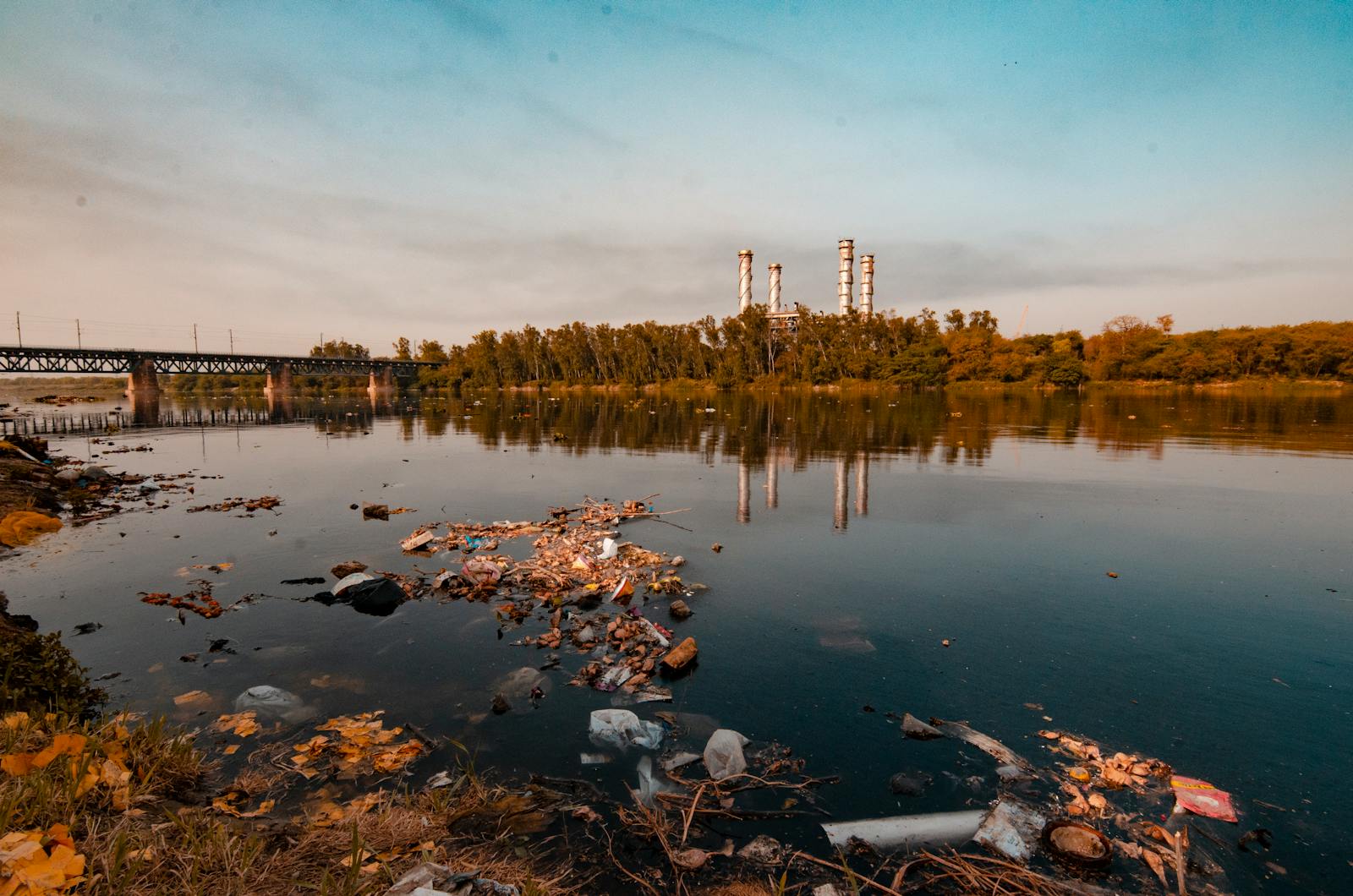
The mechanics are straightforward. The United States generates hazardous waste at rates its own processing infrastructure cannot always absorb at competitive prices. Mexico, operating under looser enforcement regimes and in need of recycling-sector revenue, accepts shipments. Lead-acid batteries arrive by the truckload. Plastic waste follows. Paper and metal come too, in volumes that overwhelm sorting facilities. What cannot be processed profitably gets dumped, burned, or buried in ways that contaminate soil and groundwater. Rivers in Puebla receive factory effluent carrying heavy metals. Microscopic plastic particles have been detected in rivers across the country. On the Yucatán Peninsula, large-scale industrial pig farms are reportedly contaminating the drinking water of communities that had no say in their construction.
The pattern is old. Nations have always exported the consequences of their choices to populations with less leverage. What makes Mexico’s toxic crisis distinct is the degree to which both countries participate in its normalization. The waste is not smuggled across the border. It is shipped legally, documented in government records, processed through legitimate trade channels. This is legalized pollution, as the rapporteur termed it. The system works exactly as designed.
A biology teacher at a secondary school in Puebla, located about two kilometers from the Atoyac River, described during a community forum the experience of teaching students about aquatic ecosystems while the river outside their window runs in colors that correspond to the day’s industrial discharge. Green on some mornings. Rust-colored by midafternoon. Her students know the river is poisoned. They also know that several of their parents work in the factories producing the discharge. The dissonance is not lost on fourteen-year-olds.
This is the psychological architecture of sacrifice zones. They produce not ignorance but a particular kind of knowledge: the understanding that your health is a variable in someone else’s cost calculation. Researchers studying environmental injustice have described a state in which danger is perceived constantly but cannot be acted upon. The body stays in a low-grade stress response. Cortisol levels remain elevated. Decision-making narrows. People learn to live sick.
The free trade framework that governs US-Mexico economic relations contains environmental provisions, but they have functioned largely as decorative text. Mexican lawmakers are now proposing waste import restrictions and stronger enforcement clauses tied to trade agreements. Mexico’s government has acknowledged that its regulatory standards are outdated, and new monitoring systems and stricter regulations are reportedly in development. These are real steps. They are also steps that follow decades of documented harm.
A small recycling operation in Tijuana that processes plastic and metal from both domestic and imported sources employs about a dozen people and operates within the law. But as one operator noted in a local press interview earlier this year, larger operations around him cut every corner available. “The permits are easy to get,” he said. “The inspections are easy to avoid.” The comment reveals the face of a system that rewards compliance in name and negligence in practice.
The United States, for its part, has shown little appetite for examining its role as the generator of the waste stream. American consumers already sense, on some level, that the low price of goods comes with externalities someone else pays. The feeling is suppressed by the same mechanism that makes it possible to buy a phone battery without thinking about cobalt mines. Distance converts complicity into abstraction.
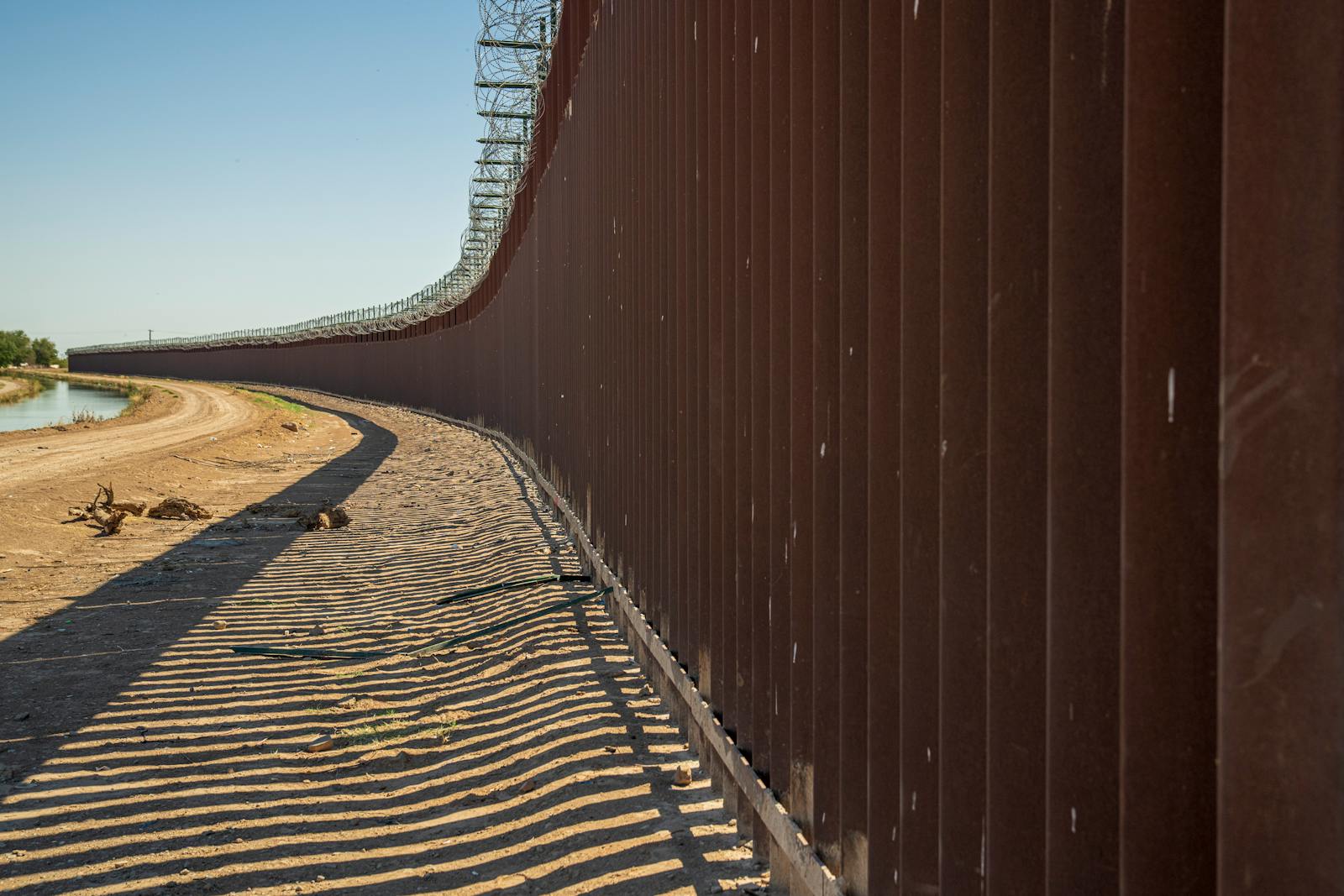
But the distance is shrinking. Air pollution in Monterrey ranks among the worst in North America. Contaminated water does not respect municipal boundaries. Microplastics found in Mexican rivers are the same microplastics that end up in seafood exported back to the United States. The circularity is literal. The waste returns, chemically transformed, in the food supply of the country that generated it.
There is a concept in behavioral economics where performing a virtuous act can lead to feeling entitled to harmful behavior afterward. Nations do this too. The United States signs trade agreements with environmental chapters. It funds cleanup programs. It publishes sustainability reports. And then it ships hundreds of thousands of tons of hazardous waste to a country with weaker enforcement. The virtue and the harm coexist without apparent contradiction, because the accounting is done in different departments.
The rapporteur’s report will be presented to the UN Human Rights Council. Mexico’s response has been more open than most countries receiving such assessments; government officials acknowledged the failures and pledged reform. Whether that reform materializes at a pace that outstrips the accumulation of contamination is a different question entirely.
The Sonora River still carries traces of the 2014 spill. Communities along its banks have developed their own informal health monitoring systems because official ones proved unreliable. Mothers track their children’s respiratory symptoms in group chats. Retired workers compare notes on joint pain and unexplained fatigue. These are not protest movements. They are survival networks built by people who understand that the system working as intended includes their bodies as an acceptable input cost.
Identity, in consumer economies, is often constructed around what people buy. Rarely is it constructed around what is left behind when the buying is done. The lead-acid battery that powered a commuter’s car in Phoenix ends up as toxic residue in the soil outside a school in Sonora. The plastic packaging from an Amazon delivery in Houston becomes a microparticle in a river in Veracruz. These are not metaphors. They are supply chain facts, documented in customs records and now in a UN rapporteur’s preliminary findings.
The language of crisis implies a sudden break from normal conditions. What the rapporteur documented in Mexico is not a break. It is the normal condition, made visible by someone with the authority to name it publicly. Sacrifice zones do not appear overnight. They accumulate, year after year, shipment after shipment, in communities too far from the capital and too close to the border to command sustained attention.
María Enríquez did not ask the rapporteur to fix anything. She told him what living inside the system feels like. She said they have learned to live sick. The word “learned” carries everything. It means the body adapted. It means the expectations adjusted downward. It means that at some point, chronic illness stopped being a crisis and became a condition of residency.
The honest read on what the UN investigation reveals is uncomfortable for both nations. Mexico’s government failed to enforce its own laws. American industry exploited that failure systematically. And the populations caught between the two adapted in ways that make the arrangement sustainable for everyone except them.
Sacrifice, in its original meaning, involved offering something valuable to secure a greater good. In the geography of cross-border waste, the offering is involuntary, the greater good is someone else’s quarterly earnings report, and the people doing the sacrificing were never consulted. They just woke up one morning and the river was a different color. Then they learned to live with it. Then their children learned. That is what normalization looks like at the molecular level. Not a policy failure. A policy feature.