
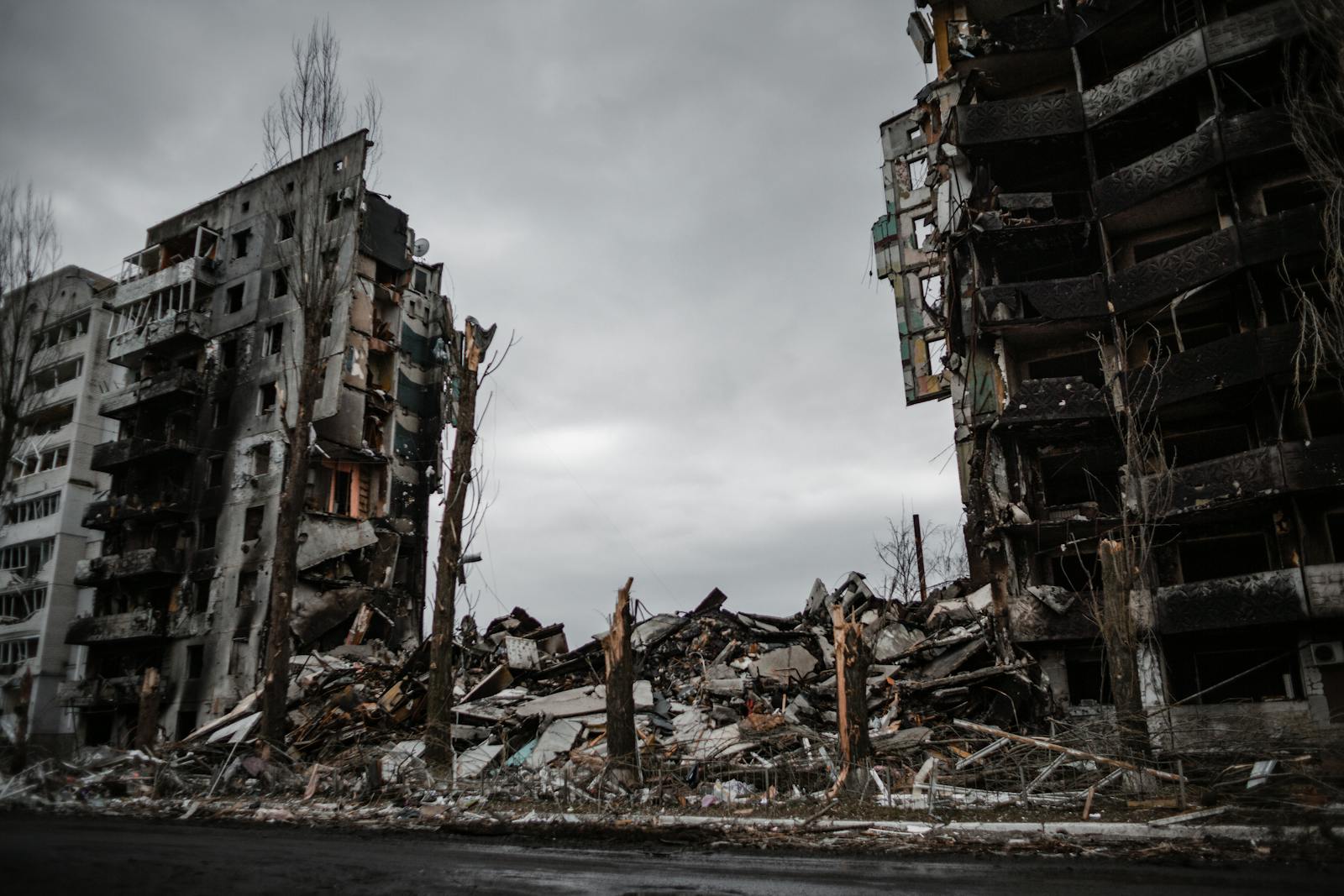
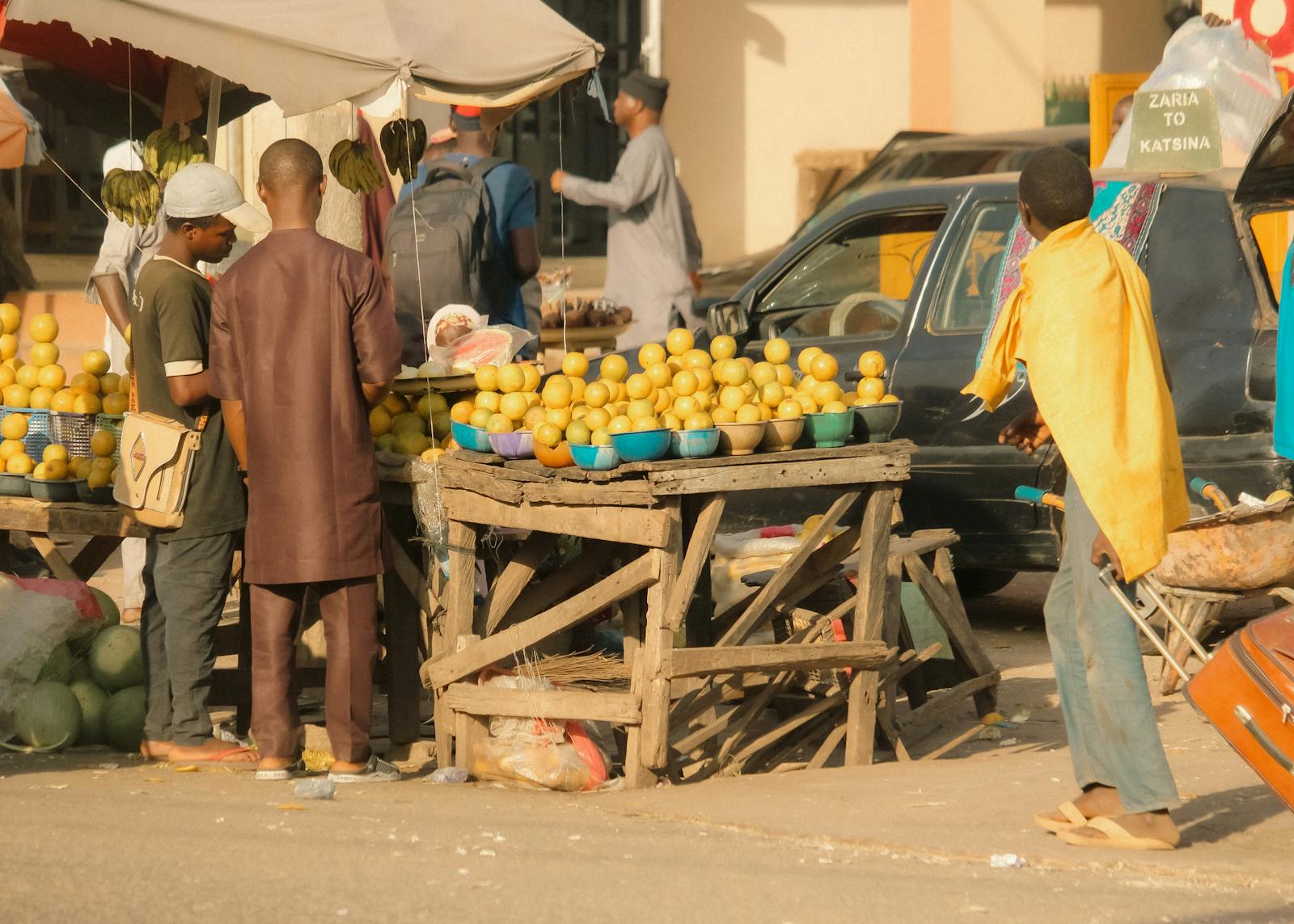
The Nigerian military confirmed that an airstrike targeting a Boko Haram stronghold near Jilli struck the wrong target. The Yobe state government reportedly acknowledged that people at the Jilli weekly market were impacted by the airstrike, using euphemistic language to describe the casualties. The word “affected” is doing extraordinary weight in that sentence, absorbing the blast radius of bombs dropped on a crowd of traders buying grain and livestock and dried fish on a Saturday morning.
Amnesty International’s Nigeria office said its representatives verified casualty figures directly through contacts at the scene, including hospital staff and victims. Reports indicate at least 100 dead. Not combatants. Shoppers.
The reflex, when a military kills its own civilians, is to call it a mistake. And technically it was. Nigerian military officials reportedly acknowledged the incident as a targeting error, though details about the intelligence failure remain unclear. But the word “mistake” implies something unusual, something aberrant, a deviation from an otherwise functional system. The record suggests something different. According to an Associated Press tally, Nigerian military airstrikes have killed at least 500 civilians since 2017. Jilli is not the exception. Jilli is the pattern.
Security analysts have pointed to intelligence gaps and poor coordination between ground troops and air assets as the structural causes. These are not new diagnoses. They have been offered after nearly every incident of this kind for years. The language recycles. The recommendations repeat. The strikes continue.
Residents of the region have described feeling trapped between two forces that both treat civilians as acceptable losses. That sensation, of being caught between your government’s weapons and your enemy’s, reflects the reality of how little either side values the people in the middle.
The psychology of acceptable loss functions differently depending on where you sit. For a military command in Abuja, each airstrike carries a probability calculation: the likelihood of hitting the target versus the likelihood of collateral damage. The term “collateral” performs the same linguistic sleight as “affected.” It makes human beings secondary to the objective. Research in psychology describes this as moral disengagement, the process by which institutions reframe harm so that responsibility diffuses across the chain of command until no individual person feels accountable for the outcome. Studies have shown that people can commit extraordinary violence when bureaucratic language and procedural distance separate the decision-maker from the body on the ground.
Medical facilities in the region reported receiving patients from the blast by early afternoon. The injuries were consistent with aerial ordnance: massive trauma, burns, shrapnel wounds that overwhelmed facilities already stretched thin by years of insurgency-related casualties. Hospitals in northeast Nigeria were not built for this volume of acute care. They were barely built for routine care. When the state itself becomes the source of mass casualties, the medical infrastructure it neglected is asked to absorb the consequences.
There is a pattern in how governments discuss these events that reveals more than the events themselves. The Yobe state government’s statement did not use the word “killed.” It did not use the word “bomb.” It said people were “affected.” Nigerian military officials confirmed a “misfire” but offered no mechanism, no timeline, no explanation of what intelligence led them to strike a populated market on a day when they presumably knew it would be full. The information vacuum is not incidental. It is strategy. When details are withheld, accountability becomes impossible to assign, and the news cycle moves on.
The international response follows its own predictable arc. Amnesty International issues statements. The AP tallies the dead. Western governments express concern through diplomatic channels. And very little changes, because the geopolitical calculus around Nigeria, the most populous country in Africa, a major oil producer, a counterterrorism partner, discourages the kind of sustained pressure that might force structural reform of military operations.
This calculus is not unique to Nigeria. The cognitive mechanisms that allow distant populations to absorb news of mass civilian death without sustained emotional response are well documented. Research suggests the brain processes statistical death differently from individual death. One hundred people killed in a market in Yobe state registers as a headline. One person killed in a bombing in a Western city registers as an identity, a face, a story that loops for days. This is not a moral failing unique to any group. It is a feature of human cognition that governments and militaries exploit, consciously or not, when they reduce human beings to numbers in a press statement.
Residents of the region have described a grim familiarity with such incidents: not shock, not anger, but a confirmation of something they had always suspected about the value placed on their lives by the institutions that claim to protect them.
The Boko Haram insurgency, which has caused widespread displacement and casualties over more than a decade, created the conditions under which the Nigerian military claims extraordinary latitude to use force. The argument is familiar from counterterrorism campaigns around the world. When the enemy hides among civilians, civilians will die. The logic is circular and self-reinforcing. Each failed strike that kills civilians generates resentment that insurgent groups exploit for recruitment, which generates more insurgent activity, which justifies more strikes. Diplomatic efforts to resolve conflicts in other regions face similar feedback loops, where each escalation narrows the space for alternatives.
The intelligence failures that analysts cite after each incident are real. Coordination between ground forces and air assets in the Nigerian military is poor by most assessments, and the pressure to show results against Boko Haram creates incentives to act on incomplete information. But framing these as technical problems, fixable with better training or better equipment, misses the deeper issue. Infrastructure vulnerabilities in security systems globally tend to persist not because solutions are unknown, but because the people most affected by the failures have the least power to demand change.
The residents of Jilli and the surrounding communities in Yobe state did not choose to live in a conflict zone. They were born there, or they returned there because it was the only home they had. The weekly market was not just a commercial activity. It was a social institution, a place where dispersed rural communities gathered, exchanged news, settled disputes, maintained the bonds that make collective life possible even under occupation and bombardment. Destroying it from the air destroyed something beyond the buildings and the bodies.
Nigerian authorities will likely announce an investigation. Previous investigations into similar incidents have produced few public findings and no significant consequences for those responsible. The structural incentives are simple: the military operates with minimal civilian oversight in the northeast, the political cost of holding senior officers accountable exceeds the political cost of civilian deaths in remote areas, and the international community lacks either the will or the leverage to change this calculation.
The weekly market at Jilli served as an economic lifeline for the region. Nobody is tracking the disrupted supply chains of dried fish and grain that fed thousands of families through that weekly market. Nobody is calculating the economic damage to a community already impoverished by a decade of insurgency. The mathematics of acceptable loss only count the dead. They never count what the dead were carrying with them.
Five hundred civilians killed by their own military since 2017. That number, compiled by the Associated Press, represents only confirmed deaths. The real figure is almost certainly higher. Each one was a person with their own life, their own plans, their own reasons for being at the market. The pattern will not break because a pattern does not break itself. It breaks when the people who sustain it, the commanders who authorize strikes on incomplete intelligence, the politicians who shield them from accountability, the international partners who look the other way, decide that the cost of continuing is higher than the cost of stopping.
Nobody in Jilli has any reason to believe that calculation is about to change.