
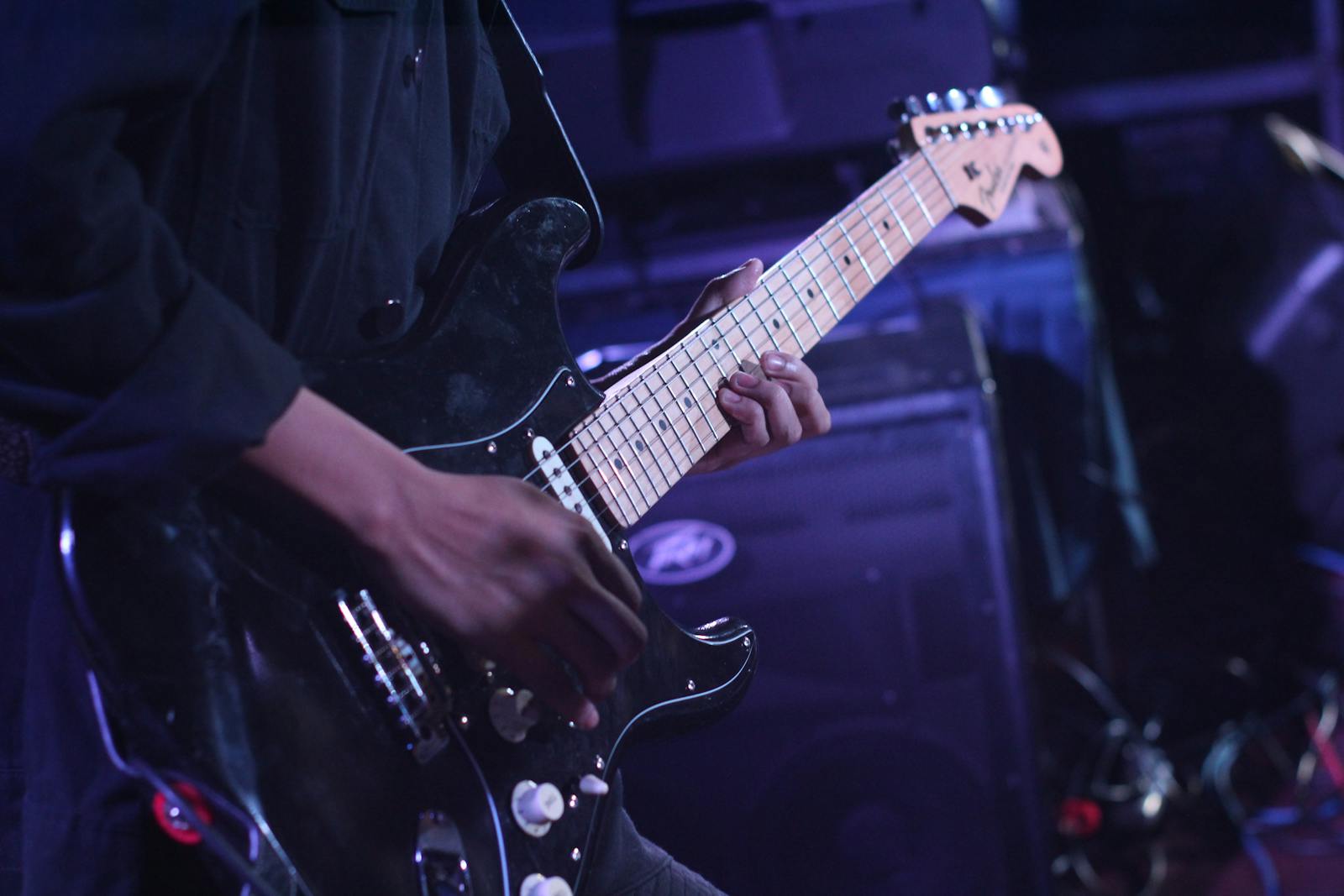
Tom Dumont’s left hand was already trembling when he picked up the guitar to record the video. He pressed play anyway. The No Doubt guitarist, sitting in what appeared to be a home studio, reportedly told the world something he’d been carrying for years: he has early-onset Parkinson’s disease. The diagnosis wasn’t new. The disclosure was. And the fact that he chose to make it now, weeks before an 18-show Las Vegas Sphere residency, says something about a calculus most people never have to perform in public: the decision to show up anyway.
Showing up anyway. That phrase sounds simple. It isn’t. It’s the product of a negotiation between what the body can still do, what the mind still wants, and what the future is almost certainly going to take away. Most people conduct that negotiation in private — in small rooms, in quiet mornings when the hands don’t cooperate, in conversations no one will ever report on. Dumont is conducting it on a stage that seats thousands of people, inside one of the most technologically advanced concert venues on Earth.
Dumont acknowledged in his video statement that living with the diagnosis has been challenging on a daily basis. He said he remains able to play music and guitar, and has been managing well with the condition.
Good news. Still. Those two words carry an enormous weight when spoken by someone whose nervous system is slowly betraying the very thing that made him who he is. And they reveal the specific nature of Dumont’s calculus: not denial, not defiance for its own sake, but a clear-eyed assessment of what is possible right now — and a refusal to let what’s coming later dictate the answer.
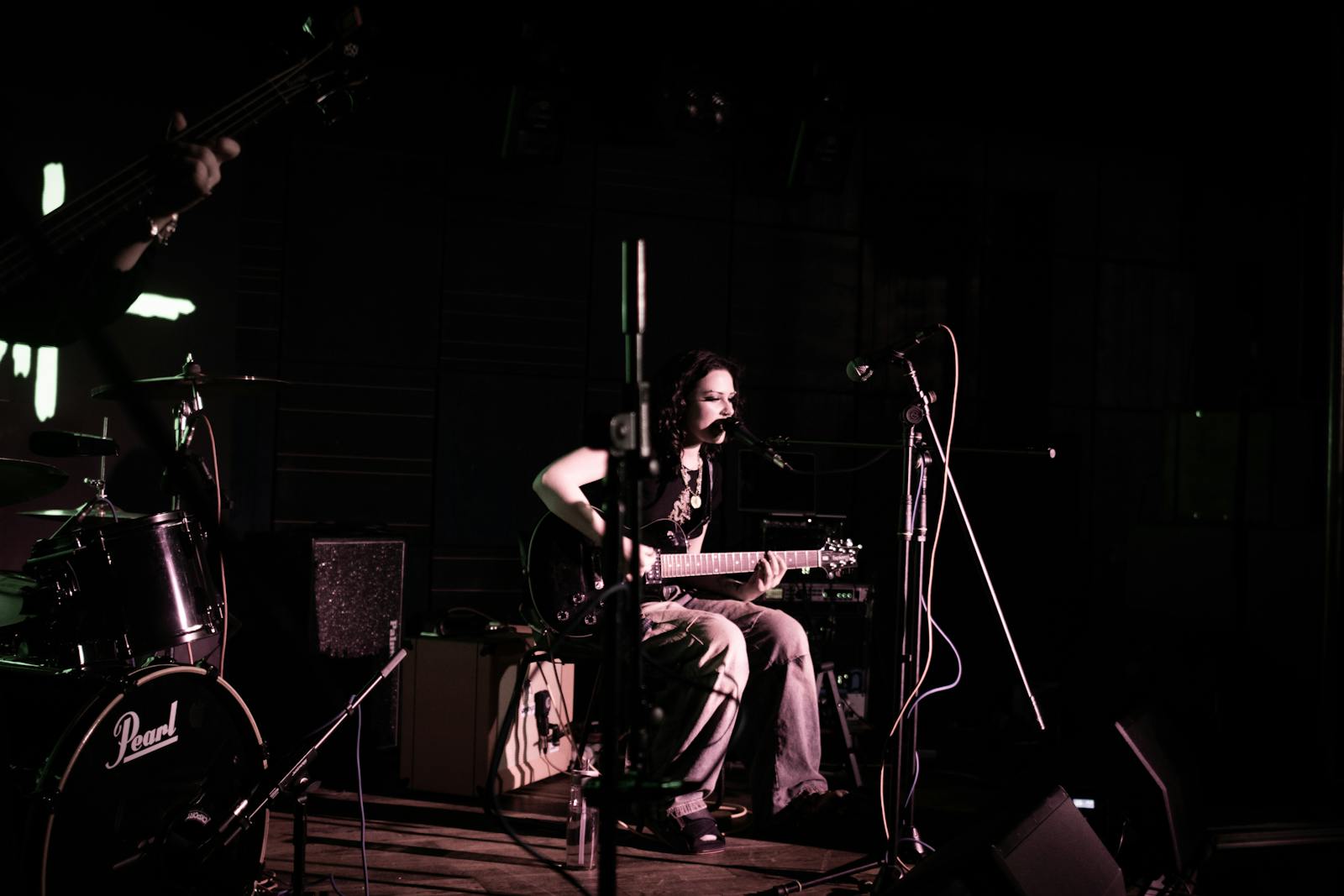
What makes this psychologically distinctive isn’t the disclosure itself. Celebrity health announcements follow a familiar rhythm: shock, sympathy, foundation links, awareness hashtags, then the cycle moves on. Michael J. Fox has been a visible face of Parkinson’s for decades, and his openness has done genuine good. Glenn Tipton went public and eventually stepped back from touring with Judas Priest. Linda Ronstadt. Neil Diamond. Each disclosure shifted the conversation slightly.
But Dumont introduced a variable the others didn’t have in quite the same configuration: he went public while simultaneously committing to a physically demanding performance schedule. He didn’t announce a farewell tour. He announced a residency. Not a final lap. A fixed engagement. Eighteen shows. The distinction is enormous, and it’s the key to understanding what Dumont’s choice actually means.
A farewell tour gives the audience permission to grieve. It frames every show as an ending, wraps the experience in a narrative of noble decline, and lets everyone — performer and crowd alike — process loss together in a way that feels complete. A residency does none of that. A residency says: I will be here, in this same place, doing this same thing, night after night. Come back Tuesday. Come back next week. I’m not going anywhere.
For a musician with a progressive neurological condition, that’s not just a scheduling decision. It’s a psychological declaration. It means refusing to pre-grieve. It means insisting that the present tense still belongs to him. And it means doing this not once, in a single emotional farewell, but repeatedly — eighteen times — each show a fresh bet against his own prognosis.
Dumont appears to have found a specific relationship with that bet. His statement was not a farewell. It was an announcement that he would keep going, delivered with the emotional register of someone who has already grieved the version of himself that didn’t have this diagnosis and come out the other side. Dumont said that reviewing old footage, photographs, and rehearsing songs has prompted reflection. He expressed gratitude for his decades-long career as a musician.
That gratitude is worth pausing on, because there are two versions of it and only one applies here. There’s the gratitude of counting blessings — pleasant, warm, suitable for acceptance speeches. Then there’s the gratitude of someone who has accepted that the thing they love is on a timer and has decided to use every remaining second anyway. The first kind is pleasant. The second kind is ferocious. Dumont’s statement reads like the second kind.
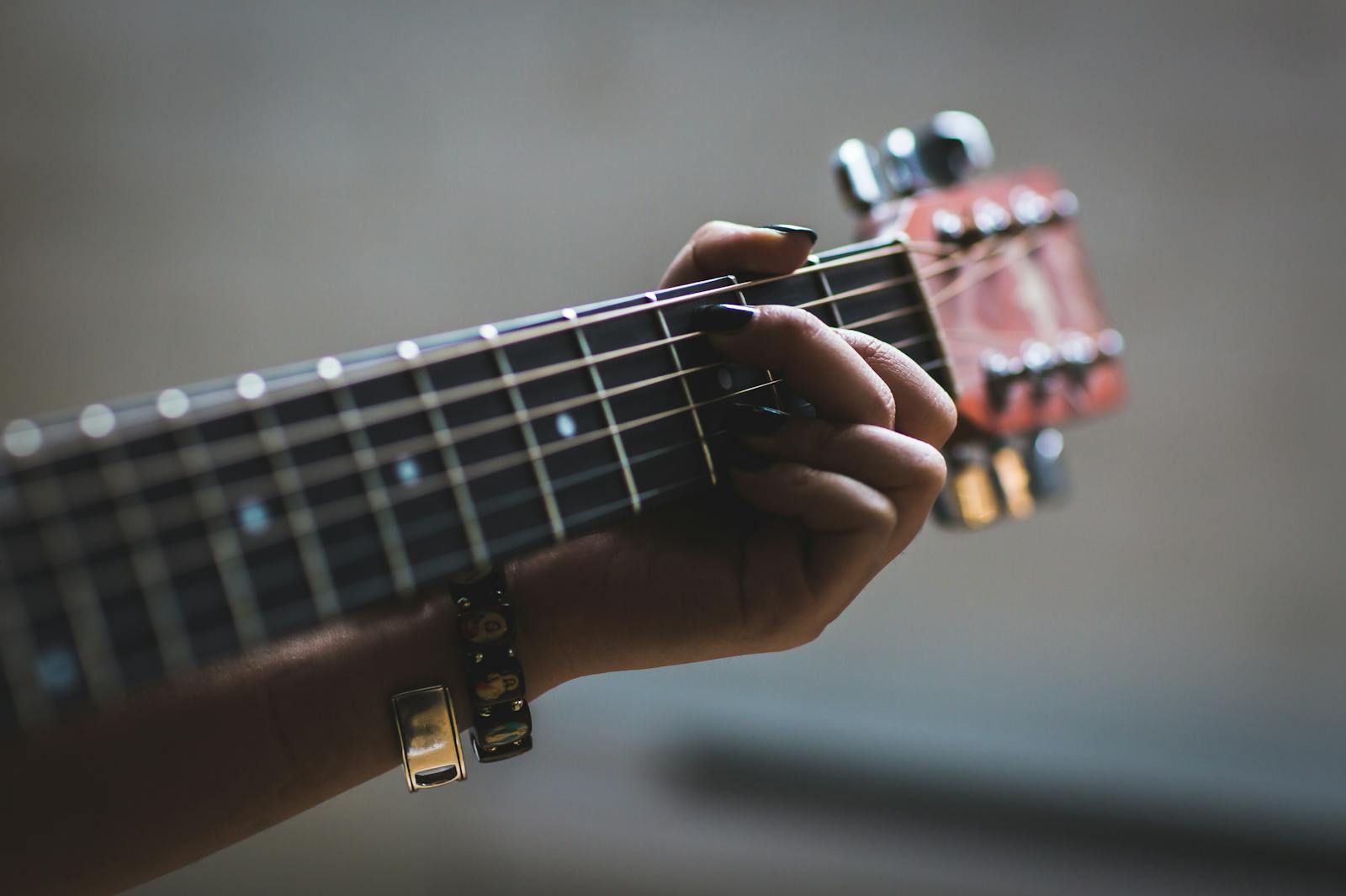
The question of building an identity that can survive the loss of the thing that defined you is one that most people don’t confront until retirement or crisis. Musicians face it differently, because their identity and their body are inseparable from their craft. A writer with arthritis can dictate. A singer with vocal damage can pivot to production. A guitarist with Parkinson’s has fewer options for adaptation. The instrument requires fine motor control, and fine motor control is exactly what the disease erodes.
Which makes Dumont’s insistence on playing not just admirable but psychologically significant. Psychologists describe how people maintain a sense of self across major life disruptions — a concept related to identity continuity. The people who fare best are those who maintain their core identity while adapting to changed circumstances. The people who struggle most are those whose identity was entirely tethered to a single capacity. When that capacity degrades, they don’t just lose function. They lose themselves.
Dumont’s disclosure is remarkable precisely because he’s doing both things at once. He is insisting on identity continuity — he remains able to play guitar, he emphasized — while acknowledging that the continuity is under threat. He’s holding two truths simultaneously, and doing so in public, eighteen times over, in a venue designed to make every visual and sonic detail enormous.
No Doubt has been largely inactive since releasing its last studio album in 2012. The band reunited for Coachella in 2024 and performed at the FireAid concerts at the beginning of 2025. The upcoming Sphere residency represents something more than a nostalgia play. For Dumont, it may represent the most significant musical commitment he’ll make in this chapter of his life. And every show is a fresh iteration of the same calculus: Can I still do this? Yes. Then I will.
The gap between what music is worth and what music means has never been more visible than in moments like this. A Sphere residency has an economic value that can be calculated in ticket sales and merchandise revenue. But the meaning of Dumont playing those shows — with that diagnosis, in front of those audiences, night after night in the same building — exists on a different ledger entirely. It’s the kind of value that the music industry has never figured out how to quantify, because it lives in the space between performance and personhood.
“Right now” is the operative phrase in everything Dumont said. Parkinson’s is progressive. There will be a point when the guitar becomes too difficult. Dumont almost certainly knows this. The discipline of his disclosure lies in the fact that he did not pretend otherwise, but he also did not let that future reality dictate his present choices. The calculus of showing up anyway requires holding the future in peripheral vision without letting it colonize the present. That’s not optimism. It’s something harder than optimism. It’s the refusal to abandon a life that still works because of a future where it won’t.
There’s a particular kind of performance that emerges when an artist is working against their own body. It’s not technically superior. It’s often technically inferior. But it carries a charge that flawless execution cannot replicate. An audience watching Dumont at the Sphere will hear No Doubt songs they’ve known for decades. Some of them will sound the way they always did. Some might not. The difference won’t be a flaw. It will be the most honest thing on stage.
The cultural conversation around passion and purpose tends to assume that the two are static. You find your calling, you pursue it, you either succeed or you don’t. Progressive illness blows that assumption apart. It introduces a third variable: capacity. You can have the passion and the purpose, but the body says no. Or the body says not today. Or the body says yes, but differently. Dumont’s residency — not a farewell, not a final statement, but an ongoing, repeating commitment — is the most public reckoning with that third variable any musician has undertaken in recent memory.
The word “residency” carries an interesting double meaning in this context. In the music industry, it means a fixed engagement at a single venue. In medicine, it refers to a period of intensive, supervised training. Dumont is, in a sense, doing both: performing at a fixed venue while living under the intensive, unsupervised tutelage of a disease that is teaching him, every day, what his body can and cannot do.
The tremor is real. The music is also real. The space between them is where Dumont lives now, and where millions of other people live with him, most of them without a stage, without an audience, without anyone watching at all. His choice to make that space visible doesn’t cure anything. It doesn’t slow the progression. What it does is simpler and harder than any of that. It says: the struggle and the playing are not opposites. They are the same hand. And showing up anyway — not once, not as a goodbye, but eighteen times, in the same room, with the same songs — is itself the answer to a question that progressive illness forces on everyone it touches. Not whether the capacity will fade. But what you do while it’s still here.