
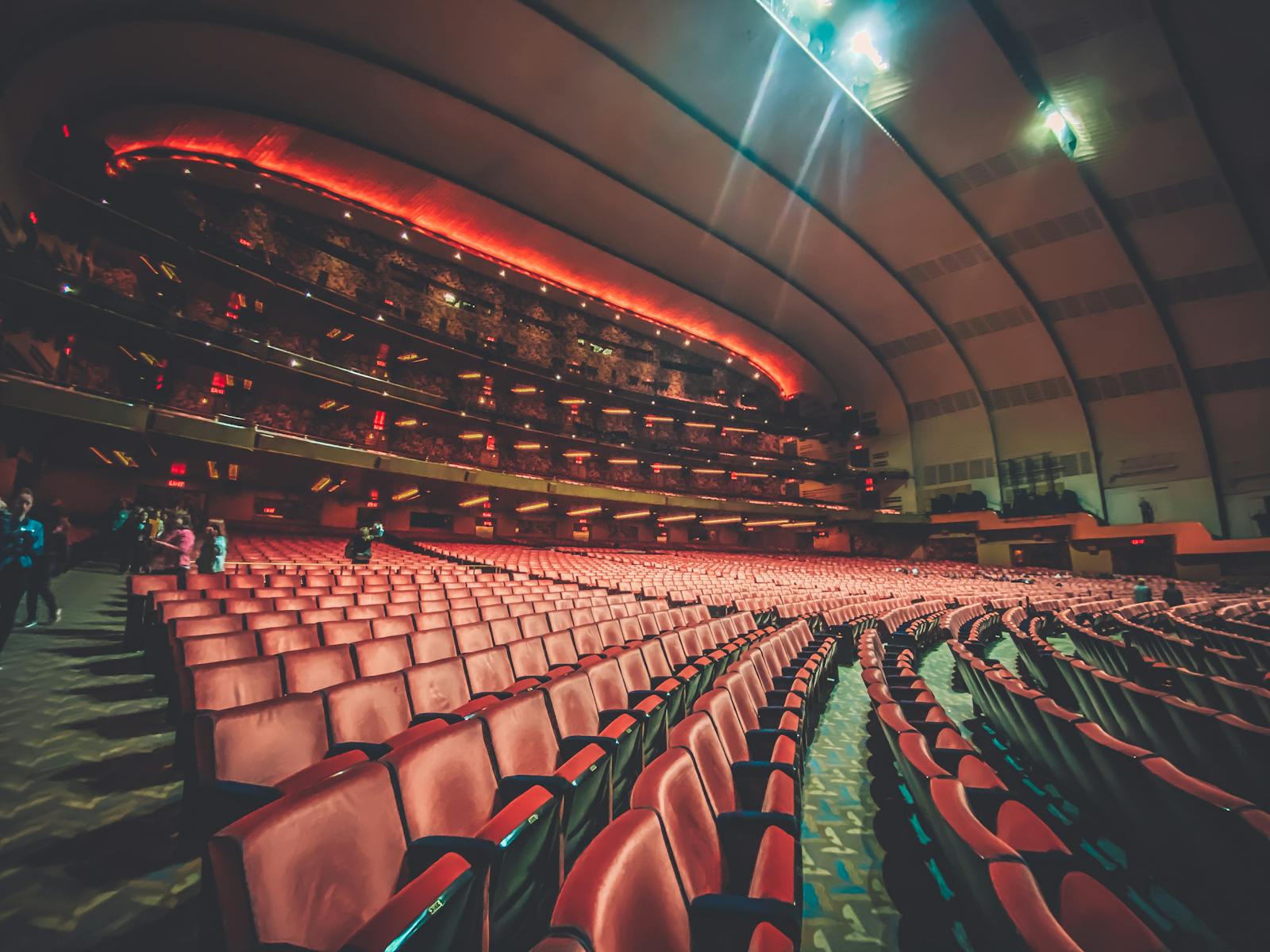
Billy Crystal is 78 years old, and he has decided to stand alone on a Broadway stage, eight shows a week, and reconstruct a house that no longer exists. Not from lumber. From memory. The show is called 860. The number is not symbolic. It was his address.
Crystal lost his Palisades home in the devastating 2025 fires that tore through Los Angeles, destroying a place where he had lived for 46 years. Nearly half a century of accumulated life, gone in the time it takes smoke to cross a ridge. And his response is not a memoir, not a podcast, not a social media elegy. It is a one-man show on Broadway, directed by Scott Ellis, opening for a limited 12-week run at a Shubert Theater this fall. Previews begin in October. He is choosing to grieve in the most exposed format available to a performer: live, unedited, in front of a thousand strangers every night, with no second takes.
That choice is the story. Not the fire, not the home, but the decision to make grief a live event. Because a Broadway stage does something to loss that no other medium can: it makes it happen in real time, in a shared room, with a fixed duration and a final blackout. Crystal is not summarizing his grief. He is submitting to it on a schedule, and inviting witnesses.
Crystal’s show, by his own account, is not a dirge. Crystal has described his show as a joyous and heartfelt exploration of getting through tough times with the support of family and friends, according to production announcements. The word “visit” is doing the heaviest lifting in that sentence. He is describing a return to something that no longer physically exists. The show is the house now.
This is what separates 860 from a TED talk or an Instagram post about resilience. The medium matters. A written essay can be revised. A social media post can be edited. A Broadway stage, eight shows a week, offers no such buffer. The grief is wet and present every single night, even if it arrives wearing a comedian’s timing. A one-man show about a lost home creates an unusual contract with the audience: the performer is asking you to see a place that you’ve never been to and that no longer exists, using only his voice and his body. The set is memory itself. And unlike a recording, it will never be the same show twice, because the performer will never be the same person twice. Grief is not a fixed state but a weather pattern that changes hour by hour, and live theater is the only form that can metabolize that instability rather than editing it away.
Crystal seems to understand this intuitively. His 2004 Broadway debut, 700 Sundays, was built on a similar instinct. That show reconstructed his relationship with his father, who died when Crystal was 15, through comedy and memory. It won a Tony Award. The loss was decades old by the time it reached the stage, but the emotional current was live. 860 appears to operate on the same frequency, except this time the loss is not a person but a place, and the distance between the event and the performance is measured in months, not decades. The rawness is closer to the surface. The buffer of time is gone. What remains is the buffer of form: the proscenium arch, the running time, the curtain call. The structure of theater holds what the structure of a house no longer can.
The Palisades and Eaton fires ranked among the most destructive in California history. The scale of communal loss is still being measured, not just in property values and insurance claims but in the less quantifiable currency of identity. A home you’ve lived in for 46 years is not real estate. It is an external hard drive for selfhood. Every scuff on the wall, every drawer that sticks, every window that lets in a particular quality of morning light holds a version of who you were when you noticed it. When that physical record is erased, the grief is not just for the objects. It is for the confirmation they provided that your life happened in a particular way, in a particular place.
One of the most common phrases survivors use is “I don’t know where to put it.” The “it” is the grief itself, the sense of disorientation that comes when the physical coordinates of your life have been erased. People need containers: a ritual, a space, a repeated action. Something that gives the loss edges so it doesn’t just bleed everywhere. Crystal’s choice of medium is his answer to that problem. A Broadway stage is a container with very specific edges. And live performance is the only container that demands you fill it in real time, with your body, in front of people who are watching you do it. That is not catharsis. That is discipline in the service of something that cannot be disciplined. That is the particular bravery of choosing to grieve on a schedule.
Crystal’s framing of the show as a “visit” suggests he is not trying to rebuild. He is not trying to replace. He is trying to go back, briefly, in the only way available to him. And he is doing it publicly, which changes the nature of the act entirely. Private grief is a conversation with yourself. Public grief, performed well, becomes a permission structure for everyone watching. The audience does not just observe the loss. They participate in it, by sitting still and receiving it, by laughing when the comedian gives them permission to laugh, by being present in a room where a man is describing a place that burned down and somehow making it stand again.
His return to Broadway also carries its own kind of weight. Crystal debuted on the Great White Way with 700 Sundays in 2004 and came back in 2022 with Mr. Saturday Night, a musical adaptation of the 1992 film. Each return has arrived at a different stage of his life and career. 700 Sundays was about the past as remembered. Mr. Saturday Night was about reinvention. 860 is about something rawer: the present tense of loss, processed in real time through the only technology Crystal has ever fully trusted, which is standing in front of people and talking.
There is a trap in the cultural conversation around disaster and art. The trap is the word “healing.” It gets applied to every creative act that follows catastrophe, and it flattens the complexity of what the artist is actually doing. Crystal is not healing onstage. Healing implies a wound that closes. What live performance offers is something different: not closure but recurrence, not resolution but repetition with variation. Every night, the house burns. Every night, the comedian rebuilds it with his voice. The wound does not close. It gets a run time.
Crystal announced his return to Broadway this fall with the new show, expressing enthusiasm for the challenging production. The show’s title, 860, references the address of the home Crystal and his family lost in the Palisades fires after living there for 46 years. The plainness of those sentences is striking. No metaphor. No flourish. Just the number, the fact, and the duration. A comedian who has spent his entire career finding the angle, the bit, the deflection, chose to describe the most personal show of his life in the flattest possible language.
That flatness is the tell. When someone who is professionally funny goes plain, the emotion underneath is too large for the usual tools. The comedy will be in the show. The announcement is the man.
Theater designers know that the most powerful sets are often the ones that suggest absence, that a bare stage with the right lighting can make an audience feel a room more intensely than a fully built interior. 860 appears positioned to work on that principle. You don’t need walls to feel a home. You just need someone who remembers where they were. And you need the room to be live, the air shared, the silence real. You need the performer to be actually standing there, actually breathing, actually older than he was the night before. That is what no film or essay or podcast can replicate. The liveness is the point. The vulnerability is not a feature of the performance. It is the performance.
The instinct to turn loss into communal witness is older than Broadway, older than theater itself. The earliest known human rituals involved reenacting loss in shared settings, not to undo the loss but to make it survivable by making it witnessed. Crystal is doing something ancient in a modern container: standing in a room and saying, this is what I lost, and trusting that the act of saying it live, out loud, with other humans present, does something that saying it alone cannot.
The show is not about a house. It is about the knowledge that only comes from having a fixed point, a coordinate, an address, and then losing it so completely that the only way to find it again is to say the number out loud, in a room full of people, and let them believe it existed.
A home is not a building. A home is the fact that someone can describe it from memory and you can see it. Crystal is betting his Broadway return on this principle. Given that he won a Tony doing the same thing with a dead father and a childhood in Long Beach, the bet is not reckless. It is earned.
The show opens in October. Twelve weeks. Then it closes. And the house at 860 will still be gone. But for those 12 weeks, every night, in a Shubert Theater, it will stand again. Not because scenery rebuilt it. Because someone who lived there for 46 years will remember it into existence, in front of witnesses, and call that a visit.
That is not healing. That is something more honest. That is a man deciding that the only answer to total loss is total presence — and that the only medium honest enough to hold it is one where the grief has to happen live, on schedule, with nowhere to hide.