
John Kirby, one of the most recognizable faces of Biden-era foreign policy, went on television and offered something remarkable: qualified support for the Trump administration’s naval blockade near the Strait of Hormuz. The former Biden National Security Council spokesperson suggested the blockade could aid nuclear negotiations with Iran. The Democratic foreign policy establishment said almost nothing in response. Two administrations that framed themselves as ideological opposites on Iran — and now one of the most prominent voices of the first is offering quiet validation to the second.
Defense policy analysts who track the language American officials use have noted patterns when they shift from opposition to accommodation. The phrasing is often similar. Words like “might” and “could” and “helpful” serve as diplomatic padding around what amounts to a position reversal. Kirby didn’t say the blockade was wise. He didn’t say it was foolish. He said it might be helpful. That construction is the sound of bipartisan foreign policy consensus being built in real time, even when neither party will admit it.
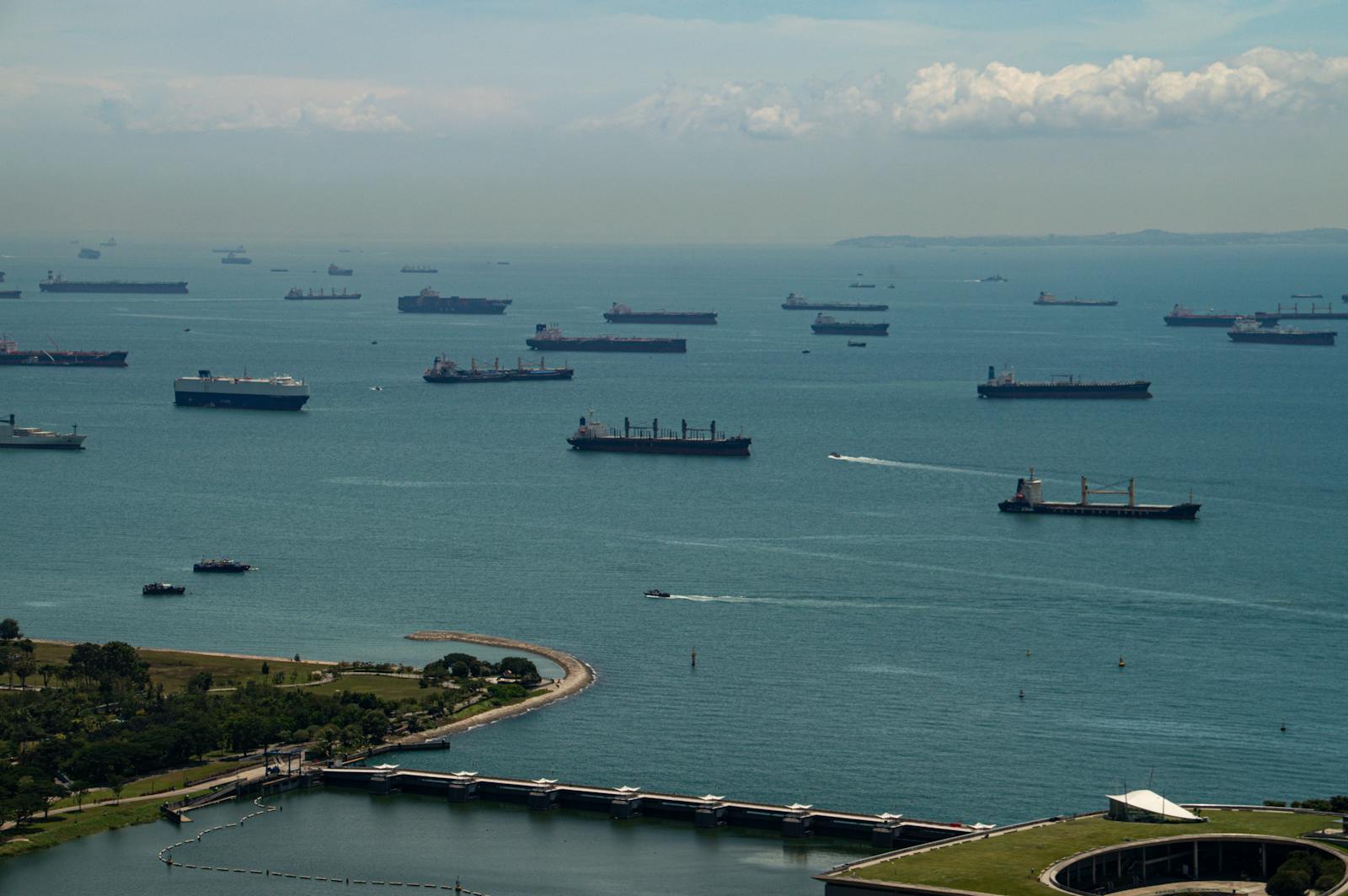
The blockade itself represents a dramatic escalation. Reports indicate U.S. naval vessels have positioned themselves to restrict Iranian oil exports passing through one of the world’s most important shipping chokepoints. The stated goal is to cut off revenue that funds Iran’s nuclear program and force Tehran back to negotiations. It is the kind of maximum-pressure tactic that Biden-era officials, including Kirby, spent years criticizing when implemented through sanctions alone. The addition of warships changes the calculus entirely.
And yet Kirby’s framing was not a reluctant concession. According to The Hill’s reporting, he acknowledged the blockade’s potential utility for nuclear negotiations, positioning it not as reckless provocation but as a bargaining chip. The distinction matters. When a former Biden NSC spokesperson treats a Trump military deployment as a plausible negotiating tool, the traditional partisan framing of Iran policy starts to dissolve.
The pattern has deep roots. Obama’s drone program became Trump’s drone program became Biden’s drone program. The labels changed. The operational logic did not. Biden tried diplomacy with Iran. It stalled. Trump returned to coercion. And Biden’s own people are now conceding that coercion might work. American foreign policy on Iran has been trapped in a recurring loop for over two decades: engage, fail, escalate, pull back, engage again. Each administration enters office believing it has a fundamentally different philosophy from the last. Each administration leaves office having converged, at least partially, with its predecessor’s methods. The blockade is new in degree. The impulse behind it is not.
What makes Kirby’s comments unusual is their timing and their source. Former officials typically wait years before acknowledging common ground with their successors. The implicit rule of Washington’s post-service media circuit is that you defend your administration’s record while offering only the most carefully hedged criticism of the current one. Kirby broke that pattern. He offered something closer to real-time analytical agreement, which suggests the pressure dynamics around Iran have moved past the point where partisan positioning feels useful.
Retired military officials who understand the operational weight of what a Hormuz blockade actually means have pointed out that the strait is a corridor where miscalculation doesn’t stay small. A blockade requires constant communication, precise rules of engagement, and the willingness to follow through if vessels attempt to run it. The military dimension is not abstract. Every day the blockade continues, the risk of a confrontation that neither side intended grows marginally but meaningfully.
That risk is precisely what gives the blockade its coercive power. Iran’s economy depends on oil exports that pass through or near the strait. A credible threat to those exports forces a calculation in Tehran that sanctions alone never fully achieved. Sanctions can be evaded through third-party networks and shadow fleets. A physical naval presence is harder to route around.
But coercive power and diplomatic progress are different things. Kirby’s framing assumed the blockade’s value lay in driving Iran toward negotiations. The question international relations experts ask is whether coercion of this kind produces genuine negotiation or merely produces the appearance of it. States under extreme pressure often come to the table, but they come to buy time, not to make concessions. The 2015 Iran nuclear deal, for all its flaws, emerged from a period when Iran faced both sanctions pressure and a credible diplomatic pathway. The blockade provides the pressure. The pathway remains unclear.
The Trump administration’s diplomatic infrastructure for Iran talks is thin. There is no John Kerry equivalent shuttling between capitals. There is no established back channel with Iranian moderates, in part because Iranian domestic politics have shifted so far toward hardliners that the moderate faction barely functions as a political force. The blockade creates leverage. But leverage without a mechanism to convert it into agreement is just sustained confrontation.

Energy market analysts have noted the blockade’s secondary effects. Oil markets have responded to reports of the blockade. Shipping insurance considerations for Gulf-bound tankers have become more complex. Asian importers who relied on discounted Iranian crude are scrambling for alternatives. The economic consequences extend well beyond Tehran. And those consequences create their own political pressures, both domestically and internationally. European allies, already strained by energy costs, have offered measured public support for the blockade while privately expressing concern about duration and escalation.
Analysis reveals something that Washington’s foreign policy conversation often elides: military actions in the Gulf do not stay contained within bilateral U.S.-Iran dynamics. They ripple through energy markets, trade routes, and alliance structures in ways that constrain future decision-making. A blockade that lasts weeks carries different political costs than one that lasts months. The longer it persists without producing talks, the more it becomes a permanent feature of the regional order rather than a temporary pressure tactic.
Kirby, to his credit, seemed aware of this. His comments were not an unconditional endorsement. The word “might” carried weight. He was offering a conditional assessment: if the blockade serves as a catalyst for diplomacy, it could prove useful. That conditionality is the honest analytical position. It is also the position that almost no one in Washington’s current political environment is equipped to hold publicly, because it requires acknowledging that your opponents might be doing something partially right.
Foreign policy analysts have noted that when a respected figure from one administration validates a tactic of the opposing administration, it can confer a degree of bipartisan legitimacy on that policy. This makes it harder for Democrats to criticize the blockade in blanket terms and harder for Republicans to frame it as something only their side would have the courage to attempt. The result is a narrowing of the acceptable debate, which can be either clarifying or dangerous depending on whether the underlying strategy is sound.
The deeper question is whether American Iran policy has reached a point where the distinction between the two parties’ approaches is more rhetorical than real. Biden tried engagement and ended up maintaining most of Trump’s first-term sanctions. Trump returned to maximum pressure and is now, through the blockade, testing whether physical coercion succeeds where economic coercion plateaued. A former Biden official says it might work. The policy space between the two administrations, which once seemed vast, has compressed into a narrow band of disagreement about tactics within a shared strategic assumption: Iran cannot be allowed to reach nuclear weapons capability, and the United States will use escalating forms of pressure to prevent it.
Military experts have noted that from the bridge of a destroyer in the Gulf, the question of which president ordered you there matters less than whether you have clear rules of engagement and a defined exit condition. The sailors executing the blockade don’t care about Kirby’s television appearances. They care about whether the chain of command has thought through what happens if an Iranian vessel doesn’t stop.
That gap between the political conversation and the operational reality is where the real risk lives. Kirby’s comments were aimed at the political conversation. They were an effort to frame the blockade as a reasonable, potentially productive application of military power. That framing may be accurate. But it exists in a different universe from the calculations being made aboard ships in 115-degree heat, where the distance between diplomatic endorsements and actual military engagement can close in minutes.
Market analysis suggests oil markets have already priced in a three-to-six-week blockade. Beyond that window, price effects compound in ways that become politically toxic domestically. American consumers notice gasoline prices before they notice geopolitical strategy. A blockade that drives gas above five dollars in swing states during the lead-up to the 2026 midterms creates a political problem that no amount of foreign policy justification can solve.
The paradox Kirby’s comments exposed is one that American foreign policy elites have managed to avoid confronting for years. On Iran, the operational consensus between the parties is far stronger than the rhetorical divide suggests. Both parties believe in pressure. Both parties have struggled to convert pressure into durable agreements. Both parties have escalated when previous tactics failed. The blockade is the latest escalation. Kirby’s endorsement, however qualified, confirms that the escalation ladder has bipartisan rungs.
What remains genuinely uncertain is whether anyone, in either party, has a theory of how this ends. Pressure is a means. A blockade is a tool. The question that analysts and observers all arrive at, from their very different vantage points, is the same one: pressure toward what? If the answer is a negotiated agreement, the diplomatic architecture doesn’t exist yet. If the answer is regime behavior change without negotiation, the historical evidence suggests that external pressure alone almost never achieves it.
Kirby said the blockade might be helpful. He was probably right. But “helpful” is doing an enormous amount of work in that sentence, carrying within it an assumption about diplomatic outcomes that no one has yet demonstrated a plan to achieve. The bipartisan agreement on pressure is real. The bipartisan absence of a plan for what comes after the pressure is equally real. And that is what Kirby’s quiet endorsement ultimately revealed — not that Washington has found common ground on Iran, but that the common ground it has found is a shared willingness to escalate without a shared vision of where the escalation leads. The ships are in the strait. The talking points have converged. The exit strategy remains, as it has for two decades, an exercise left for the next administration.