
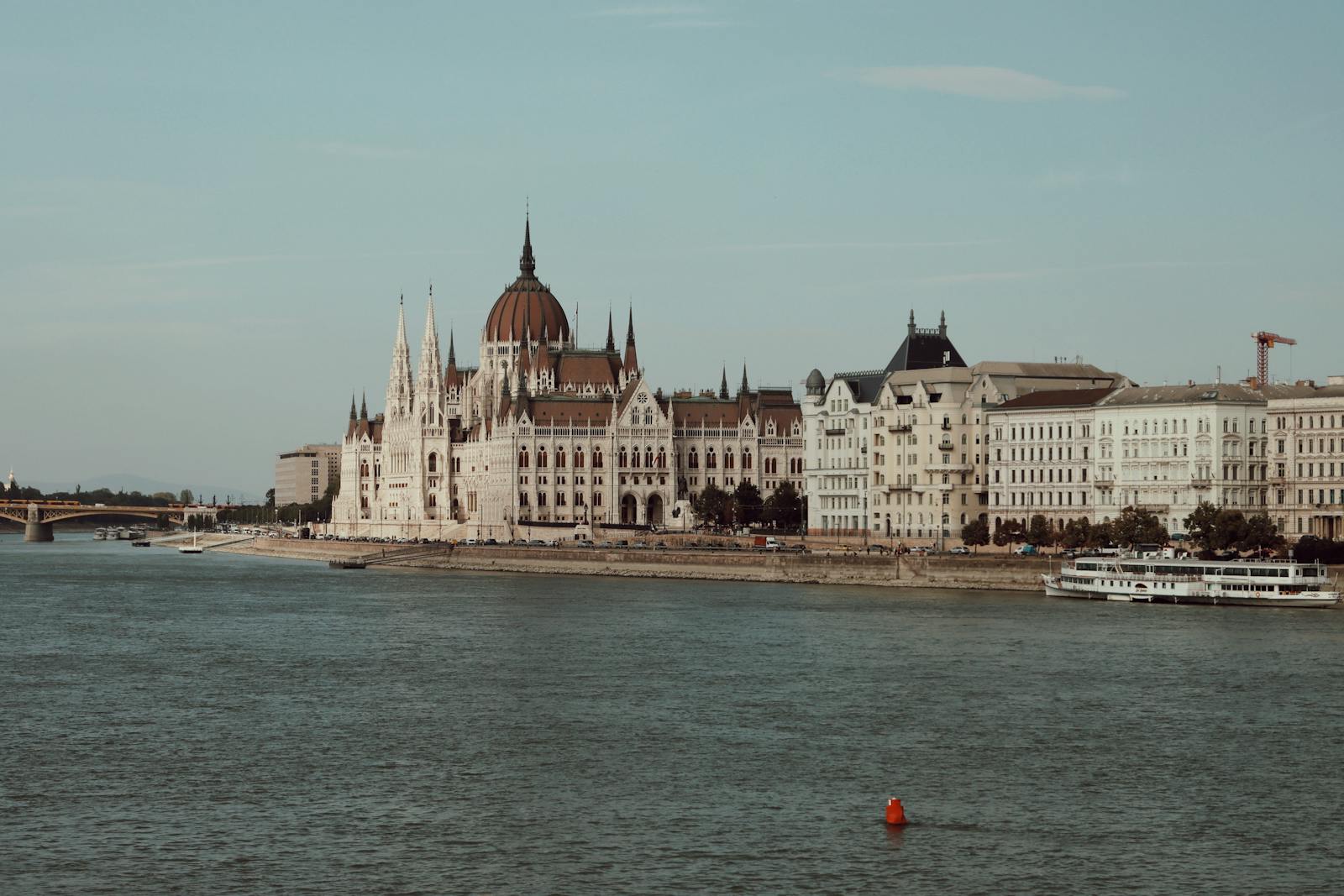
Viktor Orbán has governed Hungary for over a decade in his most recent tenure. He has reshaped its courts, its media, its educational institutions, and its relationships with Western allies. Yet as of mid-2025, cracks in his political dominance are becoming harder to ignore — rising opposition energy, deepening economic frustration, and a population increasingly skeptical of the narratives that once held Fidesz’s coalition together. None of this guarantees his defeat. But it raises a question worth taking seriously: what would it actually mean if Hungarian voters removed Orbán from power?
What follows is not a prediction. It is an analytical exercise — a scenario built on observable trends, structural pressures, and comparative precedent. Suppose that on April 12, 2026, Hungarian voters go to the polls and end the Orbán era. How should we understand what such an outcome would reveal, not just about Hungary, but about the limits of democratic backsliding itself?
The strongman who loses an election was never actually a strongman. That sentence reads like a paradox, but it describes something more ordinary than we’d like to admit: the gap between the mythology of authoritarian rule and the mechanical reality that even the most entrenched leaders govern at the pleasure of a population that can, eventually, change its mind. An Orbán defeat would send a signal read differently depending on who is reading it. In Brussels, it would look like the return of a prodigal state. In Washington, it would register as the loss of a key ideological ally. For the American right, which has spent the better part of five years pointing to Hungary as a model for national conservatism, the result would land with particular awkwardness.
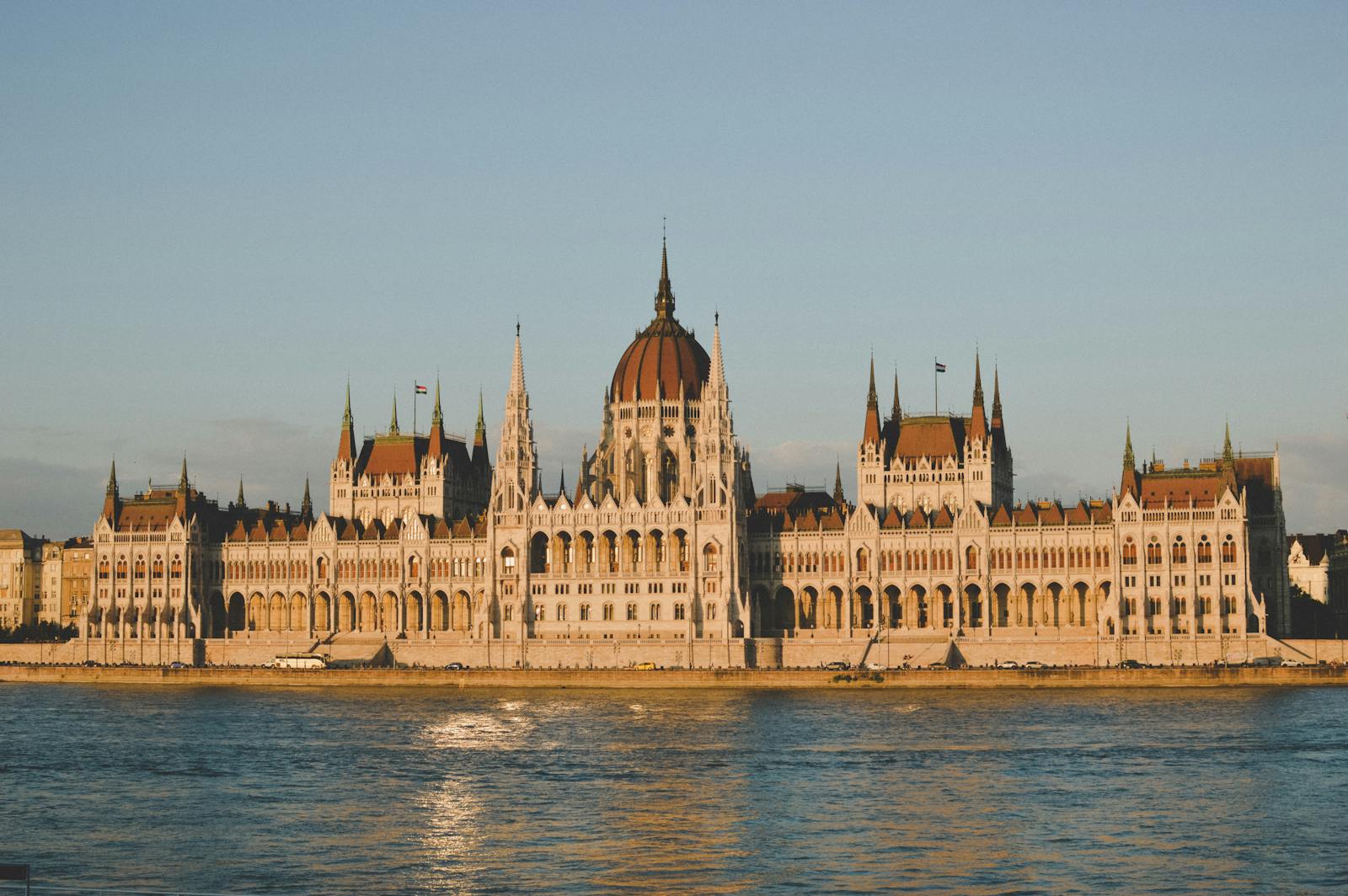
The relationship between Orbán and the American conservative movement is not casual. American conservative figures have traveled to Hungary and praised the government’s policies. Hungary has become, for a specific cohort of American political thinkers, a proof of concept: evidence that a Western democracy could prioritize national identity, restrict immigration, challenge progressive social norms, and still win elections. The emphasis is always on that last part. Winning.
An Orbán defeat, if it comes, would be less surprising than the reaction to it suggests. Authoritarian-leaning leaders who consolidate power face an ironic structural weakness: they personalize the state to such a degree that every failure, from inflation to potholes, becomes their failure. Orbán has spent years dismantling institutional buffers between himself and the public. When the economy falters, there is no one else to blame. The European Union, George Soros, migrants, Brussels bureaucrats: these villains have carried the narrative for over a decade. There are signs they are losing their power.
The psychology of this is well-documented. Research suggests that threat narratives, real or manufactured, can sustain political loyalty for a remarkably long time. But the effectiveness of fear-based cohesion tends to diminish over time. The threat must escalate to maintain the same emotional charge. When it cannot escalate further, or when the audience simply grows numb, the binding force dissolves. What remains is the ordinary question of governance: are things getting better or worse?
Things, for most Hungarians, have been getting worse. Economic indicators show declining trends. Hungary’s economy faces significant challenges including high inflation and currency depreciation. Young professionals have left the country in numbers that are becoming impossible to obscure with statistics about employment rates. Orbán’s government has produced employment. It has not produced prosperity. In a hypothetical scenario where these pressures reach a tipping point by 2026, the political consequences would be profound — but not unprecedented.
The American dimension of this story matters for reasons that go beyond diplomatic alliance. Orbán’s model is being actively studied and, in some quarters, imported. The idea that a leader could systematically weaken institutional checks on executive power, marginalize independent media, and reshape electoral law to entrench partisan advantage, all while maintaining the formal architecture of democracy, has attracted a specific kind of admiration from American politicians who see in it a template. An Orbán defeat would complicate that admiration considerably.

The template, in this scenario, would reveal a fundamental flaw. It assumes that institutional capture is durable. That once you control the courts, the media regulatory bodies, the election commission, and the flow of state advertising revenue, the population will follow. But populations are not institutions. They are millions of individual calculations happening simultaneously, and when enough of those calculations shift, no amount of institutional control can compensate. In our hypothetical, Hungary’s opposition wins despite systematic disadvantages in media access, campaign finance, and district mapping. They win because enough people in enough places decide that the direction is wrong.
This dynamic, the separation between institutional power and popular legitimacy, would be the central lesson of such an election. It echoes across democratic systems everywhere. Trust reveals more about the people granting it than about those receiving it, and when trust drains, the machinery of control cannot refill it.
In this scenario, the opposition’s victory would not be inevitable. Péter Magyar, who currently leads the main opposition coalition, is himself a controversial figure with reported roots in the Fidesz establishment. His credibility as an agent of change is debatable. But elections, especially change elections, are rarely about the alternative. They are about the incumbent. Orbán would lose this election more than Magyar would win it. The distinction matters because it determines what comes next.
Winning because the other side lost is a fragile mandate. Magyar’s coalition would inherit a hollowed-out institutional apparatus, a depleted civil service, a judiciary stacked with Fidesz loyalists, and an economy in structural decline. The honeymoon would be brief. The expectations, shaped by years of accumulated frustration, would be enormous. And the capacity to deliver would be limited by the very damage Orbán’s government inflicted on the state’s ability to function independently.
This is the pattern of post-authoritarian transition in democratic systems. The strongman leaves. The successor inherits rubble. The public, having just demonstrated its power to remove a leader, expects immediate improvement. When improvement doesn’t come fast enough, disillusionment sets in. And in that disillusionment, the strongman’s narrative, that only he could hold things together, gains retrospective credibility it never deserved.
Poland has already experienced a version of this after the 2023 defeat of Law and Justice. The Tusk government has struggled to reverse institutional damage while simultaneously meeting public expectations for economic improvement. The political scientist Grzegorz Ekiert described the challenge as “rebuilding the ship while sailing it” — the incoming government must simultaneously dismantle the legal and institutional distortions of the previous regime while delivering on the bread-and-butter promises that drove voters to demand change in the first place. The parallel to a hypothetical post-Orbán Hungary is instructive: the structural damage left behind by democratic backsliding does not vanish with a single election. It persists in stacked courts, captured regulatory bodies, and a civil service hollowed out by loyalty tests. A Magyar-led government would face this same dilemma, compounded by Hungary’s deeper economic vulnerabilities and its more prolonged period of institutional erosion.
None of this is certain. Orbán remains formidable, Fidesz’s institutional advantages are real, and opposition unity is fragile. But the trends point in a direction that merits serious analysis. If the arithmetic of groceries does defeat the mythology of sovereignty — if Hungarian voters decide that rising prices matter more than culture-war narratives — it will not vindicate any simple story about democracy’s resilience. It will instead reveal something more uncomfortable: that democratic self-correction is slow, painful, and never as clean as the headlines suggest. The strongman may fall, but what he built does not fall with him. The real test is always what comes after.