
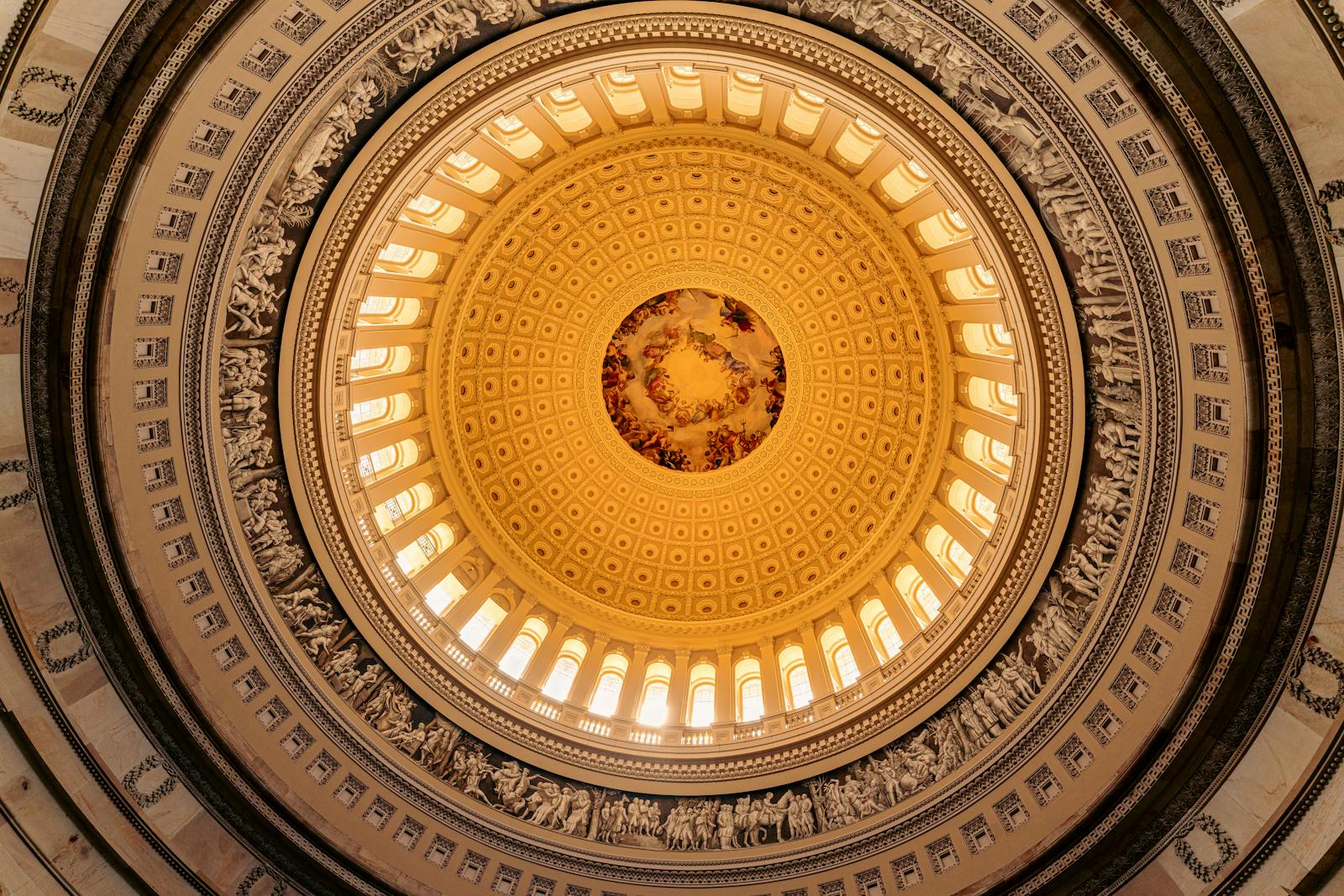
The U.S. House of Representatives has expelled a member only a handful of times in its history, and the chamber may have already set in motion a dynamic far more consequential than any single vote. Former congressional staffers who spent decades watching the institution describe expulsion as a theoretical power, terrifying in principle, almost never deployed. The procedural weapon nobody used is suddenly part of the active vocabulary.
The December 2023 expulsion of Rep. George Santos did something no single ethics case could do on its own. It cracked open the seal on a process that both parties had quietly agreed to keep shut. Expulsion requires a two-thirds supermajority, a threshold so steep it has historically functioned less as a rule and more as a psychological barrier. The logic was circular but effective: nobody gets expelled because nobody gets expelled. Precedent fed inertia, and inertia fed precedent. The Santos vote, in which 311 members chose to remove a sitting colleague over fabrications and alleged financial crimes, broke that loop.
The result is not a single expulsion vote but a new political environment in which expulsion has been domesticated. Multiple members from both parties have since faced expulsion resolutions or serious removal threats, a development that looks less like institutional accountability and more like the collapse of a norm that had been quietly holding the whole structure together.
Political scientists describe what’s happening as norm liquefaction. It resembles the way a geologist might describe an earthquake’s secondary damage. The initial shock, Santos’s removal, was significant on its own terms. But the real destruction comes afterward, when the ground that everyone assumed was solid turns out to be unstable. Norms that seemed permanent reveal themselves to be nothing more than shared agreements, and shared agreements can dissolve the moment one party stops sharing them.
The members who have since faced expulsion resolutions or credible removal threats span the political spectrum. In 2025, resolutions have been introduced targeting members over conduct ranging from criminal indictments to policy disagreements to rhetorical provocations. The breadth of the targeting is the point. This is not a partisan purge. It is something structurally stranger: a bipartisan feeding frenzy triggered by the realization that a power nobody exercised is suddenly available to everyone.
The psychology at work here resembles what behavioral economists call threshold collapse, the phenomenon in which a behavior that was suppressed not by rules but by social convention suddenly becomes permissible once the first actor breaks through. It operates in financial panics, in social media pile-ons, and in legislative bodies where the unwritten rules matter more than the written ones. Santos was the breach. Everything that follows is the flood.
Former congressional staffers recall that the House Ethics Committee’s real function was to prevent expulsions by creating the illusion of accountability. Censures, reprimands, fines. These were all designed to satisfy public outrage without triggering the nuclear option. The system worked because everyone, Republican and Democrat, understood that if expulsion became normal, no one was safe.
That compact is now broken.
Campaign strategists who manage House races in competitive districts have been watching the expulsion movement with professional interest and personal alarm. If expulsion becomes a viable weapon, it changes the calculus of every close election. A party that holds a slim majority doesn’t just need to win seats. It needs to defend its members against removal after they’ve already won. The battlefield extends past Election Day into the session itself.
This worry is not hypothetical. The current House operates with razor-thin margins. Every seat matters for committee assignments, for speakership votes, for the basic arithmetic of passing legislation. An expelled member creates a vacancy. A vacancy triggers a special election. A special election is unpredictable. The strategic incentives to weaponize expulsion are obvious, and the strategic incentives to resist it are equally obvious, which is why the norm held for so long.

The question political scientists keep returning to is why now. Many reject the explanation that the current crop of congressional scandals is uniquely severe. Members have been investigated, indicted, and even convicted throughout American history without triggering expulsion waves. The difference, they argue, is that the informal mechanisms of institutional self-protection have weakened to the point where they can no longer contain the pressure.
Those mechanisms were always fragile. They depended on party leaders having the authority to discipline their own members quietly, on committee chairs having the credibility to issue sanctions that the public accepted as sufficient, on a media environment where a censure vote could satisfy the news cycle. None of those conditions hold anymore. Party leaders are weaker than they have been in decades. The Ethics Committee is widely regarded as toothless. Social media creates demand for maximalist outcomes. A censure feels like a participation trophy.
The patterns at work resemble dynamics familiar in cynical institutional behavior, where the appearance of action becomes more important than the substance of it. Expulsion is the most dramatic action a legislative body can take against one of its own. In an attention economy, drama wins. The fact that expulsion may be wildly disproportionate to the underlying offense in some of these cases is, for many of the members pushing for it, beside the point. The act itself is the message.
Former federal prosecutors who previously worked on congressional corruption cases see a different danger. They point out that expulsion is not a judicial process. There is no presumption of innocence, no evidentiary standard, no right of cross-examination. A member can be expelled for any reason a two-thirds majority agrees on. The constitutional text places no limit on the grounds for removal. This means that a surge of expulsion activity could easily drift from genuine ethical violations into pure political retribution, and there would be no legal mechanism to stop it.
Historical analysis shows that prior expulsions in House history cluster into two categories: members expelled in 1861 for supporting the Confederacy, and those expelled in the modern era for criminal conduct. Santos was only the sixth member ever expelled, and just the third since the Civil War. The proposed expulsions now span a much wider range of alleged offenses. Some involve criminal investigations. Others involve conduct that would have, in any previous Congress, been handled through lesser sanctions. The bar, in other words, is moving.
Political strategists have been fielding calls from donors who are confused by what’s happening. They ask whether the expulsion wave is a sign that Congress is finally taking corruption seriously, or whether it’s a sign that Congress is falling apart. The answer might be both. Accountability and dysfunction can wear the same costume.
The structural parallel that keeps surfacing in conversations with political analysts and historians is the Senate during the McCarthy era. Joseph McCarthy did not invent the congressional investigation. He took a tool that had been used sparingly and applied it relentlessly, without the informal restraints that had previously governed its use. The weapon was legitimate. The deployment was destabilizing. It took years for the Senate to reassert the unwritten rules that McCarthy had shattered.
Observers note that the House has no equivalent of the Senate’s eventual censure of McCarthy, no single corrective event that can re-establish the norm. Once expulsion becomes routine, the only thing that can make it rare again is another informal agreement among members that it should be rare. And informal agreements are hard to reach in an environment where every concession is punished on social media as weakness.
The psychological weight on the members themselves is worth considering. Former members who were subjects of ethics investigations describe a phenomenon of institutional abandonment. The moment a member becomes a viable expulsion target, their colleagues begin to distance themselves. Phone calls go unreturned. Invitations to caucus dinners stop. The social infrastructure of congressional life, which depends entirely on perceived power, collapses around the targeted member before any vote is even held. The process itself is the punishment, regardless of outcome.
This is not a minor point. Congress operates on relationships. Legislation is drafted in conversations, not in committee markups. Alliances are formed over shared meals, not shared ideology. When the threat of expulsion hangs over multiple members simultaneously, it poisons those relationships for everyone, not just the targets. Members who might once have reached across the aisle on a spending bill now calculate whether their counterpart might be gone by the end of the month. The cognitive load of constant institutional uncertainty degrades the quality of every decision the body makes.
Political scientists return to a point they consider essential. The American system of government was not designed around the assumption that its members would always be virtuous. It was designed around the assumption that its procedures would be stable. The founders gave the House the power to expel because they knew some members would be unfit. But they set the threshold at two-thirds because they understood that the power to remove is also the power to destroy. The difficulty was the point.
What has changed is not the threshold. Two-thirds is still two-thirds. What has changed is the political cost of voting to expel. In a hyperpolarized environment, voting against expelling a member from the opposing party carries more risk than voting for it. The two-thirds requirement was supposed to make expulsion difficult. The current political environment has made it easy, at least when the target is someone your base already despises.
Political strategists watch the math every day. They see how a handful of expulsions could flip the balance of power in the House, triggering special elections in districts that might swing the other way. They see how the threat of expulsion could be used to pressure members into policy votes they would otherwise resist. They see the weapon being loaded for purposes its architects never intended.
The pattern unfolding in the House is not, at bottom, a story about corruption or accountability or even politics. It is a story about what happens when an institution loses its ability to manage its own internal conflicts through informal means and is left with only its most extreme formal tools. A body that can only whisper or scream will eventually choose screaming. The expulsion power was designed as a last resort. It is becoming a first option.
Institutions do not collapse when bad actors enter them. They collapse when the good actors inside them lose the shared fiction that holds everything together. The fiction in the House was that expulsion was unthinkable. Nobody thinks that anymore. And the consequences for American governance are immediate: a Congress that cannot protect the stability of its own membership cannot credibly promise stability to anyone else. The laws it writes, the budgets it passes, the oversight it conducts — all of it rests on the assumption that the body itself will endure intact long enough to see its work through. That assumption, like the norm against expulsion, has gone from bedrock to sand. What gets built on sand does not last.