
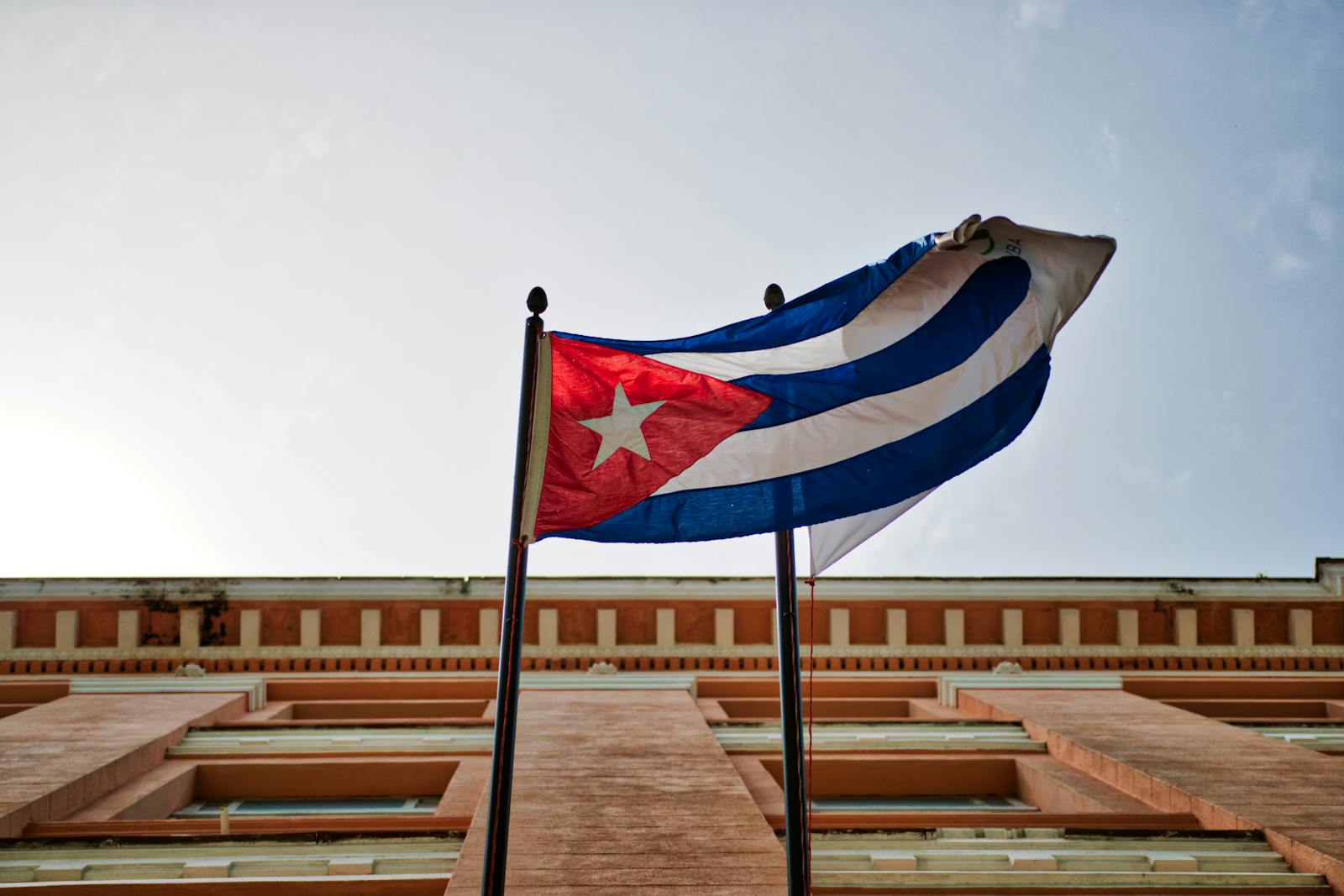
April 2026 marked a strange inflection in American foreign policy, the kind of week where two geopolitical conflicts that seemed to occupy entirely different centuries suddenly folded into one another. Reports emerged that the Trump administration began sharing intelligence with congressional committees suggesting that Cuba had been complicit in helping Russia prosecute its war against Ukraine. For longtime observers of U.S.-Cuba relations, the news landed like a cold echo from the Cold War era. The island, 90 miles off the coast, had always served as a mirror for whatever Washington feared most.
The specific nature of the alleged Cuban assistance remains tightly held. The briefings shared with Congress reportedly paint a picture of cooperation that goes beyond diplomatic sympathy, pointing instead to material involvement. The contours of that involvement, whether logistical, intelligence-sharing, or something more tangible, have not been fully detailed in public. But the political consequences are already taking shape, and those consequences will fall hardest on people who had no part in whatever Havana decided to do.
What makes this moment unusual is not the accusation itself. Cuba and Russia have maintained a relationship for more than six decades, one that survived the Soviet Union’s collapse, weathered the Obama-era thaw, and persisted through every iteration of American sanctions. What makes it unusual is the timing, and who benefits from the framing.
The Trump administration’s decision to surface this intelligence at this particular moment carries a specific political charge. Congressional debates over Ukraine funding have grown more fractious, with some Republican members questioning continued support. Simultaneously, pressure has mounted from the Florida delegation, always attuned to Cuba policy, for a harder line on Havana. The Cuba-Russia intelligence briefings serve both audiences at once. They recast the Cuba question as a Ukraine question, and the Ukraine question as a Cuba question. Two separate pressure points, compressed into a single narrative.
When intelligence is declassified or shared with Congress, the act of sharing is itself a policy move. The information may be accurate. The timing is always strategic. The substance of a briefing can be entirely factual while the decision to deliver it at a particular moment transforms it into something closer to persuasion. A piece of intelligence is a fact. A briefing is a speech act. The distance between those two things is where politics happens — and where the human consequences of geopolitical framing begin to accumulate.
When two separate concerns are linked, each one borrows emotional weight from the other. Cuba alone, for most Americans outside South Florida, registers as a low-grade irritant, a relic of a previous era’s anxieties. Russia’s war in Ukraine, while a genuine security concern, has become politically contested terrain where the appetite for engagement is declining. But Cuba helping Russia fight in Ukraine? That combination activates something older and more visceral. It merges Cold War muscle memory with present-day conflict. And once that fusion takes hold, it generates policy momentum that rolls over the people caught in its path.
Both elements are real. Cuba’s relationship with Moscow is real. Russia’s war is real. The fusion is in the framing, and framing is where political power lives. By casting Cuba as a participant in the Ukraine conflict, the administration creates a rationale for action that appeals to both the hawkish Cuba-policy wing of the Republican Party and the wing still committed to supporting Ukraine. It is a rare policy argument that can satisfy both Marco Rubio’s legacy constituency and the Lindsey Graham school of interventionism simultaneously.
A harder American posture toward Cuba, justified now by a war-complicity narrative, could mean tighter sanctions, reduced remittance flows, and a more hostile immigration environment for the very people who fled the regime. This is the recurring paradox of sanctions-based foreign policy toward authoritarian states. The government absorbs the pressure. The population absorbs the pain. The gap between those two outcomes is where lives get ground down, and it is a gap that rarely features in congressional briefings.
Consider a woman from Holguín province, 29 years old, who crossed into the United States through the southern border in 2023 after her husband was detained for attending a protest. She does not know about the intelligence briefings. She does not know that her country of origin is being discussed in classified committee rooms on Capitol Hill as a co-belligerent in a European war. She knows that her asylum case has been pending for three years and that her work authorization expires in six weeks. The geopolitical framing being constructed in Washington will shape her case, her options, her future — and it was built without a single thought about her.
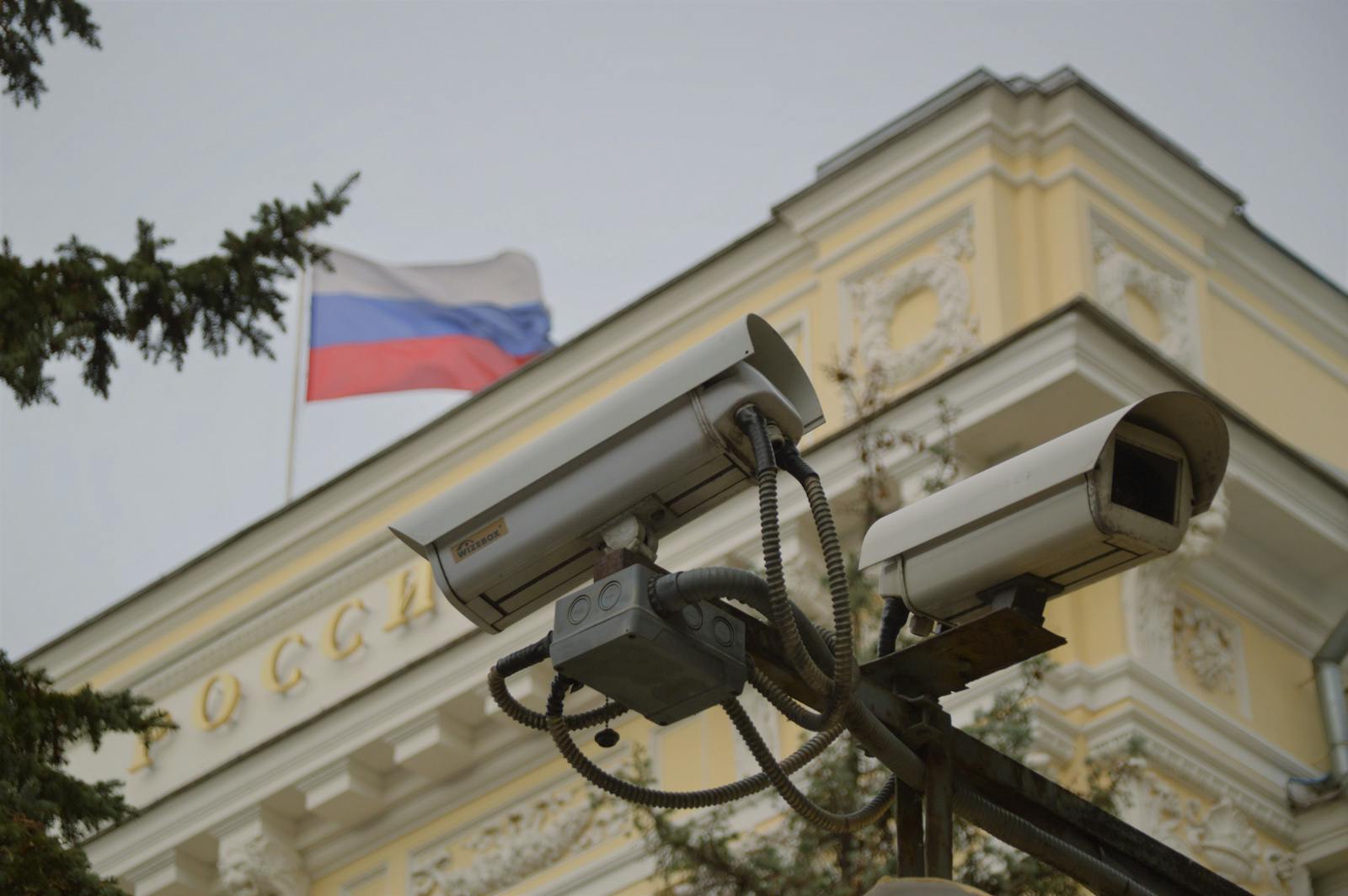
The broader context matters. Russia has been drawing on unconventional sources of military support since the war’s early months, from recruitment campaigns reaching across borders to reports of North Korean ammunition shipments and Iranian drone technology. The allegation that Cuba plays some role in this supply chain is not, on its face, implausible. The island’s military and intelligence services have maintained deep ties with Moscow for decades. Cuban military advisors operated in Africa alongside Soviet-backed forces throughout the 1970s and 1980s. The institutional relationships never fully dissolved.
But plausibility and proof occupy different categories, and the distinction matters. Congressional briefings, by their nature, occur in classified settings where the underlying evidence cannot be publicly scrutinized. Members leave the room with impressions, not documents. Those impressions become talking points, and talking points become policy momentum — the kind that tightens visa regimes, accelerates deportation proceedings, and freezes the remittance channels that families in Holguín depend on to eat.
Foreign policy researchers tracking the administration’s Latin America messaging have observed that the Cuba-Russia narrative fits within a broader pattern of reframing Western Hemisphere relationships through the lens of great-power competition. Venezuela’s ties to Iran. Nicaragua’s alignment with China. Cuba’s alleged assistance to Russia. Each bilateral relationship gets recast as a front in a larger confrontation, even when the actual scale of cooperation may be modest. The pattern of using U.S. foreign policy tools against Latin American figures and governments tied to adversarial networks has been accelerating. The Cuba briefings sit within that acceleration, another data point in a trajectory that has been building for months.
The effect of this reframing is to make Latin America feel like contested territory again. For decades after the Cold War ended, U.S. policy toward the region operated primarily through economic and migration lenses. The return of a security frame changes which agencies lead, which budgets grow, and which voices in Congress carry weight. It is an institutional shift disguised as an intelligence finding. And within that frame, diplomatic engagement with Cuba, already politically toxic in Washington, becomes nearly impossible. The intelligence briefing does not just describe a situation. It forecloses options.
Cuba’s government has made choices, real choices, that place it in Moscow’s orbit. The relationship is not an American invention. But neither is the timing of the disclosure accidental. And neither is the pattern of who pays the price when geopolitical narratives harden into policy.
The Cuba-Russia narrative will now move through Washington’s machinery. Committee chairs will reference it in floor speeches. Cable news segments will feature retired generals pointing at maps of the Caribbean. Op-eds will call for a renewed hard line. Whether the intelligence is accurate, whether Cuba’s involvement in Russia’s war effort is significant or marginal, whether the timing of the disclosure was driven by genuine security concerns or domestic political calculation — these questions will fade quickly. They always do. What remains is the narrative, and the narrative has already been built: Cuba is not just a problem from the past. It is a threat in the present, linked to the largest ground war in Europe since 1945.
For a 29-year-old woman from Holguín sitting in a Miami law office, that narrative is a weather system forming somewhere far away, invisible but approaching, about to shape conditions she cannot control and barely understands. She just wants to know if she can keep working. Her husband protested the government that Washington now says is aiding Moscow. She fled that government. And the policy designed to punish it will land on her.
That is the constant, brutal arithmetic of geopolitical framing: the people who suffer most under a regime become indistinguishable from it the moment Washington decides to draw a harder line. The briefing slides will circulate. The sanctions will tighten. And the woman from Holguín will not appear in a single one of them.