
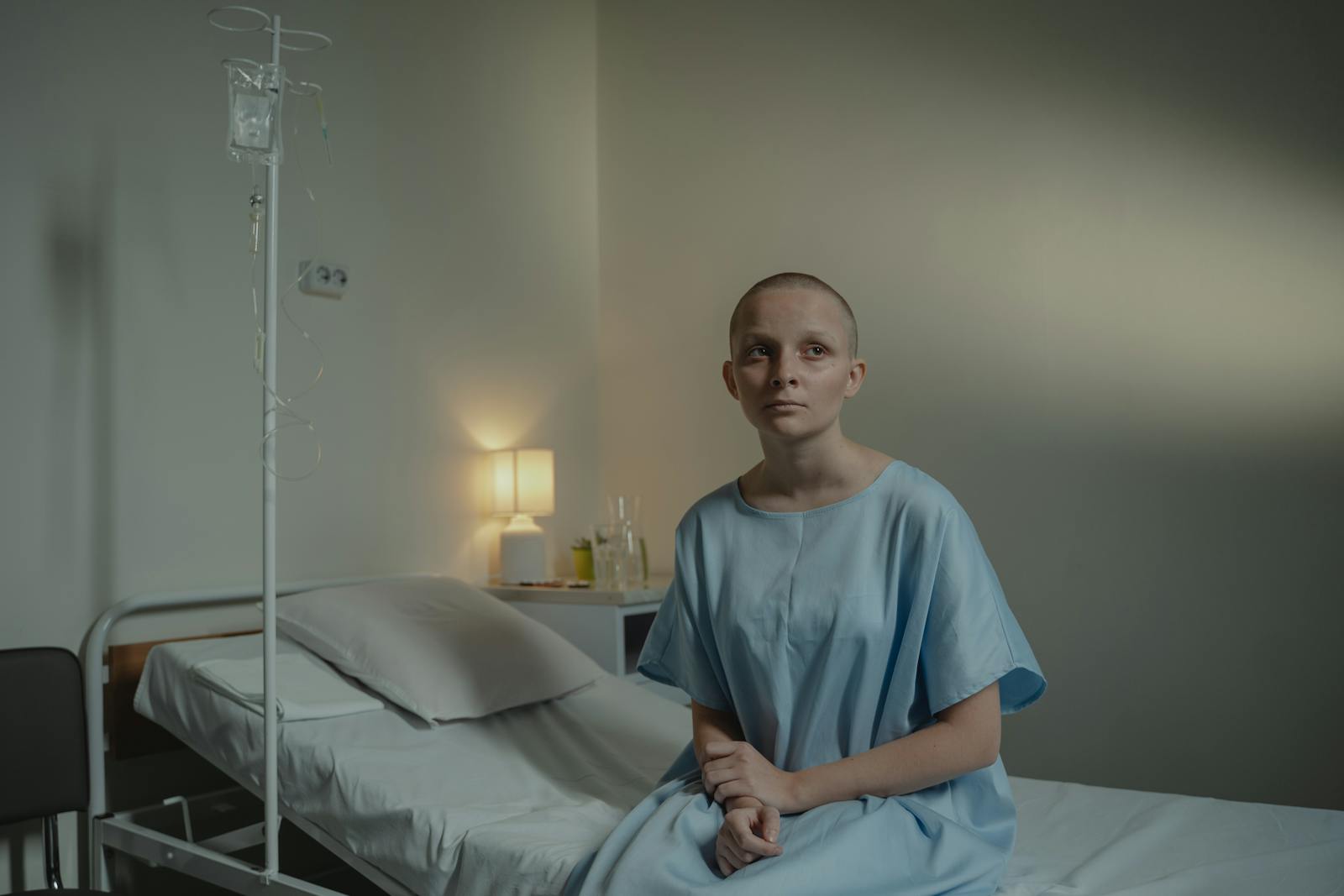
Margaret Hensley, 71, sat in her GP’s office in Sheffield for the fourth time in six weeks. Her complaints were familiar: chest tightness, sleeplessness, a persistent ache in her lower back that no scan could explain. Her doctor had run every test. Everything came back normal. This time, instead of ordering another round of bloodwork, the doctor handed her a referral — not to a specialist, but to a Wednesday morning gardening club at a community center three streets from her flat. “I thought she was taking the piss,” Hensley told a local reporter covering the program. “I came in with chest pain and she told me to go plant tomatoes.”
Margaret Hensley’s experience is not unusual. Across the United Kingdom, the practice known as “social prescribing” has expanded into a formal arm of the health system, and it is now being adopted in pockets of the United States, Canada, and Australia. The premise is almost embarrassingly simple: some of the people showing up in doctors’ offices with insomnia, chronic pain, anxiety, and vague cardiac symptoms are not sick in any way a pill can fix. They are alone. And the health system, after decades of building infrastructure to treat bodies as machines with malfunctioning parts, is quietly trying to treat the absence of human connection as a medical condition.
The politics of this are stranger and more revealing than they appear.

Consider what it means for a state to formally acknowledge that loneliness is a clinical problem. The United Kingdom appointed a Minister for Loneliness in 2018. The U.S. Surgeon General issued an advisory on the epidemic of loneliness in 2023. These were symbolic gestures, largely treated as soft news. Social prescribing is different. It involves budget lines, staffing models, referral pathways, and outcome metrics. It is infrastructure. And infrastructure reveals what a political system actually believes, as opposed to what it says in press releases.
What the infrastructure of social prescribing reveals is a quiet admission: the modern health care system has been treating symptoms of social collapse as individual pathologies. Depression that stems from isolation gets an SSRI. Insomnia rooted in purposelessness gets a sleep hygiene pamphlet. Chronic pain amplified by having no one to talk to gets an opioid prescription or, more recently, a referral to a pain management clinic where a patient sits in a waiting room full of other people in pain, none of them speaking to each other.
Health care providers describe a pattern they see in their clinics. Research suggests that a significant portion of patient complaints may be better explained by loneliness than by any identifiable disease process. A retired woman with fibromyalgia whose pain spikes correlate with periods of social isolation. A young software developer with irritable bowel syndrome that improves during visits with friends. A widower whose blood pressure dropped after he started volunteering, with no medication change.
Many clinicians do not have formal social prescribing programs at their disposal. Some have compiled lists of community organizations themselves, printed on sheets of paper they keep in their desk drawers. They give these to patients sometimes and feel vaguely guilty about it, as though recommending a pottery class is a dereliction of medical duty.
That guilt is itself a political artifact. The professionalization of medicine over the past century created a very specific contract between patient and provider: you bring me your body, I apply science to it, and we both agree to ignore everything that science can’t measure. Social prescribing breaks this contract. It says, explicitly, that the doctor’s job extends beyond the body into the social conditions that produce bodily suffering. And the resistance to this idea, when it surfaces, comes from an unexpected direction.
It comes from patients.
Some patients referred to community connector programs express resistance to the approach. These patients came to the doctor for physical symptoms and feel that being referred to social activities downgrades their suffering. The implication, in this framing, is that the system is saying their pain isn’t real enough to merit a medical response.
This reaction is not irrational. It is the product of decades of conditioning in which legitimacy of suffering is conferred by diagnosis. If you get a prescription, your pain is real. If you get a pamphlet about a walking group, something else is being communicated. What the system was trying to say was closer to: your problem is serious in a way we don’t have a pill for.
The gap between those two messages is where the politics of social prescribing actually live.

Because this is not just a health care story. Social prescribing is an institutional response to a structural failure, and the structural failure is not medical. It is civic. The organizations that once provided the connective tissue of daily life, churches, unions, fraternal lodges, bowling leagues (research has documented this decline over recent decades) have weakened or disappeared in many communities. Studies indicate that the United States lost a significant portion of its civic organizations in the late twentieth and early twenty-first centuries. What replaced them was not nothing; it was screens, algorithms, and the illusion of connection that digital platforms provide without the friction and warmth of actual human presence.
Social prescribing asks the health care system to repair what the civic system broke. This is a peculiar burden to place on doctors and nurses, and the awkwardness of it shows up in implementation. In the UK, where the model is most mature, the National Health Service employs link workers who serve as intermediaries between clinics and communities. The approach has drawn growing attention from health systems worldwide as evidence mounts that social isolation carries significant mortality risks.
In the United States, where no national system exists, the approach is more fragmented. Some Medicare Advantage plans have started offering social prescribing-adjacent services. A handful of academic medical centers have piloted programs. But the American health care payment model, built around billable procedures and diagnostic codes, actively resists anything that cannot be coded, billed, and audited. A pill has a manufacturer, a price, a clinical trial, and a reimbursement pathway. A walking group has none of these things. And the political tension runs deeper than payment mechanics: social prescribing challenges the assumption, shared across much of the American political spectrum, that health is fundamentally an individual responsibility manageable through individual interventions. Conservatives tend to see health as a matter of personal discipline. Liberals tend to see it as a matter of access to care. Both frameworks position the individual as the unit of analysis. Social prescribing says the unit of analysis is the relationship. The absence of relationships is not a lifestyle choice or an access problem; it is a condition produced by how communities are structured, how work is organized, how neighborhoods are designed, and how people learn, or fail to learn, to sustain human connection.
Social workers who work as community link workers for pilot programs describe their daily experience. They spend most of their day on the phone with patients who have been referred by their primary care doctors. The most common thing they hear is not resistance but confusion. People do not know how to find a community group. They do not know what exists. They moved to the neighborhood years ago and never met anyone on their block. They work from home. They shop online. Their church closed during the pandemic and never reopened. The link workers maintain databases of local organizations, updated regularly, and match patients to opportunities based on interest, mobility, and temperament. They follow up. They call back. The work is relational and time-intensive and does not produce the kind of data that impresses hospital administrators.
And yet the evidence on social isolation and health outcomes is not ambiguous. Lonely people die sooner. They develop dementia at higher rates. They recover from surgery more slowly. Their immune systems function less effectively. Their pain thresholds are lower. These are not soft findings from wellness blogs; they are robust epidemiological patterns documented across populations and cultures. In the UK, the NHS absorbs the cost of social prescribing, justified partly by the argument that it reduces GP visits and emergency department use. Early evidence supports this, though the studies are small and the counterfactuals hard to establish. In the United States, the pharmacological approach to treating symptoms remains the path of least institutional resistance.
The political psychology of social prescribing is also worth examining for what it says about institutional trust. Programs like government initiatives that touch personal life tend to generate suspicion on all sides. Libertarians see paternalism. Progressives worry about underfunding. Clinicians worry about scope creep. Some patients feel insulted. Each of these objections contains a legitimate concern, and none of them addresses the underlying reality: millions of people are showing up in medical settings because they have nowhere else to go with their suffering, and the suffering is rooted not in pathology but in the absence of other human beings who know their name.
Patients who participate in social prescribing programs often report improvements. Blood pressure decreases. Sleep improves. Many attribute this not to the physical activity itself but to regular social interaction. People describe not having realized how little they’d been talking until they started talking again. They had adjusted to silence the way a person adjusts to a low-grade headache, by forgetting what its absence felt like.
That forgetting is the thing that social prescribing, at its most honest, is trying to reverse. Not connection as a medical intervention, instrumentalized and measured and stripped of its meaning. But the recognition that a person who has stopped expecting anyone to show up in their life will eventually stop experiencing that absence as a loss. The body still registers it. The blood pressure still rises. The sleep still fragments. The pain still sharpens. The system finally noticed, and its best idea so far is to write it on a prescription pad, because that is the only language it knows.
The prescription is not the point. The walking group is not the point. The point is that an entire civilization built systems to keep people alive and forgot to build systems to keep people together. Now the system designed for the first task is being asked to perform the second, and the discomfort everyone feels about it — the patients, the doctors, the policymakers — is the discomfort of watching an institution try to compensate for something it was never designed to provide. It is the discomfort of a society looking in a clinical mirror and seeing not a diagnosis but an absence, the slow erosion of the ordinary infrastructure of belonging that once made medical intervention for loneliness unnecessary.
The loneliest people in the wealthiest countries on earth are being told by their doctors to go make a friend. That this qualifies as a medical breakthrough says less about medicine than it does about everything medicine was supposed to be irrelevant to. Margaret Hensley, for what it’s worth, went to the gardening club. She went back the next week, and the week after that. Her chest tightness has not disappeared entirely. But she sleeps better now. She knows the names of four people on her street. Her doctor has not seen her in two months. No one is sure which line of the budget to credit.