
Denise Cortez hadn’t walked for exercise in eleven years. Not once. The 48-year-old paralegal from Tucson had a gym membership she’d been paying for since 2019 — a monthly $34 guilt tax, she called it — and she couldn’t remember the last time she’d scanned her keycard at the door. Then, six weeks into her semaglutide prescription, she found herself lacing up running shoes at 6:15 on a Tuesday morning. Not because her doctor told her to. Not because she’d watched a motivational reel or set a fitness goal. She just — wanted to.
“It was like waking up and suddenly craving a food you’d never liked before,” she told me. “Except the food was moving my body.”
Her story isn’t unusual. It’s becoming so common, in fact, that neuroscientists are starting to pay serious attention — not to the weight loss these drugs produce, but to the strange, unprescribed behavioral shifts showing up alongside it. People who hated exercise are seeking it out. People who couldn’t maintain a walking habit for a week are training for 5Ks. And the explanation may go far deeper than “they lost weight and felt motivated.”
Something appears to be changing in the brain itself.
The conventional narrative around GLP-1 receptor agonists like semaglutide — sold as Ozempic and Wegovy — is straightforward: the drugs suppress appetite, people eat less, they lose weight. End of story. But researchers at institutions including the University of Pennsylvania and Gothenburg University in Sweden are documenting a phenomenon that doesn’t fit neatly into that box. As we’ve explored previously, GLP-1 receptors aren’t limited to the gut. They’re densely concentrated in the brain’s mesolimbic dopamine system — the circuitry that governs motivation, reward anticipation, and the feeling of wanting something before you get it.
This is where things get genuinely fascinating. Motivation isn’t a personality trait. It’s neurochemistry. And the drugs seem to be recalibrating it.
A 2023 study published in Nature Medicine found that patients on semaglutide showed increased physical activity levels independent of weight loss — meaning the movement came before the body changed, not after. A separate analysis from researchers at the Cleveland Clinic examining electronic health records of over 100,000 patients noted significantly higher rates of self-reported exercise among GLP-1 users compared to controls, even when adjusted for BMI changes.
Marcus Redding, a 53-year-old IT project manager in Charlotte, North Carolina, had been sedentary for most of his adult life. His doctor prescribed Wegovy primarily for cardiovascular risk reduction. Within two months, Marcus had started cycling — something he hadn’t done since college. “I didn’t have a come-to-Jesus moment about fitness,” he said. “I just noticed one Saturday that I wanted to ride a bike more than I wanted to sit on the couch. That had literally never happened before.”
What Marcus is describing — a shift not in discipline but in desire — aligns with what neuroscientists call reward revaluation. Dr. Scott Kanoski at USC’s Dornsife College has published extensively on how GLP-1 receptors in the ventral tegmental area and nucleus accumbens modulate dopaminergic signaling. His research suggests these drugs don’t just reduce the reward value of food — they appear to shift the entire landscape of what the brain finds rewarding. The dopamine system doesn’t operate in silos. When you dampen one reward pathway, others can become relatively more salient. Exercise, which already triggers endogenous dopamine release, may suddenly register as more appealing when competing rewards — hyperpalatable food, alcohol, compulsive shopping — have been turned down.
This has implications far beyond weight management, and ongoing coverage of this phenomenon is beginning to frame it as one of the more significant neurological stories of the decade.
Think about what we’ve always told people about exercise: just do it, push through, build habits, be disciplined. The entire framework assumes that the gap between knowing exercise is good and actually doing it is a willpower problem. But what if, for millions of people, the gap was never about willpower at all? What if it was a reward-system configuration issue — a brain that simply didn’t code movement as worth pursuing?

Yoon-Ji Park, a 36-year-old graphic designer in Seattle, had spent years in therapy exploring why she couldn’t stick with any exercise routine. She’d internalized it as a character flaw — laziness, self-sabotage, lack of grit. Three months on tirzepatide, she’s doing yoga four mornings a week. “My therapist and I spent two years unpacking my relationship with movement,” she said. “Turns out my brain just needed a different chemical environment.”
That sentence is quietly revolutionary. And it sits at the center of a growing tension in how we think about motivation, identity, and the body.
There’s a cultural discomfort with the idea that a drug could make you want to be active. It feels like cheating — as though the desire to exercise only counts if it emerges from some pure internal well of determination. This is the same discomfort that shadows every conversation about these medications, the same identity-level friction we see in people who can’t separate their sense of self from a single defining structure — whether that structure is a career, a body size, or a belief about what effort is supposed to feel like.
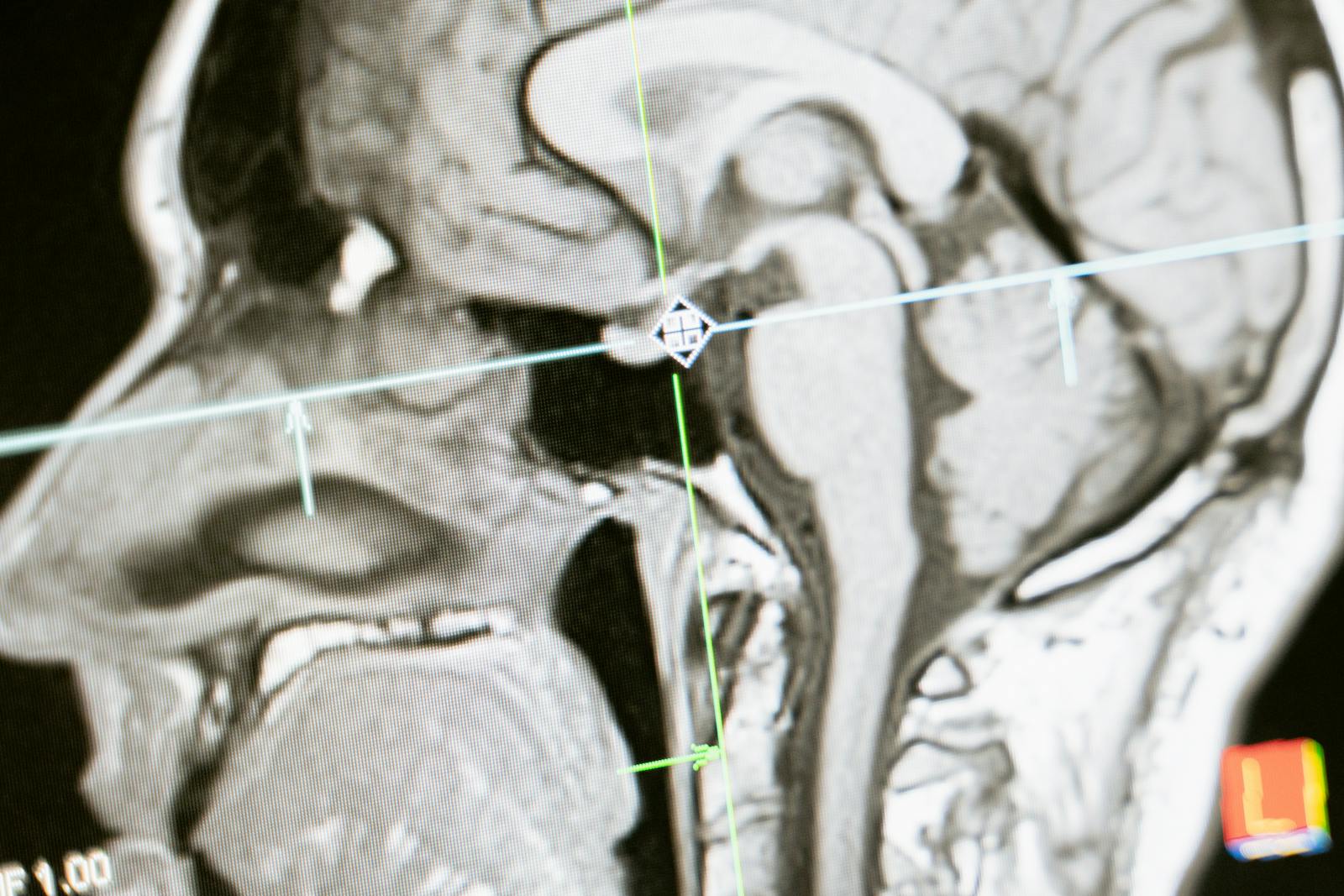
But the neuroscience doesn’t care about cultural narratives. GLP-1 receptors in the brain respond to these drugs with measurable shifts in dopamine transmission. Functional MRI studies are beginning to show altered activation patterns in reward-associated regions. The brain isn’t being tricked. It’s being tuned.
And here’s what makes this story even more layered: the exercise itself then generates its own neurochemical feedback. Movement produces endorphins, BDNF, endocannabinoids. It reinforces its own reward signal. So the drug may serve as a kind of neurological catalyst — a starter motor that, once it kicks the engine over, allows the engine to run on its own fuel. Some clinicians are already speculating that the exercise habits formed on these medications may persist even after the drugs are discontinued, though long-term data is still sparse.
As research into this behavioral shift deepens, the questions it raises extend far past any single drug. If motivation is more neurochemical than moral — if the reason someone doesn’t exercise is less about character and more about receptor density in the ventral striatum — then decades of shame-based fitness culture start to look not just ineffective, but fundamentally wrong.
Denise still walks every morning. She’s up to three miles. She doesn’t think of it as discipline. She thinks of it as something her brain finally figured out how to want. And the fact that a medication helped her brain get there doesn’t make the walks less real, or the sweat less earned, or the sunrise less worth seeing at 6:15 on a Tuesday in the desert.
What’s shifting isn’t just waistlines. It’s the entire premise that wanting to move your body is something you either have or you don’t — that it’s a fixed trait rather than a tunable signal. For millions of people who spent years believing their inability to exercise was a moral failure, that shift doesn’t feel like a side effect. It feels like permission to finally stop blaming themselves for a problem that was never really theirs to solve through sheer force of will.
Feature image by Tara Winstead on Pexels