- Tension: We obsess over brain-training apps and cognitive optimization, yet the activity neuroscientists keep flagging as unusually beneficial is standing still in a park watching birds — an activity most people associate with retirement and irrelevance.
- Noise: Modern hobbies either deplete directed attention (gaming, work) or mimic restoration while increasing rumination (social media scrolling). Birdwatching occupies a rare cognitive sweet spot — combining soft fascination with active perceptual discrimination — that almost nothing else reliably produces.
- Direct Message: Attention isn’t just a resource to be managed — it’s a capacity that atrophies when only pointed at tasks and screens, and regenerates when given something alive, unpredictable, and entirely unconcerned with your engagement.
To learn more about our editorial approach, explore The Direct Message methodology.
Derek, a 51-year-old software architect in Portland, hadn’t taken a real lunch break in six years. He ate at his desk, scrolled through Slack, and considered a walk to the coffee machine a form of movement. Then his therapist — who’d been gently suggesting he find something outside of screens — handed him a used copy of The Sibley Guide to Birds. “I thought she was joking,” he told me. “I’m not a nature guy. I’m not a retirement guy. I associated birdwatching with people who had given up on being interesting.”
Three months later, Derek was waking up at 5:45 a.m. on Saturdays — voluntarily — to stand in a wetland with binoculars, trying to distinguish a Wilson’s warbler from a yellow warbler by the black cap on its head. He described the experience with a word I didn’t expect: electric.
Here’s the contradiction that caught my attention. We live in a culture that fetishizes optimization — brain-training apps, nootropics, productivity systems designed to squeeze cognitive performance out of every waking minute. And yet the activity that neuroscientists are quietly calling one of the most cognitively enriching things a person can do is… standing very still in a park, looking at birds.
It’s not that birdwatching is relaxing — though it is. It’s that birdwatching activates a specific cognitive pattern that researchers call soft fascination, and it’s a pattern that almost nothing else in modern life reliably triggers.
The concept comes from Attention Restoration Theory, developed by environmental psychologists Rachel and Stephen Kaplan in the 1990s. Their framework distinguishes between two types of attention: directed attention — the effortful, top-down focus we use for work, screens, and problem-solving — and involuntary attention, the kind that’s drawn out by environments and stimuli that are interesting but not demanding. Soft fascination sits in that second category. It’s the mental state produced by things like watching clouds, hearing water move over rocks, or — as it turns out — scanning a tree canopy for the source of a particular song.
What makes birdwatching unusual, even among nature activities, is that it layers soft fascination with what cognitive scientists call active perceptual discrimination. You’re not just passively absorbing scenery. You’re identifying shapes, filtering sounds, comparing patterns against mental models, making rapid categorizations. It’s a gentle but genuine cognitive workout — the kind that engages working memory and pattern recognition without triggering the stress response that directed attention fatigue produces.
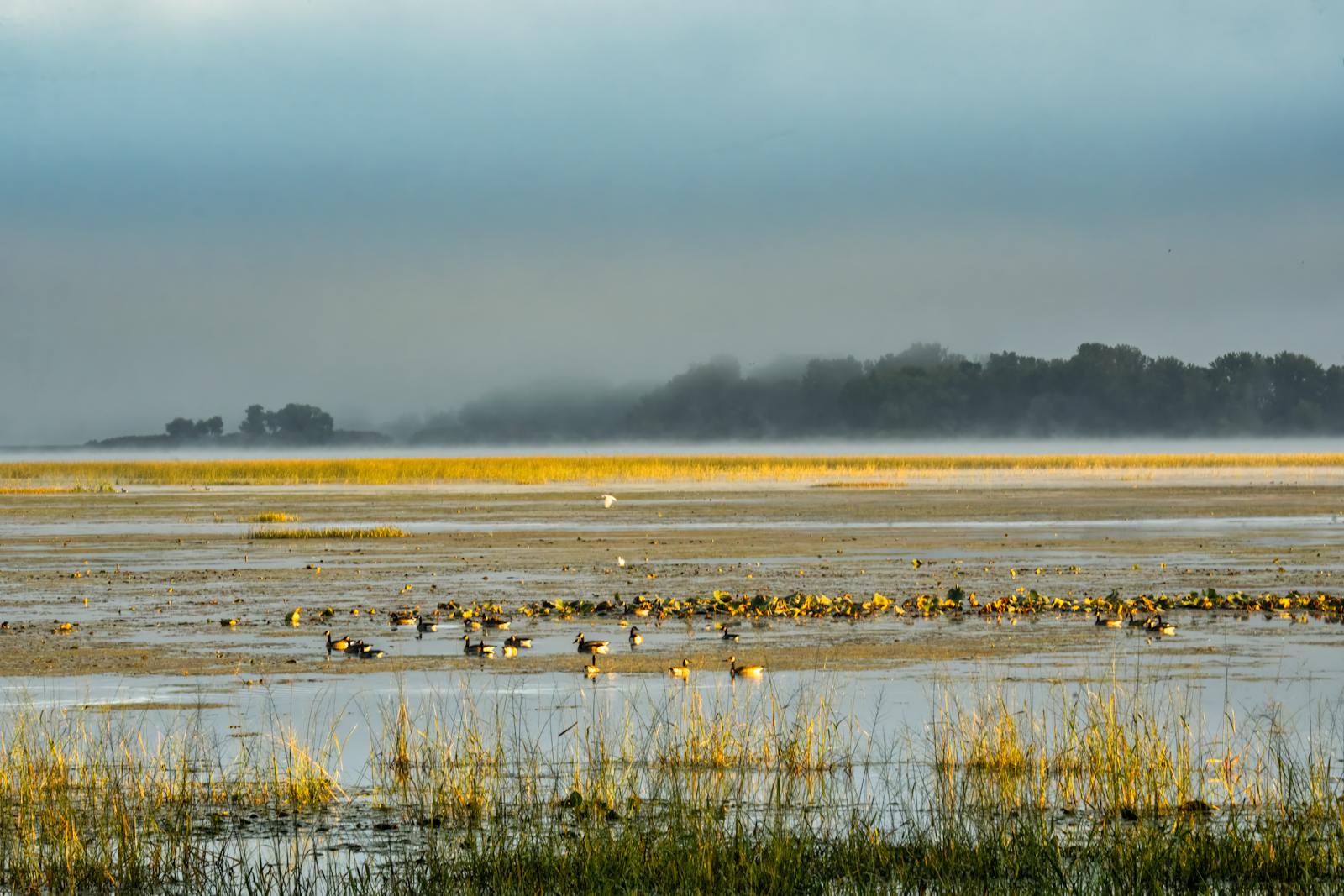
A 2022 study published in Scientific Reports tracked over 1,200 participants using a smartphone app and found that encountering birds — even just hearing them — was associated with significant improvements in mental well-being that lasted for hours afterward, even in people with depression diagnoses (Hammoud et al., 2022). The effect wasn’t just about being outdoors. It was specifically tied to bird encounters. Trees alone didn’t do it. Flowers alone didn’t do it. Something about the presence of birds — their unpredictability, their movement, the way they demand a particular quality of noticing — created a cognitive shift that other natural stimuli didn’t replicate.
Nora, a 38-year-old middle school teacher in Austin, started birding during the pandemic lockdowns and never stopped. “I’ve tried meditation apps, journaling, yoga — all the things you’re supposed to do,” she said. “Birdwatching is the only thing that actually gets me out of my own head. Not because it empties my mind, but because it fills it with something that isn’t me.” What Nora is describing — without using the clinical language — is a phenomenon psychologists call decentering: the ability to observe your own thoughts and emotions from a slight distance. It’s a core mechanism in mindfulness-based cognitive therapy, and it turns out that activities requiring sustained external attention in low-threat environments naturally produce it.
This matters because most modern hobbies don’t do this. Think about what we typically turn to for relaxation or mental enrichment. Streaming content is passive and often emotionally activating. Gaming engages directed attention intensely — it’s cognitively demanding in a way that depletes the same attentional reserves we use for work. Social media scrolling mimics soft fascination — it feels effortless — but research consistently shows it increases rumination rather than reducing it. As we explored in a recent piece about spending time alone without boredom, the ability to settle into an unstructured experience — without reaching for a screen — is increasingly rare, and increasingly valuable.
Birdwatching occupies a cognitive sweet spot that’s almost paradoxical: it demands attention without demanding effort. It rewards patience without punishing failure. You can’t optimize it. You can’t win at it. There’s no leaderboard, no streak to maintain, no algorithm learning your preferences and feeding you a more efficient version of the experience.
Marcus, a 44-year-old financial analyst in Chicago, put it differently. “Every other thing I do has metrics. My runs have pace and distance. My reading has pages per week. Even cooking — I’m always trying to improve the recipe. Birding is the only activity where I just… notice. I don’t have to be better at it than I was yesterday.” What Marcus is describing maps onto something psychologists call non-instrumental engagement — participating in an activity for its own sake rather than for a measurable outcome. It sounds simple. It is vanishingly rare in adult life.

There’s a deeper layer here, too. A growing body of research on what’s called cognitive reserve — the brain’s resilience against age-related decline — suggests that activities combining physical movement, sensory engagement, and learning new classification systems are uniquely protective. A 2023 study from King’s College London found that the act of learning to identify species — any species, but birds especially, because of their accessibility and variety — activates hippocampal networks associated with spatial memory and episodic recall (Cox et al., 2023). In other words, birdwatching doesn’t just feel restorative. It may be structurally protective. As we discussed in a piece on habits that keep people looking and feeling younger after 60, the common thread isn’t any single dramatic intervention — it’s sustained, low-intensity engagement with the world in ways that keep the brain building new connections.
And then there’s the social dimension, which surprised me. Birdwatching — especially through community groups like local Audubon chapters or eBird reporting networks — creates what sociologists call weak-tie social bonds: connections that aren’t intimate but are consistent, pleasant, and organized around a shared external interest rather than personal disclosure. These bonds are exactly the kind that younger generations are often missing — not deep friendships, but the texture of belonging that comes from standing next to a stranger who also just spotted a painted bunting and is equally thrilled about it.
Joanna, a 67-year-old retired nurse in Savannah, told me she joined a birding group after her husband passed away. “I didn’t want a grief support group. I didn’t want to talk about my feelings. I wanted to be around people who were looking at something beautiful and could teach me things I didn’t know.” She paused. “That turned out to be the most healing thing I could have done. Not because it fixed anything. Because it reminded me that my attention was still worth giving to something.”
This is what I keep circling back to. We treat attention as a resource to be managed — something we’re always running out of, something we need to protect or recover. And that framing isn’t wrong. But birdwatching suggests something more interesting: that attention isn’t just a resource. It’s a capacity. One that atrophies when it’s only ever pointed at tasks, screens, and self-referential thought — and one that regenerates when it’s given something alive, unpredictable, and entirely unconcerned with whether you’re watching or not.
The bird doesn’t care if you see it. It doesn’t perform for your engagement metrics. It doesn’t optimize its song for your attention span. And maybe that’s exactly why noticing it — really noticing it, the tilt of its head, the specific quality of its call, the way it moves through space with an intelligence you can’t quite name — does something to your brain that another hour of screen time never will.
Derek still writes code all day. But he told me something that stuck with me long after our conversation. “I used to think being sharp meant being fast. Now I think being sharp means being able to notice. And I had almost completely lost that.” He said it quietly, like someone who’d found something he hadn’t realized was missing — which is, I think, the only honest way to describe what happens when you stop trying to optimize your brain and start letting a small, indifferent creature remind you how to use it.
As one writer reflected after losing his father before retirement, we keep deferring the things that actually sustain us — the slow, quiet, unproductive things — as if they’ll wait. Sometimes they do. Sometimes what’s waiting is a warbler in a tree you walk past every single day without looking up.
Feature image by Yaroslav Shuraev on Pexels