
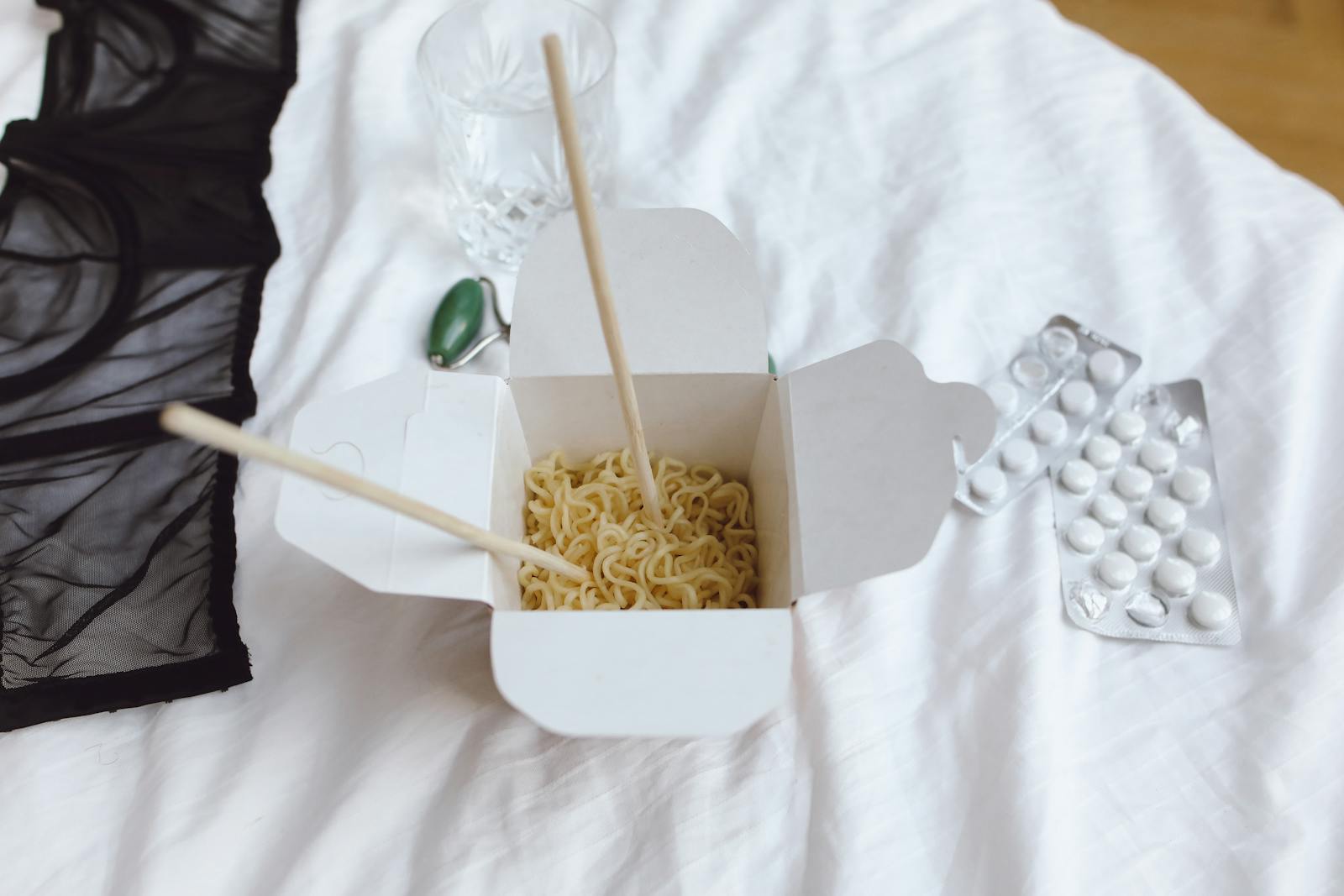
Elena Ruiz, a 51-year-old pediatric nurse in San Antonio, didn’t think much about her 9:15 p.m. dinners. She’d get home from a twelve-hour shift, decompress for twenty minutes, then heat up whatever her husband had cooked hours earlier. A plate of rice and chicken. Maybe leftover enchiladas. She’d eat standing at the counter sometimes, scrolling her phone, barely tasting it. When her bloodwork came back with elevated triglycerides and borderline high blood pressure last March, her doctor asked a question she didn’t expect: “What time do you eat your last meal?”
Not what she was eating. When.
Elena isn’t an outlier. According to a 2023 study published in Circulation Research, the American Heart Association’s flagship journal, eating after 9 p.m. was associated with a significantly elevated risk of cardiovascular events — including heart attack and stroke. But the finding that rattled researchers wasn’t the 9 p.m. number. It was what happened when they looked more closely at when the first and last bites of the day occurred. The real inflection point for cardiovascular risk appeared even earlier — around 8 p.m. — and eating a larger proportion of daily calories after that mark was linked to measurably worse outcomes for blood pressure, blood sugar regulation, and inflammatory markers.
Most people hear “don’t eat late” and think midnight snacks. Fast food runs after a concert. The reality is far more mundane. The cutoff that seems to matter most falls squarely inside the window when most American families are just sitting down to eat.

The research driving this conversation comes primarily from the NutriNet-Santé cohort, a massive French study tracking over 100,000 participants. A December 2023 analysis in Nature Communications found that each hour of delay in the last eating occasion was associated with a 6-7% increase in cerebrovascular disease risk. The mechanism isn’t mysterious. When you eat late, your body is being asked to process glucose and fat during a phase when circadian biology has already begun shifting toward repair and sleep. Insulin sensitivity drops. Melatonin — which rises in the evening — interferes with pancreatic function. Your cardiovascular system, which is supposed to be downregulating, stays activated.
Dr. Ravi Chandra, a cardiologist in Portland who has been incorporating chrono-nutrition into his practice for two years, puts it bluntly: “We’ve spent decades arguing about macronutrients — fat versus carbs, protein ratios. And it turns out the clock on the wall might matter just as much as the food on the plate.”
This is the kind of pattern that hides in plain sight. We’ve long known that shift workers have higher rates of heart disease, diabetes, and metabolic syndrome. But the assumption was that this stemmed from disrupted sleep or job-related stress. The emerging picture suggests something more specific: the misalignment between eating windows and circadian rhythm creates its own distinct cardiovascular burden. You don’t have to work the night shift to experience it. You just have to eat like you do.
Marcus Leung, a 38-year-old software developer in Seattle, started tracking his eating window after reading about time-restricted eating on a longevity podcast. He’d been finishing dinner around 9:30 most nights — sometimes later when he got absorbed in code. “I wasn’t eating junk,” he told me. “I was eating salmon and vegetables. I genuinely thought it was healthy.” When he shifted his last meal to 7 p.m., the first thing he noticed wasn’t weight loss or improved labs. It was that he slept differently. Deeper. More consistently. His resting heart rate on his fitness tracker dropped four beats per minute within a month.
That tracks with the science. As we explored in a recent piece on how weight-loss drugs are unexpectedly changing exercise motivation, the body’s metabolic and behavioral systems are far more interconnected than we once assumed. Change one input — timing, medication, movement — and cascading effects ripple through systems we didn’t realize were linked. The heart doesn’t exist in isolation from the gut clock.
What makes this research particularly uncomfortable is that it collides with how modern life actually works. The cultural norm of the “family dinner” has drifted steadily later over the past forty years. Dual-income households, after-school activities, long commutes — all of it pushes the evening meal toward 8 or 9 p.m. In many cultures, eating at 10 p.m. isn’t just normal; it’s tradition. Spanish cena, Korean late-night dining culture, the Italian seconda cena — there’s a global pattern of socializing and eating well into the evening hours.

And yet the biology doesn’t negotiate with cultural preference.
Tanya Breckenridge, 44, a high school principal in Atlanta, felt this tension acutely when she tried to move dinner earlier. Her kids had practice until 7. Her husband didn’t get home until 7:30. “Eating at 6 p.m. would mean eating alone,” she said. “And the whole point of dinner in our house is connection.” She compromised by making the 8 p.m. meal lighter — a soup, a salad — and eating her larger meal at lunch. She doesn’t know if it’s enough. No one really does yet.
That uncertainty is worth sitting with. The research is observational, not interventional. Correlation is doing heavy lifting here, and the NutriNet-Santé cohort, while enormous, is predominantly French — a population with distinct dietary and lifestyle patterns. Researchers are careful to note that confounders abound. People who eat late may also sleep less, exercise less, experience more stress. Disentangling the timing effect from the lifestyle effect is an ongoing challenge, similar to how scientists have found that common age-related findings don’t always mean what we think they mean — context shapes interpretation.
Still, the mechanistic evidence is hard to dismiss. Controlled lab studies show that identical meals produce different glucose spikes depending on time of day. Your 7 a.m. toast and your 10 p.m. toast are not, metabolically speaking, the same food. Evening meals generate higher postprandial glucose, lower diet-induced thermogenesis, and altered lipid profiles. The body processes the same calories with measurably less efficiency as the day progresses.
Dr. Chandra has started telling patients something that surprises them: “I care less about whether you cut carbs or go keto. I want to know if you’re done eating by eight.” He acknowledges it’s a simplification. But simplifications that move people toward better outcomes have their place — much like how simple financial rules can outperform complex strategies precisely because people actually follow them.
The deeper pattern here isn’t really about dinner. It’s about a slow-building reckoning with the idea that when we do things may matter as much as what we do — a concept researchers call chrono-misalignment. We optimize the content of our lives obsessively. The food. The supplements. The workout split. But the temporal architecture of a day — when we eat, when we move, when we see light, when we sleep — operates as a kind of invisible scaffolding that either supports or undermines everything we stack on top of it.
As emerging research into metabolic drugs and behavioral change suggests, the body keeps a ledger we’re only beginning to read. It tracks not just calories and nutrients, but rhythms. Patterns. The regularity or irregularity of signals arriving at expected or unexpected hours.
Elena, the San Antonio nurse, eventually shifted her eating. Not dramatically. She packs a larger meal to eat at the hospital around 5:30 p.m. and has something small — a handful of almonds, some yogurt — when she gets home at 8. She says she doesn’t feel deprived. She feels like she found a loophole. “I was eating the same food. I just moved it. And my numbers came down.”
She pauses when she talks about it, like she’s still slightly disbelieving. Not that it worked — but that something so obvious had been invisible for so long. That the answer wasn’t a new diet or a new drug or a harder workout. It was a clock. The same one that had been on her kitchen wall for fifteen years, ticking away while she ate enchiladas at a quarter past nine, not knowing her heart was listening.
Feature image by Polina Tankilevitch on Pexels