

The most consequential front in the U.S.-China AI contest is not superintelligence, bioweapons, or drone swarms — it is the boring commercial layer where Chinese models are already cheaper, Chinese factories already dominant, and Chinese infrastructure already embedded in the countries Washington needs on its side. That is the argument buried inside The Atlantic’s recent look at what a Chinese AI victory would actually mean, and it sits awkwardly against the catastrophic framing that has come to dominate Washington’s AI discourse.
Start with the price sheet, because that is where the contest is actually being settled. The Atlantic’s reporting describes the leading models from Chinese firms — Moonshot AI, Z.ai, DeepSeek, Alibaba — as by most accounts nearly as capable as what OpenAI, Anthropic, or Google offer, and far cheaper to run. For a company weighing an enterprise deployment, that combination does most of the deciding on its own.
Multiply that calculation by tens of thousands of procurement decisions a month across Europe, Southeast Asia, Latin America, and Africa, and you get the actual shape of the race. No geopolitical calculation, no ideological choice. A spreadsheet.
The dominant framing in U.S. policy circles is different. It is the framing of the influential 2024 AI white paper that warned a decisive economic and military advantage would flow to whichever country reaches artificial general intelligence first. It is the framing Anthropic CEO Dario Amodei has offered in his public essays, which warn of an AI-enabled totalitarian nightmare led by Beijing and of models capable of walking an amateur through the creation of a biological weapon. It is the framing prominent voices in the tech policy world have reached for when calling this a hot Cold War II, and when claiming the AI race matters more than the Space Race did.
The catastrophic frame has a specific structure. It assumes a threshold — superintelligence, weaponized biology, autonomous swarms — that, once crossed, cannot be uncrossed. It assumes the other side crossing first is game over. It assumes months of lead time matter existentially.
R. David Edelman, an MIT AI-policy researcher who served on the Obama-era National Security Council, has questioned the logic that a six-month AI advantage would be militarily decisive. That is not a fringe view. It is a working policy hand saying the timeline math does not survive contact with how military procurement, doctrine, and integration actually work.
The catastrophic frame also has a political function. It justifies enormous federal spending, chip export controls, and a permission structure for U.S. labs to move fast. It flatters the labs themselves, whose commercial value rises with the perceived stakes. And it distracts from a less dramatic story that is harder to fundraise against.
Grace Shao, an analyst who covers AI and China and writes the AI Proem newsletter, has put that less dramatic story plainly: the more important race inside China may be the race to push AI out into the real economy. Diffusion — not frontier capability — is the variable that determines whose tools end up inside factories, ports, municipal systems, and enterprise software stacks around the world. Shao has also noted that she has not heard Chinese executives or researchers describe their own work as part of a national contest against the United States.
China is winning that diffusion race on price. For a buyer without a national-security budget or a political stake in the outcome, the capability gap is smaller than the price gap, and the price gap is the one that shows up on a quarterly statement.
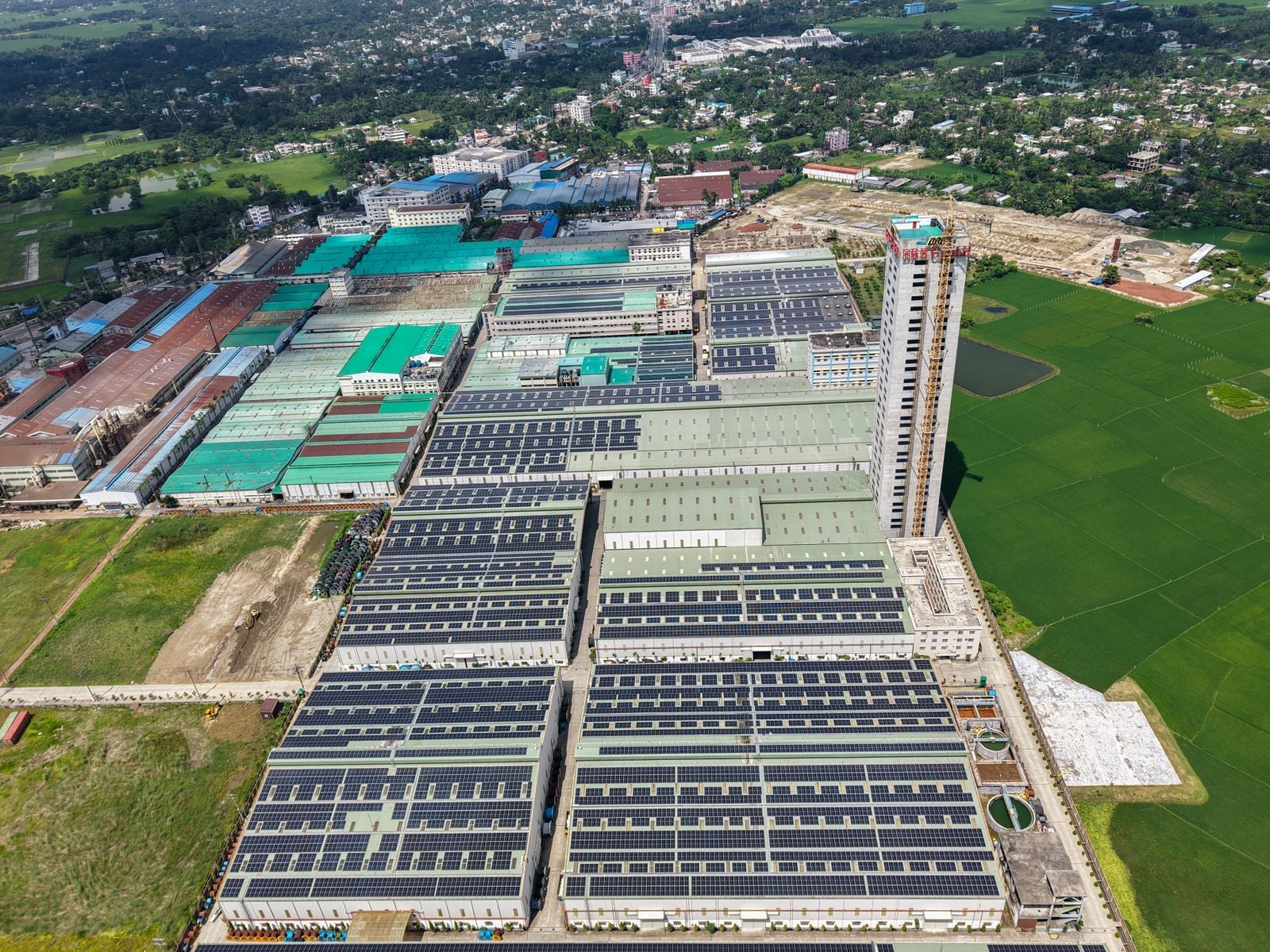
China is also winning the physical layer, and here the numbers are stark. The country manufactures roughly 90 percent of the crucial components in solar panels, and in the most recent full year of sales, nearly 90 percent of humanoid robots sold worldwide were Chinese. AI models need to touch the world through hardware. The hardware, increasingly, is Chinese.
That advantage has almost nothing to do with AI itself. It is the accumulated result of decades as a manufacturing power and of sustained industrial policy aimed at renewable-energy equipment, electric vehicles, robots, and other complex systems. Integrators buying robot arms and vision systems for food processors or auto-parts suppliers are not weighing export-control regimes. They are weighing payback periods, and increasingly the Chinese stack ships faster, costs less, and arrives with AI-enabled software layers already included.
This is where the Belt and Road Initiative enters the picture in a way that catastrophic AI framings miss. Through it, China has helped build highways, ports, power plants, fibre-optic cables, and data centres across Asia, Africa, and Latin America; AI services are the logical next offering. Daniel Remler, a senior fellow at the Center for a New American Security who previously led AI policy at the State Department, has described the concern precisely: that a technology sphere of influence congeals into political alignment with Beijing. The pattern is already visible. Several nations that have benefited from significant Chinese infrastructure investment have sided with Beijing on Taiwan.
Infrastructure creates dependency. Dependency creates deference. Deference, at scale, is what a sphere of influence looks like — not a decisive strategic advantage in some hypothetical AI-enabled conflict, but the quiet accumulation of countries whose default position on a UN vote, a shipping lane dispute, or a semiconductor sanctions regime tilts a few degrees toward Beijing.
The U.S. government’s response has been, charitably, incoherent. In January 2026, the Trump administration reversed its earlier restrictions on advanced AI chip exports to China, moving H200-class hardware from presumption of denial to case-by-case review. At the same time, the Pentagon has been moving back and forth on how it uses U.S. commercial AI models for defence applications. The public messaging is that Chinese AI is a civilizational threat. The policy behaviour is that Chinese buyers should still get American chips and American labs should still profit from selling them.
Contradictions of this shape tend to signal that the policy is being written by different constituencies with different interests, not by a single actor pursuing a coherent strategy.
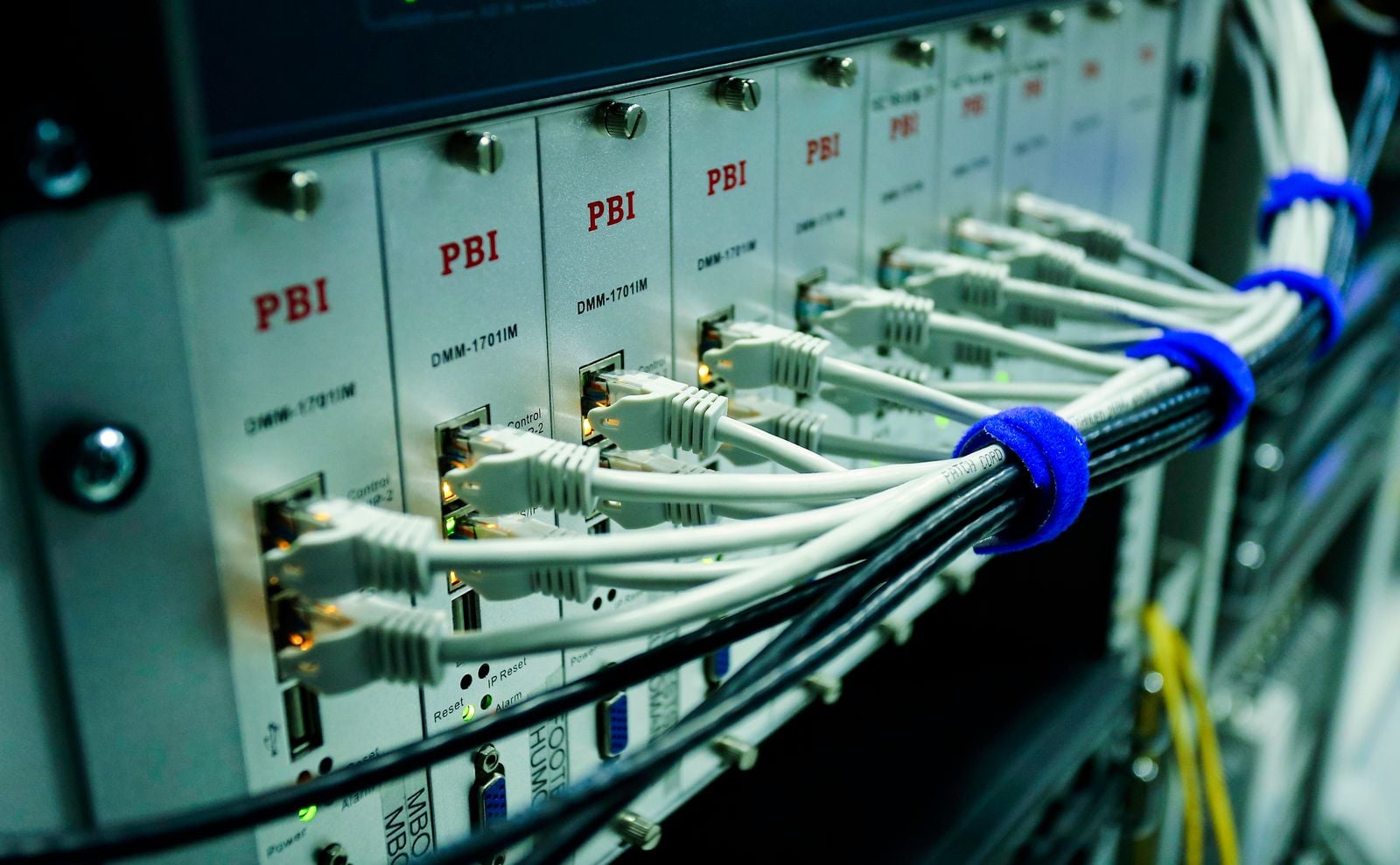
Meanwhile, the domestic side of the American AI buildout is running into friction that catastrophic framings do not account for. Local governments have started saying no. Communities from Memphis to Plain City, Ohio to East Lansing, Michigan have paused or restricted new data centre development. State-level tax incentives underwriting the buildout are under review in Ohio. The physical footprint of American AI — the power, the water, the land — is running into the same voter it always does.
China’s buildout runs into fewer of those obstacles, for reasons that have nothing to do with AI and everything to do with governance structure.
There is also a softer battle underway, over what these models say when they speak. In August 2026, The New York Times reported on a Chinese government effort to become a leading supplier of the text, images, and video that train AI systems worldwide, with the aim of shaping how chatbots handle politically sensitive subjects including the status of Taiwan. The United States has its own record of contesting that ground by other means: in September 2024 the House passed a $1.6 billion bill to fund media and civil society work countering Beijing’s influence abroad. Both governments understand that the ground truth a model absorbs during training shapes the answers it gives forever after.
Researchers testing Western and Chinese systems side by side have found the two describing the same events with meaningfully different framings. Anyone using both can triangulate. Most users will not.
Kyle Chan, a fellow at the Brookings Institution’s John L. Thornton China Center, has described what the hawks mean by a decisive strategic advantage: something closer to one country holding nuclear weapons while no other does. He is characterising the argument rather than endorsing it, and his own read on the competition points elsewhere — toward how fast Chinese firms and government bodies are moving on adoption. That is the advantage that is actually visible right now, and it accrues in slow, unspectacular increments that do not fit inside a war-room briefing.
The story the catastrophic frame tells is that America must sprint to a finish line before China gets there. The story the diffusion frame tells is that there is no finish line, only a long accumulation of who supplies whose factories, whose ports, whose bureaucracies, and whose kids’ homework help. In that race, six months of frontier capability does not matter. Fifteen years of building the cheaper option, in more places, for more customers, does.
What losing looks like is not a mushroom cloud or a rogue superintelligence. It is a procurement decision that never makes the news. It is a hardware order that goes to whoever ships fastest. It is a chatbot that quietly favours one account of a disputed island. And it is a foreign ministry somewhere rethinking its position on Taiwan because its power grid runs on Chinese equipment.
The alarm is aimed at a war that may never come. The competition that is already here is being run on price sheets and shipping manifests.