
To learn more about our editorial approach, explore The Direct Message methodology.
Two car brands launch campaigns in the same quarter. One pours its budget into retargeting ads, saturating every screen with offers and incentives, measuring success by how many leads hit the CRM. The other invests in stitching together dealership data, social media sentiment, mobile engagement patterns, and post-purchase communications into a single, coherent picture of its customer’s experience.
The first brand can tell you exactly how many people clicked. The second can tell you why someone chose to stay loyal for a decade. Both have access to similar technology.
Both employ skilled marketers. Yet only one of them tracks the thing that actually predicts whether a customer will come back. Growing up in a small town in Oregon where the nearest mall was two hours away, I developed a deep skepticism about consumer culture and the assumption that more exposure automatically equals more influence. That skepticism followed me through my MBA at UC Berkeley Haas, and it has sharpened every year I’ve spent analyzing how brands communicate. Jaguar’s approach to customer data reveals a fundamental split in how the automotive industry thinks about marketing, and most brands are standing on the wrong side of that divide.
The Gap Between What Automakers Measure and What Customers Remember
The automotive industry has a peculiar relationship with data. Manufacturers and dealerships sit on enormous reservoirs of information about their customers.
They know which pages get visited, which emails get opened, which promotions generate foot traffic. They track lead transmission across national, regional, and local tiers. And yet, despite all this measurement, a startling number of car buyers feel like the brands pursuing them have no idea who they are.
A 2023 study by Acxiom found that while consumers believe personalized customer experiences influence their future brand choices, only 55% felt automotive manufacturers’ websites offered such personalization. That represents something more painful than a missed marketing opportunity. It represents a broken promise. Consumers have been told that the digital age means brands will understand them better. Instead, many encounter fragmented messaging, generic follow-ups, and a buying process that feels disconnected from everything they did online before walking into a showroom.
The tension here runs deeper than technology. It lives in a conflict between two values the industry claims to hold simultaneously: efficiency and empathy. Efficiency demands that marketing teams optimize for volume, speed, and cost-per-acquisition. Empathy demands that they slow down, listen to the shape of a customer’s journey, and respond to what they find there. Most organizations, pressed by quarterly targets and constrained budgets, default to efficiency every time. They track what is easy to count. Clicks. Opens. Form fills.
I learned the hard way, during my years working with tech companies and consumer brands, that data without empathy creates products nobody wants. The same principle applies to marketing. Data without empathy creates campaigns nobody remembers.
Why the Industry’s Favorite Metrics Keep Misleading It
Conventional wisdom in automotive marketing has long centered on a funnel metaphor: awareness at the top, consideration in the middle, conversion at the bottom. Pour more in at the top, optimize the middle, and celebrate the sales that trickle out below. It is a tidy model. It is also dangerously incomplete, because it treats every customer interaction as a step toward a transaction rather than a moment in a relationship.
This oversimplification leads to predictable distortions. Regional dealer groups invest in campaigns that contradict the national brand message. Local dealerships run promotions that undercut the aspirational positioning the OEM spent millions building. Each tier measures its own metrics in isolation, and when the numbers look healthy in one silo, nobody asks whether the cumulative customer experience makes any sense. The result is a marketing ecosystem where everyone is optimizing their own piece without anyone owning the whole picture.
The digital echo chamber compounds the problem. Marketing teams benchmark against competitors using the same flawed metrics, creating an industry-wide reinforcement loop. If every brand measures success by lead volume, then lead volume becomes the definition of success, regardless of whether those leads convert, retain, or become advocates. What I’ve found analyzing consumer behavior data over the years is that the brands with the highest lead volume often have some of the weakest customer lifetime value scores. The correlation between easy-to-track metrics and actual business health is far weaker than most CMOs want to admit.
Meanwhile, the channels keep multiplying. Social platforms, OEM websites, third-party review sites, mobile apps, email sequences, direct mail, dealership experiences. Each channel generates its own data stream, and without a unified collection process, marketers end up with fragments. They see a customer’s visit to the website but miss the three conversations that person had on social media. They track the email open but lose sight of the test drive that happened two weeks later. The customer’s journey is continuous. The brand’s view of it is episodic. And that episodic view is what passes for “data-driven” marketing in most automotive companies today.
What Jaguar’s Integrated Approach Actually Reveals
The brands that outlast trend cycles are the ones willing to track the emotional coherence of a customer’s experience across every tier, every channel, and every interaction, especially the ones that are hard to measure.
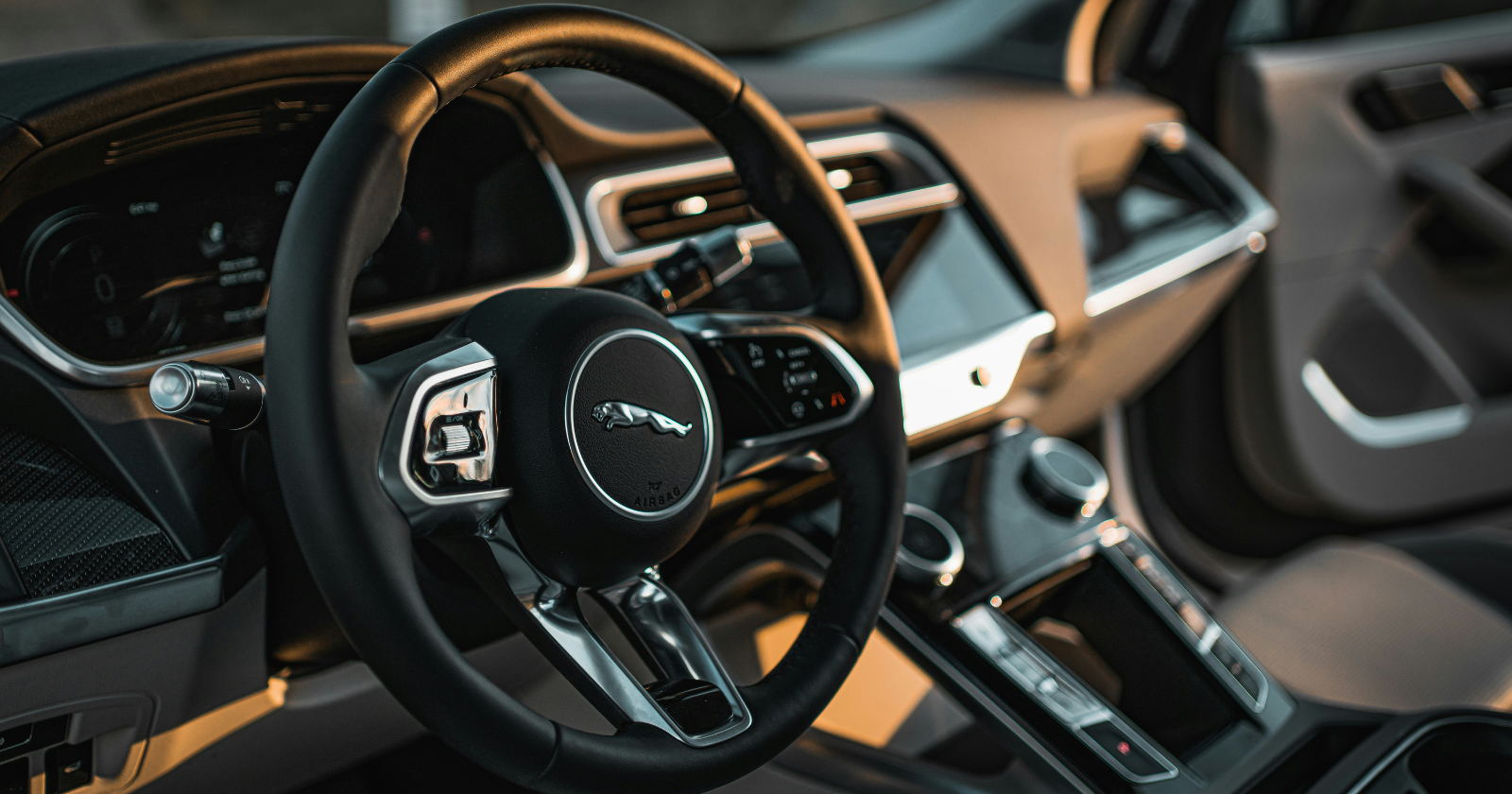
Jaguar has taken a notably different path. The brand brings together dealership data, mobile engagement, and social media activity to track trends across the full customer journey. They work with Nielsen to understand how their creative campaigns contribute to brand lift, a metric that most competitors dismiss as too soft to matter. They connect the OEM experience to the local dealership experience through segmented direct mail, targeted email campaigns, and post-purchase communications designed to sustain the relationship long after the sale closes. This approach treats marketing as a continuous conversation rather than a sequence of isolated transactions.
Building the Ecosystem That Tracks What Matters
Of course, pursuing this kind of integrated, emotion-aware marketing comes with real risks. The more data a brand unifies, the more vulnerable that data becomes. As Jamie Nimmo reported, Jaguar Land Rover confirmed that some customer data was compromised after a cyberattack that disrupted production and sales. The incident underscores a critical paradox: the same integration that makes customer-centric marketing powerful also expands the surface area for security threats. Brands that commit to tracking the full customer journey must simultaneously commit to protecting it. There is no shortcut around this responsibility.
Yet the alternative, retreating to siloed, channel-centric marketing out of fear, carries its own cost. It means accepting a permanent gap between what customers expect and what the brand delivers. It means continuing to pour money into metrics that feel safe but reveal little. During my time working with tech companies in the Bay Area, I watched several well-funded startups collapse because they optimized for acquisition metrics while ignoring the qualitative signals that predicted churn. I keep a journal of marketing campaigns that failed spectacularly, a collection I call my “anti-playbook,” and the most common thread in those failures is a refusal to measure what felt uncomfortable or ambiguous.
The practical path forward requires three commitments. First, unify data collection across all tiers so that a single customer’s journey can be viewed as a whole, from the first website visit through post-purchase follow-up. Second, invest in metrics that capture emotional resonance, such as brand lift, net promoter scores, and qualitative feedback, alongside traditional performance metrics. Third, treat data security as a foundational element of the marketing strategy, because customer trust is the prerequisite for everything else.
Behavioral psychology tells us that people make purchasing decisions based on how a brand makes them feel across accumulated interactions, what researchers call the “peak-end rule.” Customers remember the emotional high points and the final moments of their experience far more vividly than any individual ad impression. An automotive brand that tracks only impressions and clicks is measuring the scaffolding while ignoring the building. Jaguar’s willingness to integrate social sentiment, dealership behavior, and creative effectiveness into a unified view represents something the rest of the industry will eventually have to confront: the most valuable data is often the kind that resists a clean spreadsheet. The brands willing to wrestle with that complexity will be the ones customers choose to stay with.