
To learn more about the DM News editorial approach, explore The Direct Message methodology.
The most consequential engineering decision behind the Tesla Model 3 Performance has almost nothing to do with its electric motors. It has everything to do with the way air moves around its body.
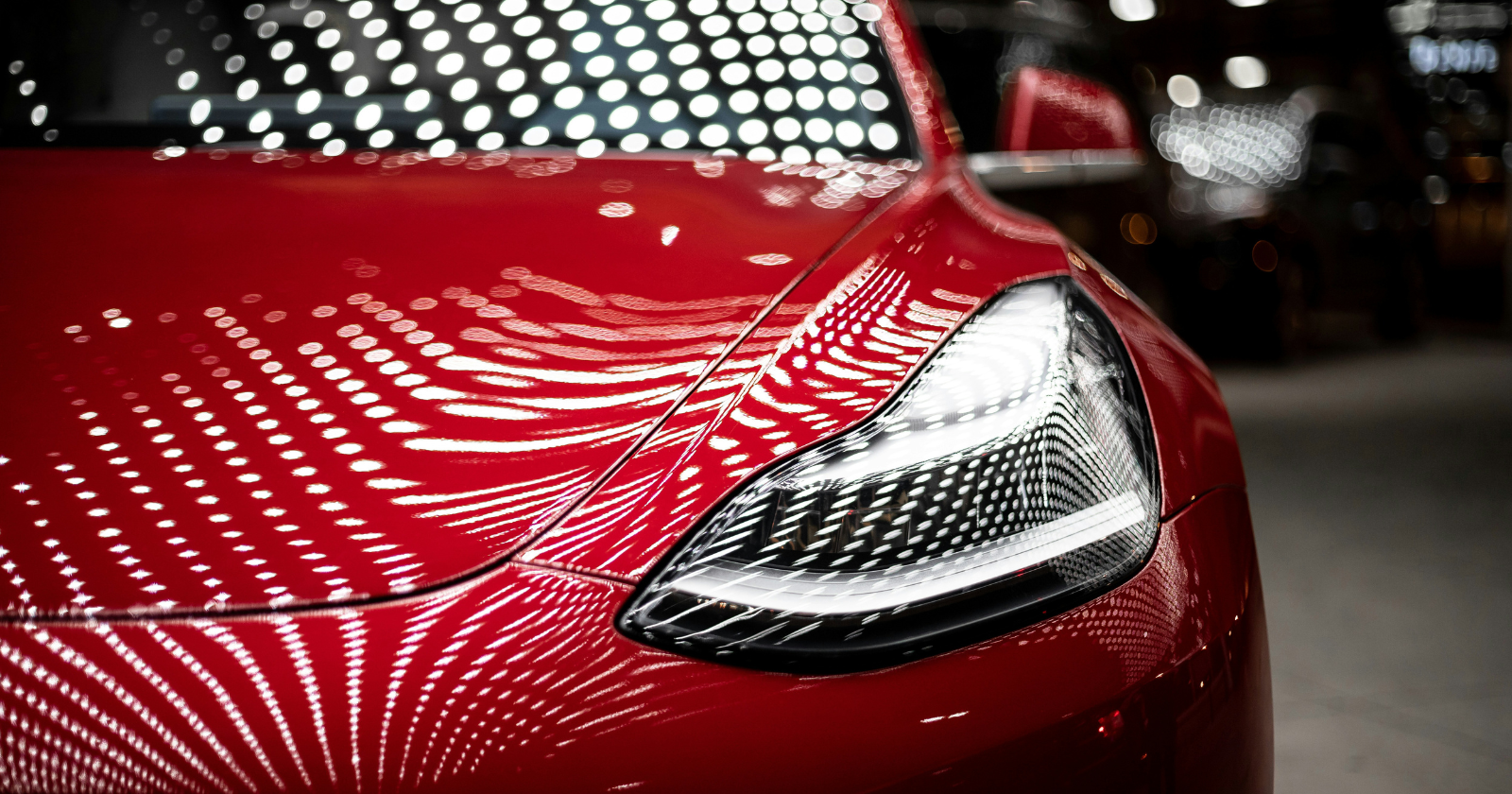
In an era where automotive marketing fixates on zero-to-sixty times and peak horsepower figures, the Model 3 Performance owes its real-world dominance to a drag coefficient of 0.23, a number achieved through deliberate choices about form, surface continuity, and the absence of features most consumers never think to miss. The Model 3’s lack of front air intakes, its flush bodywork, and its integrated rear spoiler work together to reduce air resistance and extend driving range in ways that a bigger battery alone could never replicate.
This reality presents an uncomfortable question for the broader EV market and for consumers who evaluate cars primarily by powertrain output: What if the shape of a car matters more than what sits beneath its floor?
When the spec sheet tells a half-truth
The tension at the center of the Model 3 Performance’s reputation runs deep. Performance, in the vocabulary of mainstream automotive culture, typically means power. It means acceleration, top speed, braking force, and lateral grip. And the Model 3 Performance delivers on those metrics convincingly. As Car and Driver notes, “The Model 3 Performance includes a sport-tuned suspension with adaptive dampers, upgraded brakes, and a staggered set of wheels with grippier tires.” These are the components that earn headlines, the ingredients reviewers use to justify performance credentials.
Yet there is a gap between what performance means in a controlled test environment and what performance means during the other 99% of a vehicle’s life. For most owners, the Model 3 Performance spends its days commuting, running errands, and covering highway miles. In those contexts, the car’s aerodynamic profile does more work than its dual motors. The drag coefficient, a measurement of how efficiently a body passes through air, directly governs energy consumption at sustained speeds. A lower coefficient means less energy wasted pushing air aside, which translates to more miles per kilowatt-hour, quieter cabin experiences, and reduced wear on battery systems over time.
The expectation gap here is significant. Buyers drawn to the Performance badge often arrive seeking the thrill of instant torque. They find it. But the daily value proposition, the reason the car remains satisfying over years of ownership, hinges on a body that slips through the atmosphere with unusual efficiency. The shape subsidizes the experience in ways the marketing materials rarely foreground. Tesla’s engineers understood that range anxiety, the persistent psychological barrier to EV adoption, could be addressed more effectively through aerodynamic refinement than through ever-larger battery packs, which add weight and cost. The Model 3’s flowing roofline, sealed underbody, and carefully radiused edges represent a design philosophy that treats air as the primary adversary, not a secondary concern.
This tension between perceived performance and functional performance mirrors a broader pattern in consumer technology: the features that generate excitement at the point of sale often differ fundamentally from the features that generate satisfaction over time.
Acceleration figures and the loudest number in the room
Media coverage of electric vehicles has consistently prioritized a narrow set of metrics. Zero-to-sixty acceleration times, in particular, have become the default currency of EV comparison articles. The result is a distortion: cars are evaluated by a capability that most drivers exercise for a combined total of minutes across years of ownership, while the characteristics that define daily livability receive far less attention.
This pattern reflects a deeper structural issue in automotive journalism. Acceleration is dramatic, easy to measure, and simple to rank. Aerodynamic efficiency, by contrast, reveals its value slowly and invisibly. There is no moment behind the wheel when a driver feels a drag coefficient of 0.23 the way they feel 0-60 in 3.1 seconds. The benefit accumulates in the background: slightly more range at the end of each charge cycle, slightly less energy consumed on each highway trip, slightly less degradation on the battery over the vehicle’s lifetime.
MotorTrend highlights that “the Model 3 Performance has a Track driving mode that allows for driver-adjustable torque splits, stability control, and other parameters.” Coverage like this, focused on the high-performance edge cases, shapes how the public understands the car. Track mode is compelling content. Drag coefficient optimization is a harder story to tell. The consequence is that many buyers purchase the Model 3 Performance for reasons that, while legitimate, represent the least frequently used dimension of its capability.
The Hyundai Ioniq 6, with its drag coefficient of 0.210, has earned recognition as the most aerodynamic production car from an Asian manufacturer, drawing design inspiration from mid-century aviation. The Porsche Taycan 4S achieves 0.220. These figures receive a fraction of the coverage devoted to power output and lap times, despite arguably contributing more to the ownership experience of the average driver. The noise of acceleration benchmarks drowns out the signal of aerodynamic engineering, creating a public understanding of EV performance that remains stubbornly incomplete.
The geometry beneath the conversation
A vehicle’s shape determines its relationship with the physical world more completely than any powertrain specification. In the electric era, where energy storage remains the binding constraint, aerodynamic efficiency is the silent multiplier that separates adequate range from transformative range.
This insight reframes how performance should be evaluated across the entire EV landscape. When the primary energy source is a battery with finite capacity and significant weight, every watt lost to air resistance is a watt subtracted from the driving experience. The shape of the vehicle becomes a first-order engineering problem rather than an aesthetic afterthought.
The Model 3 Performance illustrates this principle with unusual clarity. Its powertrain is impressive. Its shape is foundational.
How the invisible becomes the advantage
The practical implications of this insight extend well beyond Tesla. Research published in the International Journal of Heat and Technology found that the application of spoilers and diffusers to sedan automobiles significantly reduced drag and improved vehicle stability, underscoring how targeted design interventions in body geometry can outperform brute-force powertrain upgrades in delivering real-world performance gains. The study highlights a principle that applies across the industry: small changes in form can produce disproportionate changes in function.
This principle has been tested at the extreme end of the Tesla aftermarket as well. A study by Unplugged Performance utilized Computational Fluid Dynamics to validate aerodynamic enhancements for the Model 3, demonstrating a 21% reduction in total vehicle drag and a 0.049 decrease in drag coefficient through the addition of a front spoiler and rear spoiler. That level of drag reduction translates directly into extended range, a finding that reinforces how much headroom exists in the aerodynamic domain compared to the diminishing returns available from battery chemistry improvements alone.
For the broader consumer market, the lesson is structural. When evaluating an electric vehicle, the body’s relationship with air resistance deserves at least as much scrutiny as its relationship with asphalt. A car that looks fast and a car that moves efficiently through space are two different design objectives, and they do not always converge. The Model 3 Performance happens to achieve both, but its lasting competitive advantage sits with the latter.
For marketers, product designers, and media analysts, the Model 3 story offers a transferable pattern. The features that generate the most attention at launch are often different from the features that generate the most value over time. Identifying those quieter, structural advantages and learning how to communicate them without reducing them to spectacle represents one of the more durable challenges in product storytelling. The Tesla Model 3 Performance built a reputation on acceleration. It earned its longevity through geometry.