

I write this with urgency. We are living through a slow-motion cognitive collapse – a collapse of our shared sense-making in the face of AI-generated confusion and media dysfunction.
Every day brings another absurd information breakdown: a chatbot’s factual flub erases $100 billion in market value; a fake image of an “explosion” near the Pentagon goes viral and briefly sends stock markets tumbling before it’s debunked. We scroll past AI-conjured hoaxes, rage-bait headlines, and tribal propaganda before we’ve even had our morning coffee. It feels like reality itself is fracturing into a million noisy shards, leaving us grasping for something true and solid in the din.
This is the crisis of our time. In 2025, misinformation moves at machine speed, social media algorithms amplify outrage to keep us hooked for profit, and public trust in what we read is in free fall (Gallup’s 2024 data shows just 31% of Americans trust newspapers “a great deal”). We’re inundated by content but starved for clarity. If we can’t even agree on what’s real, how do we function as a society?
This is more than an “infodemic” – it’s a collapse of the cognitive commons. And unless we confront it, we risk drifting into a dangerous era where illusion trumps reality by default.
How did we get here? Let’s call out the pathology by name: AI hallucinations, political groupthink, and clickbait outrage cycles are three of the chief culprits.
Consider AI first. In the past couple years, we’ve seen our shiny new AI assistants make up facts out of thin air with unnerving confidence. Google’s much-hyped chatbot Bard casually delivered a false answer in its debut demo – claiming the James Webb Telescope took the first picture of an exoplanet – and wiped out $100 billion of its parent company’s value overnight. A lawyer entrusted ChatGPT with legal research and got back completely fabricated case law, nearly humiliating himself in court. These systems hallucinate – they generate bogus information – and if we lean on them uncritically, we start hallucinating too. In the AI age, reality can be algorithmically distorted at scale, and it’s getting harder to tell the difference.

Then there’s our own propensity for delusion: tribal groupthink. In an era of hyper-polarization, millions have effectively chosen their own “facts.” Entire communities left or right live in echo chambers that reinforce their biases and filter out inconvenient truths. Like-minded media outlets and social feeds act as mirrors, reflecting back only what their tribe wants to see.
The result? We now have parallel realities, each fiercely certain the other side is crazy. When every issue is cast as us vs. them, genuine truth-seeking falls by the wayside. Our public discourse devolves into dueling conspiracies and group-confirming memes, rather than a shared search for understanding.
And let’s not forget the gasoline on this fire: the outrage industrial complex. Outrage is now both entertainment and economy. Outrage gets clicks; clicks get cash. Social platforms and sensational media know this, and they’ve engineered an environment where the most incendiary, polarizing content rises to the top by design. These clickbait outrage cycles form a perpetual motion machine of anger. They hijack our attention and emotions, leaving us anxious, divided, and none the wiser. Meanwhile, deeper issues go unexamined. It’s all noise, no insight.
Diagnosing these problems isn’t about wallowing in doom; it’s about naming the forces that assault our cognitive sovereignty.
Cognitive sovereignty, if you’re new to the term, simply means your mind under your own control – the ability to govern your thoughts and beliefs amid all these manipulative forces. And reclaiming that sovereignty has never been more urgent. When confusion is being mass-produced by everything from deepfakes to propaganda, maintaining command of your own mind becomes an act of survival and self-respect.
So how do we do it? How do we push back against AI illusions, herd mentality, and outrage bait?
The Direct Message Method: A Framework for Cognitive Sovereignty
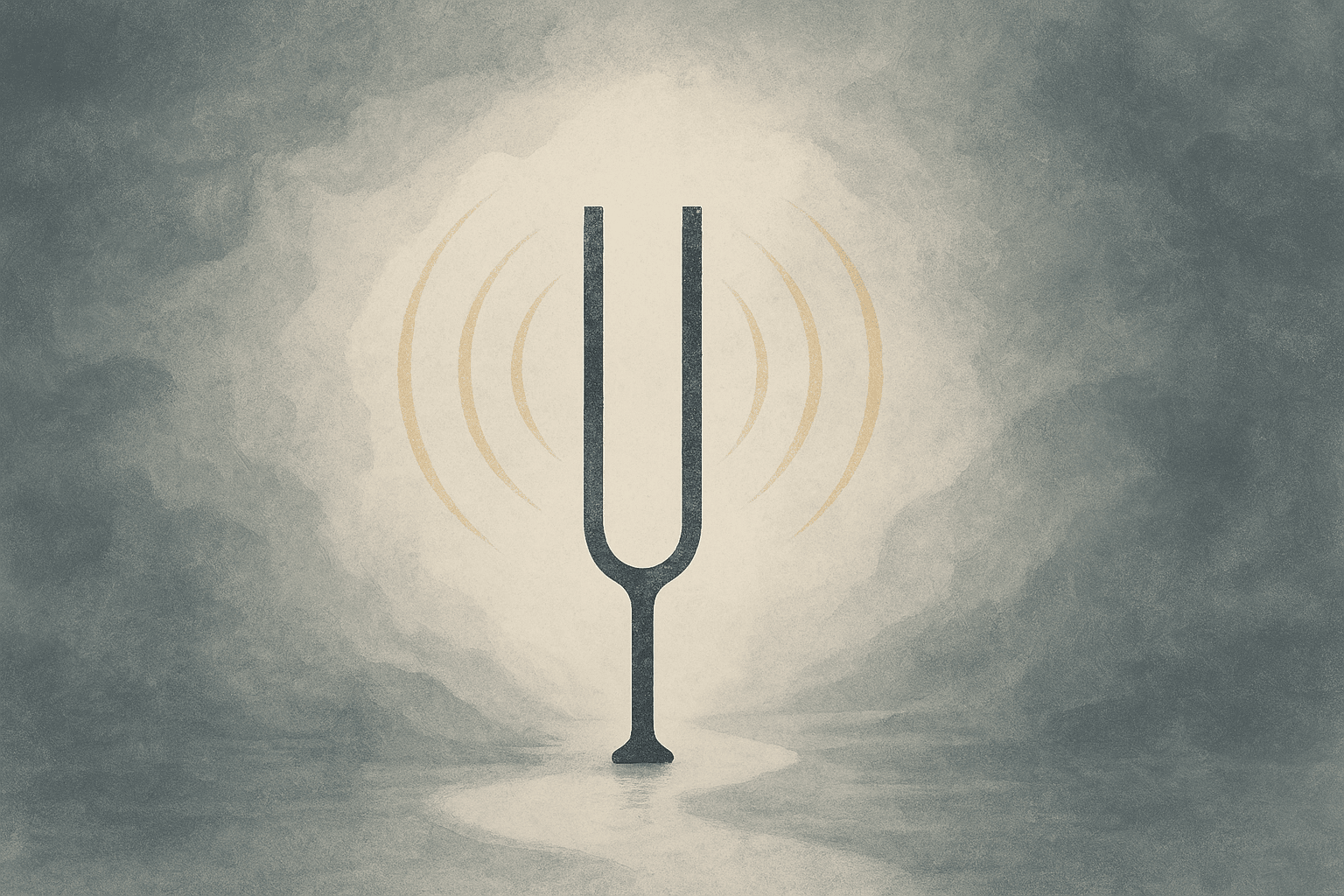 My answer is what I call the Direct Message framework – a simple but hard-hitting mental model built to cut through the noise. It works like a decoder ring for modern life. At its core, it comes down to three moves: Tension → Noise → Direct Message. Any time you’re confronted with a fog of information (a breaking news story, a contentious issue, a personal dilemma – you name it), you deliberately walk through these steps:
Tension: First, identify the core tension in the situation. What is the fundamental question, conflict, or issue at stake? Strip away the fluff and ask: What is this really about? Every meaningful story has a tension at its heart – maybe a problem that needs solving, a truth that’s in dispute, a value that’s clashing with another. If you can pinpoint that, you’ve found the starting point.
Noise: Next, recognize the noise swirling around that core. This is all the distortions, distractions, and surplus chatter obscuring the truth. It’s the misleading headlines, the social media hysteria, the partisan spin, the irrelevant trivia, the half-baked “takes” flooding the zone. In short, noise is whatever is making the truth harder to see. Here you must play detective: filter out which parts of the narrative are fluff, agenda, hype, or error. Who’s shouting and why? What’s being amplified versus what’s being ignored? Be ruthless here – call out the BS for what it is.
Direct Message: Finally, extract the direct message. This is the clear signal you’re left with once the noise is stripped away – the insight or truth that actually matters. If tension is the question and noise is the muddle, the direct message is the answer, distilled. It’s the takeaway you can hold on to, the concise understanding that cuts through the confusion. The direct message is what you’d tell a friend later: “Amid all that chatter, here’s what it really means…” It should resonate as something real and meaningful, not just another hot take.
This framework might sound straightforward – and in a sense, it is. It’s basically critical thinking with a memorable structure. It’s definitely not a magic formula; philosophers and good journalists have been doing this forever by other names. But I do claim that consciously applying Tension → Noise → Direct Message as a habit can change how you consume and communicate information. Think of it as a pair of noise-cancelling headphones for your brain, or a tuner that helps you lock onto the clear frequency amidst a sea of static. It helps you separate the music from the static, the wheat from the chaff.
In an age when everyone from advertisers to politicians is fighting to rent space in your head, this is how you protect your cognitive turf. It’s how you ensure your opinions and actions are truly your own, not just a knee-jerk reaction to the latest stimulus.
Importantly, the Direct Message method isn’t just a trick for dissecting news articles – it’s a mindset for life. You can use it in personal decisions, workplace debates, anywhere confusion threatens to take over. It’s about constantly refocusing on what matters and refusing to be swept up in the spectacle. This is cognitive resistance training. Each time you practice it, you reclaim a bit more of your mental sovereignty. You become less reactive, more intentional. You start thinking for yourself again – a small act of rebellion in a world that wants to do your thinking for you.
The Direct Message Test: A Challenge to the Media (and Ourselves)
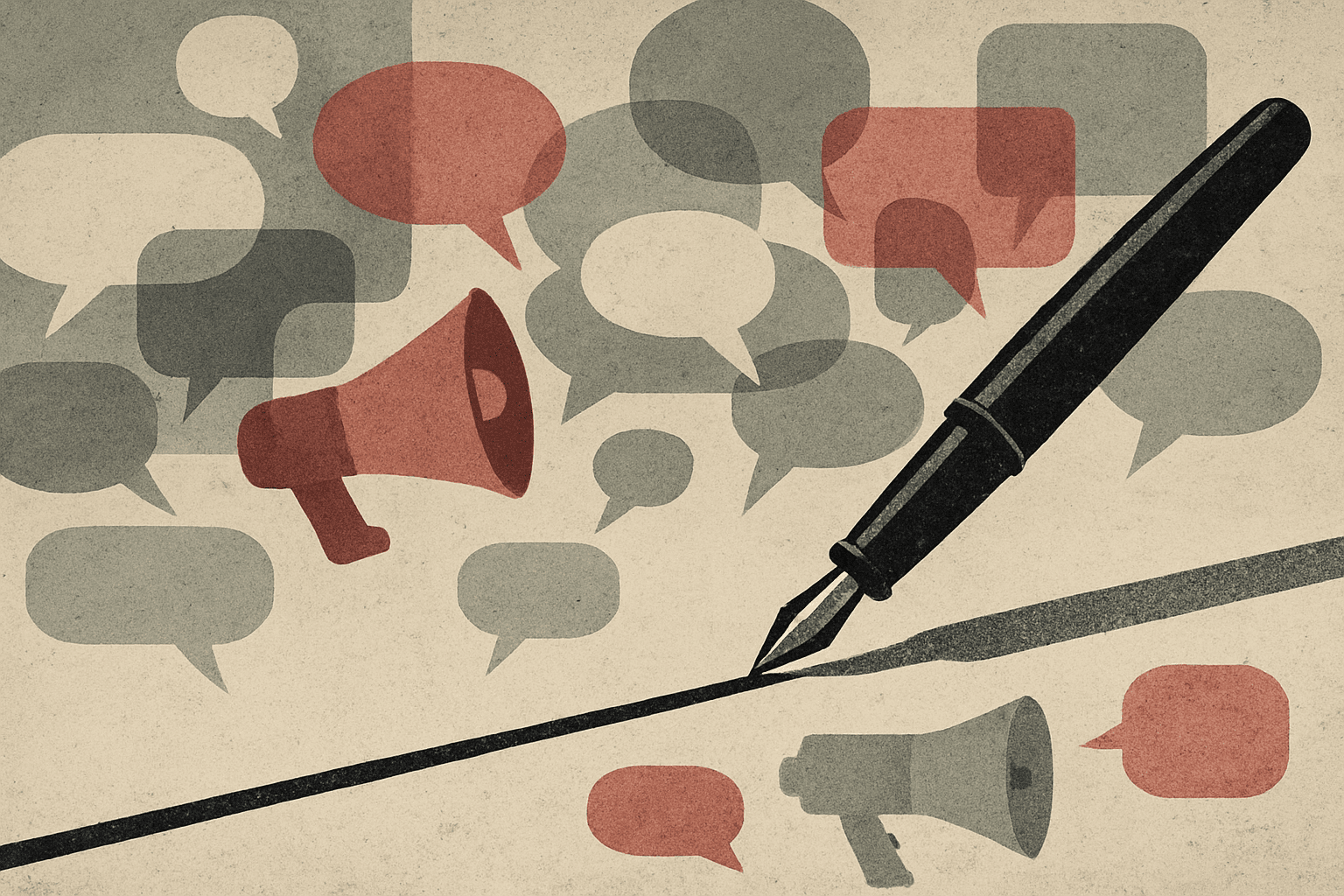 Let me shift gears and address an industry that desperately needs a wake-up call: the media itself. I came up through the media world, and I’ve witnessed firsthand how often we fail the public. Sensational headlines, churnalism, partisan slant – we all know the sins. So consider this a direct challenge, from me and DMNews, to every editor, reporter, pundit, and content creator out there: Take the Direct Message Test. Ask yourselves, does your work deliver a clear signal or just add to the noise? If it’s the latter, why are you wasting our time?
Too many outlets today chase virality at the cost of truth. The 24/7 news churn has become a race to the bottom: in the rush to publish first, accuracy becomes a casualty. Clickbait merchants slap incendiary titles like “You Won’t Believe XYZ!” on nothing-burger stories, betraying the audience’s trust. Even serious newsrooms often pump out “updates” and speculation on breaking stories before facts are confirmed – effectively spreading noise and confusion when people most need clarity. This has to stop. If your headline misleads more than it informs, you’ve failed the test. If your story has no clear takeaway or insight (no direct message at its core), why did you even publish it? If you find yourself writing just to ride the outrage wave or fill airtime, step back – you’re part of the problem.
At DMNews, we’ve drawn a line in the sand. We refuse to be another cog in the outrage-industrial machine, and we challenge our peers to do the same. Our relaunch is about rebelling against the idea that media must be a tornado of noise. Instead, we’re carving out a pocket of sanity in the media diet – a place devoted to signals over noise. That means some editorial vows on our part: We choose clarity over sensation, every time. We’d rather be right than first. We aim to provide context and pattern with every story, not just isolated info. And if we don’t have something meaningful to add, we won’t publish anything at all. “It’s not a take, it’s a signal,” has become a bit of an unofficial mantra in our newsroom – a gut-check on every piece we produce.
Now, am I claiming we’re perfect? Hardly. We’re human; we’ll slip up. But when we do, I expect you – our readers – to hold us accountable. Seriously. Call us out if you catch us slipping into noise. Send an email, leave a comment, heck, send a carrier pigeon if you must. We’ll listen. This manifesto isn’t just navel-gazing; it’s a public promise. By putting these principles in writing, we invite you to judge us by them – and to demand the same of other media you consume. The more of us that insist on substance over spectacle, the more the media landscape will have to change. Consider the Direct Message Test a gauntlet thrown at the feet of clickbait peddlers and outrage artists everywhere: either start delivering real signals or get out of the way.
Putting Clarity into Practice: How You Can Use This Framework
 Enough theory – let’s talk practice. How can you, the reader, apply the Direct Message mindset in everyday life? I firmly believe this approach is not just for journalists or “media literate” types; it’s for anyone who consumes information (i.e., all of us). Here are a few practical use cases and tips:
When Breaking News Hits: Today’s news cycle moves at breakneck speed, and it’s easy to get whipped into a frenzy by initial reports. Next time there’s a big breaking story, remember that first impressions are often wrong. Resist the reflex to retweet that unverified claim or to form an instant opinion. Instead, identify the tension of the story (what fundamental issue or risk is this event about?) and watch how early coverage might obscure it. In the first hours of a crisis, even professional reporters usually have no clue what’s really going on. Rumors and mistakes abound. So tune out the speculative noise (“reports say…sources say…Twitter says…”) and wait for solid facts to emerge. As the dust settles, look for the direct message – maybe it’s a lesson about infrastructure safety (if it was a disaster), or a revelation about a systemic issue. Be patient. Let others chase every update; you focus on understanding the why and what now once credible information is available. By day two or three, you’ll have a far clearer picture than those who panicked on day zero. In short: don’t let the “breaking” news break your critical thinking.
For Personal Decisions and Dilemmas: The Direct Message framework isn’t only for media analysis – it works wonders in your personal life too. Facing a tough decision or a problem at work? Start by defining the core tension. For example: “Should I change careers because I’m unfulfilled, or stick it out for financial stability?” There’s your tension – meaning vs. money (or security vs. growth). Next, list out the noise clouding your thinking. Maybe it’s well-meaning friends overwhelming you with advice, societal pressure (“am I a failure if I switch paths now?”), or your own fear of the unknown. Acknowledge those as noise – mental static that’s obscuring what you really want. Then, try to articulate the direct message for yourself: it could be something like, “I value long-term fulfillment over short-term comfort,” or vice versa. That clarity is your signal. It might not make the decision easy, but it grounds you in your own values rather than the cacophony of others’ opinions. The same process can apply to simpler dilemmas too – even planning a project or resolving an argument. What’s the real issue? What noise (ego, emotions, external input) is getting in the way? And what clear principle or resolution emerges when you cut through it all? Using this method, you’ll find you can approach personal challenges with a calmer, more deliberate mindset. It’s about being the editor-in-chief of your own life, not letting outside chatter dictate your story.
On Social Media and Information Diet: Let’s be honest – social media is a noise machine. It’s the loudest cafeteria in the global conversation, with billions of voices shouting at once. Approaching it with a Direct Message mindset can save your sanity. First, curate your feeds to reduce noise: follow sources that provide substance, not just those who deal in outrage or clickbait. But even in a well-curated feed, you’ll inevitably encounter triggering posts or trending “controversies” that suck you in. When you feel that immediate spike of anger or anxiety from something you see online, pause. Identify the tension: is this person actually raising a valid issue I care about, or are they poking my emotional buttons? Recognize the platform’s algorithmic noise: these services literally engineer our feeds to keep us angry and keep us online – knowing that can help you take a step back. If you see yet another political outrage blowing up, ask yourself: Is this part of the familiar outrage cycle? Often, it is. Today it’s one viral video; tomorrow it’ll be something else. By mentally tagging it as “probably noise,” you can decide not to get dragged into a pointless flame war. Instead, seek out a direct message if one exists: maybe a credible summary from a trusted outlet later, or a knowledgeable person’s take that actually adds context. And if you can’t find a clear signal at all, it might be best to just let that topic go and move on with your day. Your attention is precious – don’t squander it on every piece of viral drivel. Think of your attention span as a budget; spend it on signals, not noise.
Pattern Recognition: Seeing the Bigger Picture
 Here’s where things get really powerful. Once you make a habit of distilling direct messages from the daily info-chaos, you’ll notice something magical: patterns start to emerge. It’s like stepping back from an Impressionist painting – what looked like random noisy dots up close now forms a coherent picture from afar. By consistently carving clarity from chaos, you’ll begin to see the repeating playbooks of modern media and society.
For example, you’ll recognize the Outrage Cycle for what it is – a loop that plays out over and over with just the names and details changed. The formula is always the same: Incident → Outcry → Polarized Debate → Distraction by the Next Incident. One week it’s a celebrity scandal, the next it’s a political gaffe, but the cycle of frenzy and forgetfulness repeats.
When you spot this, you can consciously opt out of being triggered every time. You’ll ask, “Will this thing everyone’s yelling about even matter a month from now, or is it just today’s noise?” More often than not, it’s the latter. By seeing the outrage-du-jour as a recurring pattern rather than a unique emergency, you take back control of your emotional energy. Save your outrage for the issues that truly matter to you, not what the algorithm tells you to care about.
Another pattern: the Manufactured Confusion playbook. Time and again, powerful actors (whether big industries, political operatives, or interest groups) have learned that spreading confusion is a great way to delay accountability. Think of how the tobacco industry spent decades sowing doubt about whether smoking causes cancer, or how a handful of climate change deniers muddied public understanding of global warming despite overwhelming evidence.
The strategy is simple: identify a clear tension (e.g. “are cigarettes harmful?”), then inject tons of contradictory noise – fake experts, misleading studies, fear-mongering ads – until the public doesn’t know what to believe. We’ve seen this tactic used on issues from health to environmental policy to public safety. By learning to spot the markers of deliberate disinformation, you become much harder to fool. You start demanding higher standards of evidence. Your internal direct message when confronted with a “manufactured debate” might simply be, “Ah, I see the game here, and I’m not buying it.” That realization alone is a huge step toward cognitive independence – you’ve seen through the smoke and grabbed hold of the truth being buried.
We also regularly see the Techno-Panic pattern. Every time a new technology emerges – whether it was the printing press, the radio, video games, the internet, or now AI – a chorus of voices cries that it will spell the end of civilization as we know it. Sure, new tech always brings changes and some legitimate concerns, but the historical pattern shows that moral panics are usually overblown.
The cycle goes: New Thing appears → pundits and politicians predict doom (“it will corrupt our youth / destroy society / rot our brains”) → eventually, society adapts and the world keeps spinning. This isn’t to dismiss all concerns—new tech does bring real challenges—but recognizing the historical pattern can keep you from freaking out every time a headline screams “Is [New Thing] Going to Ruin Everything?” Chances are, we’ll navigate it, just as we did electrification or television.
Some patterns are deeply personal. As you hone your direct-message lens, you may start noticing your own triggers and loops. Maybe you realize, “Every time there’s breaking news about the economy, I get anxious and make impulsive decisions,” or “Whenever I scroll Instagram late at night, I end up feeling lonely and inadequate.” These, too, are patterns – personal noise cycles that undermine your well-being.
Recognizing them is the first step to breaking free. If doomscrolling pandemic news or Twitter politics riles you up and ruins your mood, acknowledge that pattern and reframe your habits. You might decide to limit checking the news to certain times, or remind yourself that markets naturally go up and down (no need to panic-sell on every dip). If social media makes you feel worse, maybe your direct message is to log off and get some real rest, or to remember that online life is a curated illusion – noise, not the full signal of reality. You guard your mental health and cognitive sovereignty by not letting predictable triggers sabotage you repeatedly.
Lastly, amidst all the negative patterns, don’t miss the Hidden Progress trend. This one is easy to overlook because bad news screams loudest. But step back and you’ll see that while headlines shout about crisis and conflict, many long-term trends quietly show improvement. Extreme poverty globally has plummeted over the decades; literacy rates are up; certain diseases have become far less deadly. These positive developments are signals too, even if they’re drowned out by the daily clamor. Recognizing the “good news is often silent” pattern can dramatically reframe your worldview. Modern life is not an unbroken downward spiral; it’s a complex mix of challenges and progress.
Notice what we’re doing with all these patterns: we’re taking back control of the narrative. Instead of living at the mercy of the latest trending topic or manufactured panic, you’re cultivating a historical and psychological context for events. You start to see each news event or controversy not as an isolated flare demanding an immediate reaction, but as part of a larger constellation that you can map and understand. With that wider view, life feels less like a chaotic whirlwind tossing you around and more like a landscape you have a map for. In a sense, you become a time-traveler in your own life – drawing on wisdom from yesterday to deal with today and tomorrow.
This reframing isn’t just intellectual play; it’s deeply practical for maintaining your sanity and making good decisions. If you know the outrage cycle is fleeting, you won’t let every Twitter controversy derail your day. If you know the confusion playbook, you’ll demand solid evidence before believing sensational claims. If you sense a tech panic pattern, you’ll weigh both risks and benefits instead of succumbing to fear. If you recognize your personal trigger loops, you’ll take steps to protect your mental health. If you recall hidden progress, you’ll balance your worries with rational optimism.
In short, pattern recognition turns the Direct Message framework into more than a one-time trick – it becomes a way of seeing the world in context. And context is a powerful antidote to confusion and fear. When you have context, you transform that panicked question “Why is this happening to us?!” into the calmer insight “I see how this fits into the larger story.” You move from being reactive to proactive, from feeling like a victim of the news to feeling like an informed participant in the world. It’s like finally being able to zoom out on a frantic, zoomed-in scene – the picture steadies, the random chaos resolves into an intelligible panorama. With that clarity of the big picture, you can navigate modern life with a confidence that once felt out of reach.
A New Signal in the Noise (Conclusion)

This manifesto isn’t just another “hot take.” In fact, if you’ve made it this far, I hope you feel it’s the opposite of a take. It’s a signal – a clear message cutting through the background hiss of our dysfunctional information era. I’ve written it in the first person because reclaiming clarity is a personal battle as much as a collective one. I’m right here in the trenches with you, trying to make sense of the madness in real time. And I’ll be honest: it’s not easy to resist the tide. But it is possible, and it starts with a choice to seek substance over spectacle.
If there’s one idea I want to leave you with, it’s this: We don’t have to live at the mercy of the noise. We have the tools – and the right – to reclaim our minds. Cognitive sovereignty is not some abstract ideal; it’s something you can practice every day with a little conscious effort. Every time you question a sensational headline, every time you withhold an impulsive retweet and dig deeper, every time you pause to think for yourself about what really matters – you are striking a blow for clarity in a very cluttered world. In an era when confusion is cheap to manufacture, clarity becomes an act of rebellion.
For us at DMNews, this isn’t just a philosophy – it’s our mandate. We’re committed to being your ally in this fight. We’ll strive, day in and day out, to bring you journalism that respects your time, your intelligence, and your sovereignty of mind. We’ll do our damnedest to provide the signal amidst the noise, but ultimately you are the final curator of your understanding. No publication, no algorithm, no guru can do that for you. The power to reclaim your cognitive autonomy lies in your hands, in your habits of inquiry and attention.
So consider this both an invitation and a rallying cry. To everyone tired of feeling duped, drained, or disoriented by the media hellscape: join this little rebellion. Demand better – from your news sources, from your leaders, from yourself. Apply the Direct Message test to everything you encounter. Support those creators and outlets that respect truth over sensationalism, and call out those that don’t. Share real signals with your friends, not just hot takes. Cultivate patience and context in a frenzied culture that tells you to react without thinking. By doing so, you’ll inspire others to tune out the noise and seek clarity too. Change won’t happen overnight, but it starts with a mindset shift in each of us.
I’ll close with the line that has become our credo at DMNews: It’s not a take. It’s a signal. In a world bursting with takes – opinions flying left and right, commentary on top of commentary – signals are rare and precious. Signals are what actually stick, what actually matter. Our mission is to amplify those signals and empower you to find your own. This is our stand. This is our promise. And if you’re reading this, you’re already part of it.
Welcome to the resistance against the noise. It’s time to reclaim our clarity – one direct message at a time. Onward.