
This article was published in 2026 and references a historical event from 2018, included here for context and accuracy.
- Tension: The promise of frictionless retail automation collided with the messy reality of human labor hidden behind algorithmic facades.
- Noise: Futuristic headlines about cashierless stores obscured the overseas workers verifying purchases and the communities left behind.
- Direct Message: Revolutionary technology reveals its true nature through retreat, and Amazon Go’s contraction exposes what automation actually automates.
To learn more about our editorial approach, explore The Direct Message methodology.
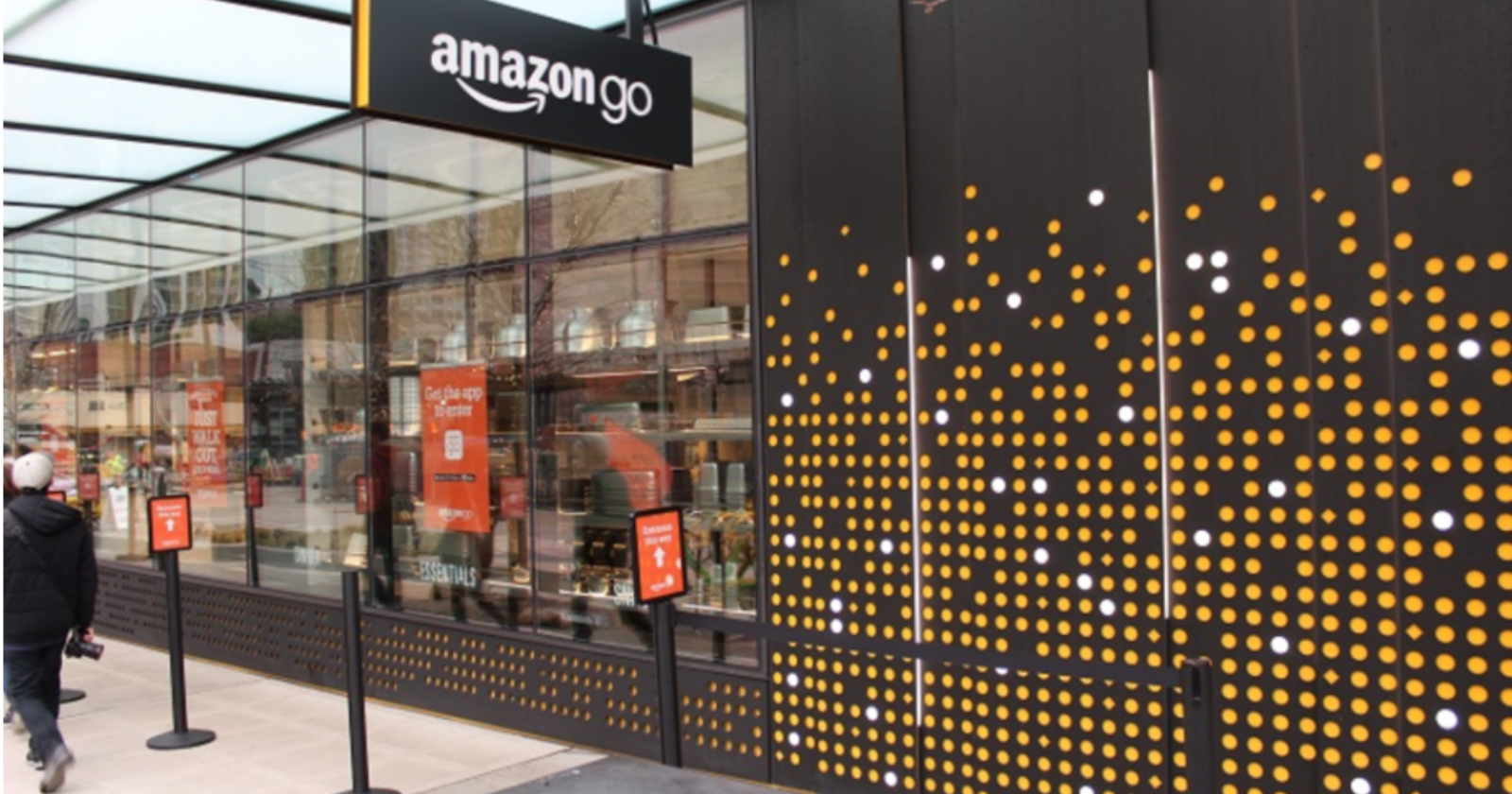
When Amazon unveiled its first cashierless convenience store in downtown Seattle on January 22, 2018, the experience felt genuinely revolutionary. Shoppers could scan a QR code, grab items from shelves stocked with organic snacks and prepared meals, and simply walk out. No checkout lines. No fumbling for wallets. No human interaction required beyond the occasional employee in a puffy orange jacket answering questions about how this technological marvel actually worked.
A firsthand visit to the store in its second week confirmed both the genuine impressiveness of the consumer experience and the nagging awareness of long-term ripple effects that would take years to fully materialize.
The store existed on the same block as Amazon’s surreal glass Spheres, housing tropical flora alongside employees tackling their workloads in spaces designed for “biophilic” inspiration. Community bikes from new sharing services dotted the sidewalks. Everything felt like a science fiction novel roaring to life.
At the time, Amazon processed $177.9 billion in annual revenue and seemed poised to translate its e-commerce dominance into physical retail. The company had plans for thousands of locations. Eight years later, the story has taken unexpected turns that illuminate far more about automation’s real impact than any opening day spectacle could reveal.
The friction between promise and performance
Amazon Go represented something genuinely new in retail. Previous innovations like self-checkout kiosks and mobile payments still required customer effort. Amazon leapfrogged these intermediate steps entirely.
Computer vision, sensor arrays, and deep learning algorithms tracked every item customers selected, creating what the company called “Just Walk Out” technology. The friction of transactions disappeared so completely that early shoppers hesitated at exit gates, laughing nervously about how leaving without paying felt like shoplifting.
What remained invisible was equally significant. Those approximately 100 cameras mounted on dark ceiling beams fed data to systems that weren’t fully autonomous. When the AI expressed uncertainty about a transaction, the data went to workers in India who manually reviewed footage and confirmed purchases.
By some accounts, approximately 1,000 workers performed these verification tasks, watching video feeds to determine which items customers had actually selected. The technology that seemed to eliminate human labor had partially relocated it to overseas centers where lower wages made the economics viable.
Amazon never denied this arrangement when pressed, acknowledging only that “trained associates” confirmed purchases “a small fraction of the time” without specifying where those associates were located. This revelation fundamentally reframed conversations about what “automation” actually means when companies deploy it at scale.
Cashiers weren’t simply replaced by algorithms. Their work was disaggregated, outsourced, and rendered invisible to customers who believed they were experiencing a fully autonomous system.
The workforce implications weren’t theoretical abstractions. At the time of Amazon Go’s debut, roughly 3.5 million Americans worked as cashiers, with women holding 73% of those positions. A Cornerstone Capital Group report warned that large-scale retail automation could disproportionately affect female workers.
Today, the Bureau of Labor Statistics projects cashier employment will decline by 10% through 2034, eliminating over 350,000 positions. The roles face an 88% automation risk according to workforce analysis firms.
These aren’t predictions about distant futures. The transformation is actively underway.
When headlines outpaced reality
Media coverage of Amazon Go amplified a particular narrative: cashierless stores would soon be everywhere, conventional retail was obsolete, and workers needed to adapt or become roadkill. Bloomberg reported Amazon planned 3,000 locations by 2021. The future had arrived in Seattle, and it was simply a matter of time before it spread nationwide.
What this coverage largely missed was the question hiding beneath the spectacle: had Amazon actually automated the cashier’s job, or simply relocated it? The humans-in-the-loop reviewing transactions from overseas data centers didn’t fit the narrative of fully autonomous retail, so they remained mostly invisible in mainstream reporting until investigative journalists dug deeper.
The actual trajectory proved messier. Amazon Go peaked at approximately 43 locations in 2023, then began contracting. By October 2024, the company had closed stores in New York City, citing lease economics.
In early 2025, additional closures followed. Today, roughly 15 locations remain operational in the United States. Amazon removed Just Walk Out technology entirely from its larger Fresh grocery stores in April 2024, replacing it with smart shopping carts that scan items as customers add them. The company that pioneered checkout-free shopping retreated from its most visible implementation.
Critics offered various explanations. Some suggested consumers weren’t ready for AI-driven shopping. Others blamed the technology itself for failing to deliver promised efficiency. But these interpretations missed something more instructive.
Amazon Go stores relied on premium urban real estate with high rents. The technology required substantial infrastructure investment. And the experience, however revolutionary, served primarily customers with smartphones, Amazon accounts, and banking cards, effectively creating what one competitor called “a tiny food desert in the middle of an affluent area” for anyone paying cash.
What the retreat actually reveals
Technology doesn’t fail or succeed in absolute terms. It succeeds in contexts where its costs align with its value, and fails everywhere else. Amazon Go’s contraction doesn’t prove cashierless shopping was a gimmick. It proves the concept works best where people need speed over selection and where transaction volume justifies infrastructure investment.
While Amazon shuttered its own branded stores, Just Walk Out technology expanded dramatically in third-party venues. Over 360 locations globally now use the system, with 150 more planned for 2026. University campuses host 71 checkout-free stores.
More than 80 stadiums and arenas offer Just Walk Out concessions. Hospitals, airports, and fulfillment centers have adopted the technology where its strengths align with environmental demands.
The numbers validate this contextual success. Lumen Field in Seattle reported 47% higher sales per game after implementing the system. UC San Diego saw retail theft drop 83% while serving 11% more students. BayCare’s St. Joseph’s Hospital reduced wait times from 25 minutes to 3 minutes.
These aren’t marginal improvements. They represent genuine operational transformation in settings where speed matters more than browsing, where customers want to grab items and return to whatever brought them there in the first place.
Platform strategy beyond the storefront
Amazon’s retail automation story ultimately became a platform story. The company now markets Just Walk Out as an AWS service, licensing the technology that struggled in its own convenience stores to operators who can deploy it more effectively.
Recent innovations include portable RFID checkout lanes that can be assembled in hours for music festivals, pop-up shops, and temporary retail environments. The Camp Flog Gnaw music festival and Circuit of the Americas racetrack piloted these systems in 2025.
This pivot reflects a broader pattern in Amazon’s history. The company built AWS infrastructure for its own e-commerce operations, then discovered the greater opportunity lay in providing that infrastructure to others.
Similarly, checkout-free technology may generate more value as a service than as a store concept. Amazon collects data, refines algorithms, and earns licensing revenue without bearing real estate risk or managing retail operations directly.
For marketers and brand strategists, this evolution carries significant implications. Stores using autonomous checkout offer limited opportunities for traditional merchandising interventions.
No cashier recommends products during transactions. No point-of-sale displays capture last-minute impulse purchases at checkout counters that no longer exist.
Brands must convey value through packaging, digital marketing, and recognition that customers can grab without deliberation. As one marketing consultant noted when Amazon Go first opened, good branding enables customers to grab and go without research or thinking too hard.
The retail workforce, meanwhile, continues adapting. Cashiers don’t simply disappear. Some transition to roles as customer hosts, technical monitors, or experience ambassadors. Others find positions in e-commerce fulfillment, managing the logistics that automated checkout enables.
Education becomes less a finite period qualifying workers for careers and more a continuous process of skill development. The economy Amazon Go helped inaugurate demands flexibility from workers who once counted on stability, for better and worse depending on individual capabilities and circumstances.
Eight years after that Seattle storefront opened, the revolution Amazon promised has materialized in ways no one quite expected. The cashierless future arrived, retreated, repositioned, and found its proper context.
The 3.3 million cashiers still working in American retail face genuine pressure, but the disruption unfolds more gradually and selectively than breathless headlines once suggested. Technology rarely transforms society as dramatically or quickly as its evangelists predict, or as slowly as its skeptics hope.
It finds its level, solving problems worth solving, retreating from applications where costs exceed benefits, and leaving everyone to sort through the implications.