

Rachel Kwon, a 56-year-old Korean language instructor in Fairfax, Virginia, lined up her morning supplements on the kitchen counter like a ritual. Lion’s mane. Alpha-GPC. Bacopa monnieri. A high-dose B-complex. Omega-3s. Magnesium L-threonate. She’d been taking the stack for two years — built piece by piece from nootropics forums, YouTube neurologists, and a biohacking podcast she’d discovered during the pandemic. Her brain, she told friends, had never felt sharper. Until the afternoon she walked into a parent-teacher conference and couldn’t remember the name of the student she’d taught for three semesters.
She laughed it off. Then it happened again — a familiar Korean proverb she’d recited since childhood, gone mid-sentence. Then again — her PIN number at the bank, a number she’d used for a decade. She went to her doctor, who ran a cognitive assessment. Her scores were fine, technically. But something in the pattern caught attention: her processing speed had dropped measurably from a baseline test two years prior. The period that lined up, almost exactly, with when she started her supplement stack.
Dr. Sunita Rao, a behavioral neurologist at a major research hospital in Boston, has been seeing patients like Rachel with increasing frequency. She doesn’t think supplements are universally harmful. What concerns her — what she says should concern everyone — is the specific way people are combining them, the doses they’re choosing, and the assumption that because each compound has a study behind it, taking them all together must be even better.
“The logic sounds airtight,” Dr. Rao told me. “If lion’s mane promotes nerve growth factor and alpha-GPC boosts acetylcholine and bacopa supports memory consolidation — why not take all three? The problem is that the brain isn’t a machine where more input equals more output. It’s an ecosystem. And when you flood an ecosystem, things drown.”
The concept she keeps returning to is something she calls neurochemical overcorrection — the brain’s tendency, when artificially pushed in one direction for long enough, to compensate by pulling hard in the other. It’s a well-documented phenomenon in pharmacology. SSRIs, for example, can cause emotional blunting precisely because the brain downregulates serotonin receptors in response to the surplus. Research published in Frontiers in Neuroscience has shown that chronic cholinergic enhancement — the kind produced by popular acetylcholine-boosting supplements — can lead to receptor desensitization over time, effectively making the brain less responsive to its own natural signaling.
That’s not a theoretical risk. It’s a biochemical reality that most supplement enthusiasts never encounter because the studies they cite are short-term — 8 weeks, 12 weeks, maybe 16. The nootropics community builds long-term protocols from short-term data, and almost nobody tracks what happens at month 14 or month 30.
Take Darren McCaffrey, 47, a software architect in Austin. He’d been taking a “cognitive longevity” stack he found on a biohacking subreddit — racetams, CDP-choline, and high-dose vitamin E, layered on top of the usual suspects. He felt great for the first year. Focused. Verbal. Quick. Then his annual bloodwork showed elevated homocysteine levels and suppressed folate metabolism — both established markers for accelerated neurodegeneration. As one person’s experience stopping supplements revealed, the numbers after years of stacking can be genuinely worse than the starting point.
Dr. Rao sees patterns in her clinic that the supplement industry doesn’t want to talk about. High-dose B6, for instance — a staple of many brain health stacks — can cause peripheral neuropathy and, at sustained levels above 100mg daily, has been linked to neurotoxicity. A 2021 study in the Journal of Clinical Neurology documented cases of sensory neuropathy in patients taking B6 at doses commonly found in over-the-counter brain health formulas. Not mega-doses from some fringe protocol — regular supplement-store doses, taken consistently.
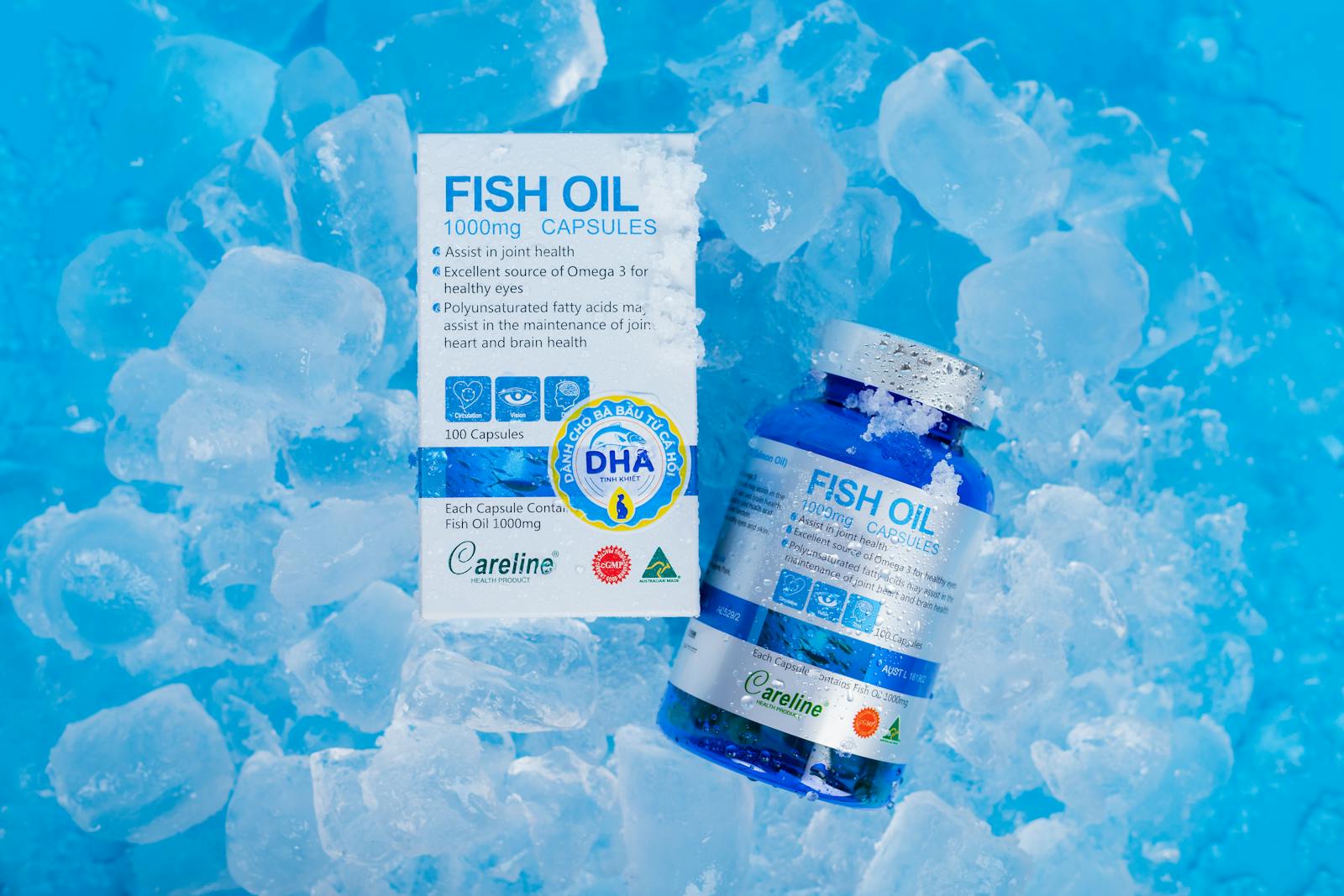
Then there’s the interaction problem. Bacopa monnieri affects serotonin, dopamine, and acetylcholine simultaneously. So does lion’s mane, though through different mechanisms. Stack them with an SSRI or even with high-dose fish oil — which also modulates serotonin pathways — and you’ve created a neurochemical environment that no clinical trial has ever tested. “People are running uncontrolled experiments on their own brains,” Dr. Rao said, “and calling it wellness.”
The cultural fuel behind this is worth examining. We explored how childhood nutrition permanently shapes brain structure, and that knowledge has — understandably — made people hyper-aware of what they put in their bodies. The fear of cognitive decline, especially among adults watching parents develop dementia, creates a psychological urgency that the supplement industry is perfectly designed to exploit. Brain health supplements are now a $10 billion global market, and the fastest-growing segment isn’t isolated compounds. It’s stacks — curated combinations sold as packages or recommended as protocols by influencers with no clinical training.
Nadia Cheng, 63, a retired financial analyst in Vancouver, started her brain health stack after her mother was diagnosed with Alzheimer’s at 78. “I was terrified,” she said. “I would have done anything.” She spent $340 a month on supplements. She felt proactive. She felt in control. What she didn’t feel was the gradual onset of insomnia, irritability, and a strange new difficulty with spatial reasoning — all of which appeared in the same window as her stacking regimen. When her neurologist suggested she stop everything for 90 days, the symptoms resolved.

Dr. Rao is careful not to frame this as anti-supplement. She prescribes specific supplements to specific patients — vitamin D for deficiency, B12 for older adults with absorption issues, omega-3s at moderate doses for patients with documented inflammatory markers. What she opposes is the stack-and-pray approach, the idea that layering eight compounds with overlapping mechanisms is somehow self-care. “We wouldn’t do this with pharmaceuticals,” she said. “You wouldn’t take three different blood pressure medications because each one had a good study. Why do we think the rules change because something is sold at Whole Foods?”
The deeper issue, the one that nobody selling brain supplements wants you to sit with, is that cognitive decline isn’t primarily a deficiency problem. For most people, it’s a lifestyle problem — sleep, stress, social connection, metabolic health. As a recent piece on the sleep apnea crisis in women over 50 showed, undiagnosed sleep disruption alone can mimic and even cause the very cognitive symptoms people are trying to supplement their way out of. And the psychological dimension matters too — losing a sense of purpose can deteriorate cognitive function faster than almost any nutritional gap.
Rachel Kwon stopped her entire stack six months ago. She didn’t replace it with a different stack. She replaced it with a sleep study (which found mild apnea), a walking routine with a friend three mornings a week, and a Korean book club that forced her to process dense language in real time. Her word-retrieval issues have largely resolved. Her processing speed, retested recently, has ticked back up.
She still keeps one bottle on her counter — a basic magnesium supplement her doctor actually recommended after testing her levels. Just one. “I used to think more was safer than less,” she told me. “Because it’s natural, right? But my brain wasn’t asking for twelve things. It was asking for sleep and conversation and someone to notice it was struggling.”
The supplement industry sells certainty in capsule form — the comforting fiction that the right combination of powders can outrun your genetics, your stress, your age. But the brain doesn’t respond to good intentions. It responds to balance. And balance, by definition, is not something you achieve by adding more.
Feature image by by Natallia on Pexels