
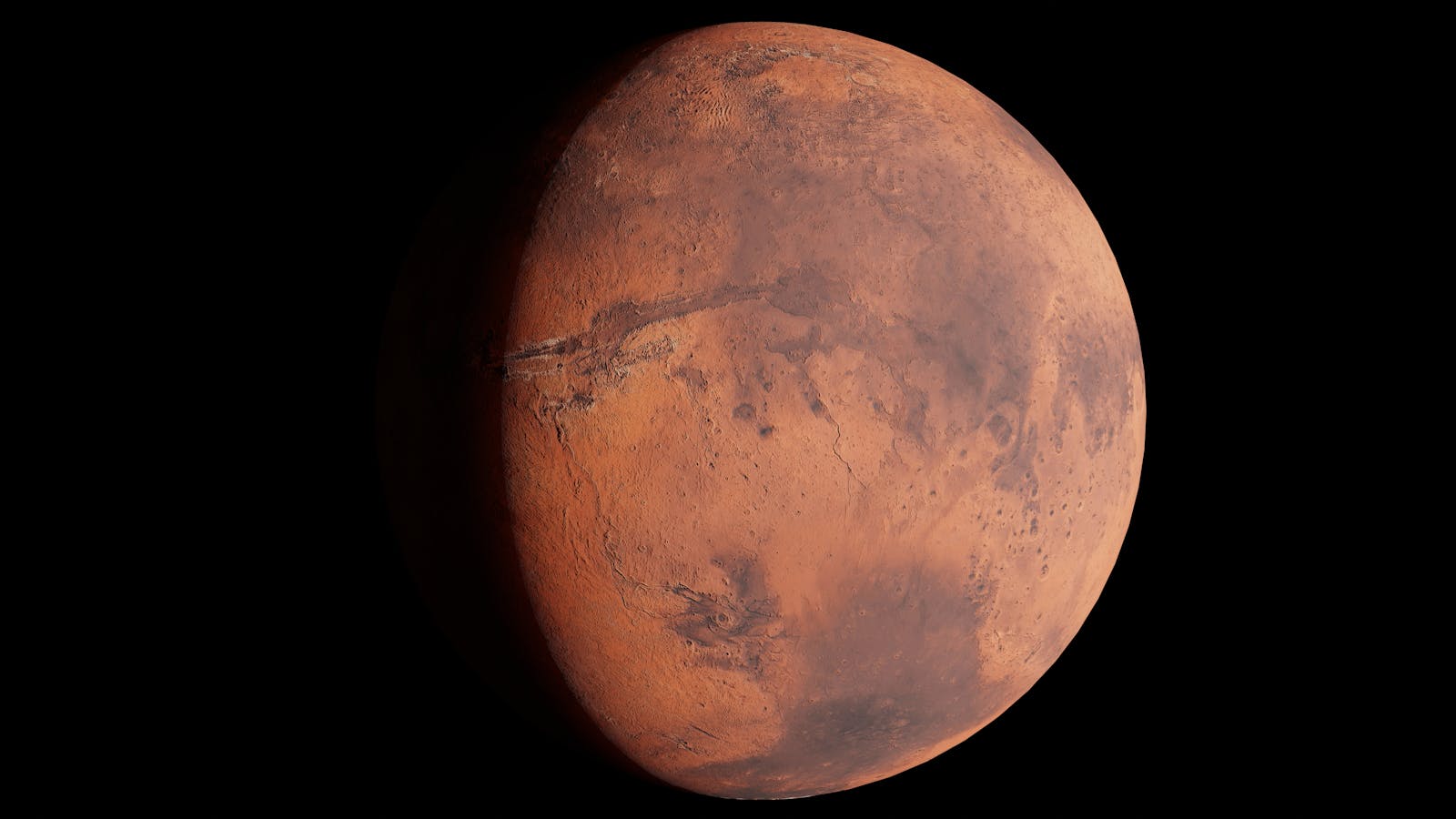
On April 14, 2026, NASA Administrator Jared Isaacman stood before a bank of cameras and said something that sounded like it belonged in a press release from the 1960s: the United States would build a nuclear-powered spacecraft and fly it to Mars by the end of 2028. The craft had a name already, Space Reactor-1 Freedom, or SR-1. The timeline was absurd. The ambition was familiar. And somewhere in Albuquerque, New Mexico, a nuclear engineer read the announcement on her phone during a lunch break and felt two things at once: a jolt of professional excitement and the bone-deep skepticism of someone who has watched this exact promise get made, and broken, for her entire career.
She has good reason. The history of American nuclear propulsion in space is a history of announcements that never become hardware. NERVA. Prometheus. DRACO. Each one was technically sound, politically celebrated at birth, and quietly strangled in its crib by budget cycles, shifting administrations, or public unease about the word “nuclear.” SR-1 is the latest entry in this lineage, and the central question it poses is not whether nuclear propulsion works — the physics has been settled since the 1950s — but whether this time, the institution behind the announcement has finally assembled the conditions to actually follow through. The answer, against the weight of history but because of a narrow and specific set of circumstances, is: probably yes. Not certainly. But more probably than any of its predecessors.
The engineer in Albuquerque works for a Department of Energy contractor. She has spent years modeling heat dissipation in compact reactor systems. She knows what extreme temperatures do to metal over time. She knows the history of SNAP-10A, a nuclear reactor the United States put into space in 1965, which stopped functioning after approximately 43 days due to electrical system failure. She also knows that the Soviet Union flew nuclear reactors in orbit to power satellites while America spent decades studying the concept and spending billions on designs that never left the ground. According to the announcement, Isaacman expressed optimism that America would finally move forward on nuclear power in space after decades of conceptual work. She wanted to believe him.
The plan is technically straightforward, which is not the same thing as simple. SR-1 will reportedly carry a uranium-filled nuclear reactor producing electrical power in the tens of kilowatts. That reactor would be vastly less powerful than a standard Earth-based nuclear plant, which typically generates hundreds of megawatts to over a gigawatt. But size is misleading here. Nuclear experts note that nuclear fuel sources are far more energy-dense than conventional alternatives, making them orders of magnitude more efficient per unit of mass.
The reactor won’t propel the spacecraft the way a chemical rocket does, with massive bursts of thrust that burn through fuel in minutes. Instead, it will power ion thrusters, a technology called nuclear electric propulsion, or NEP. Sebastian Corbisiero, the U.S. Department of Energy’s National Technical Director of Space Reactor Programs, has described NEP as producing very low thrust but operating with high efficiency over very long periods. Think of it less like a sprinter and more like a distance runner who never stops.
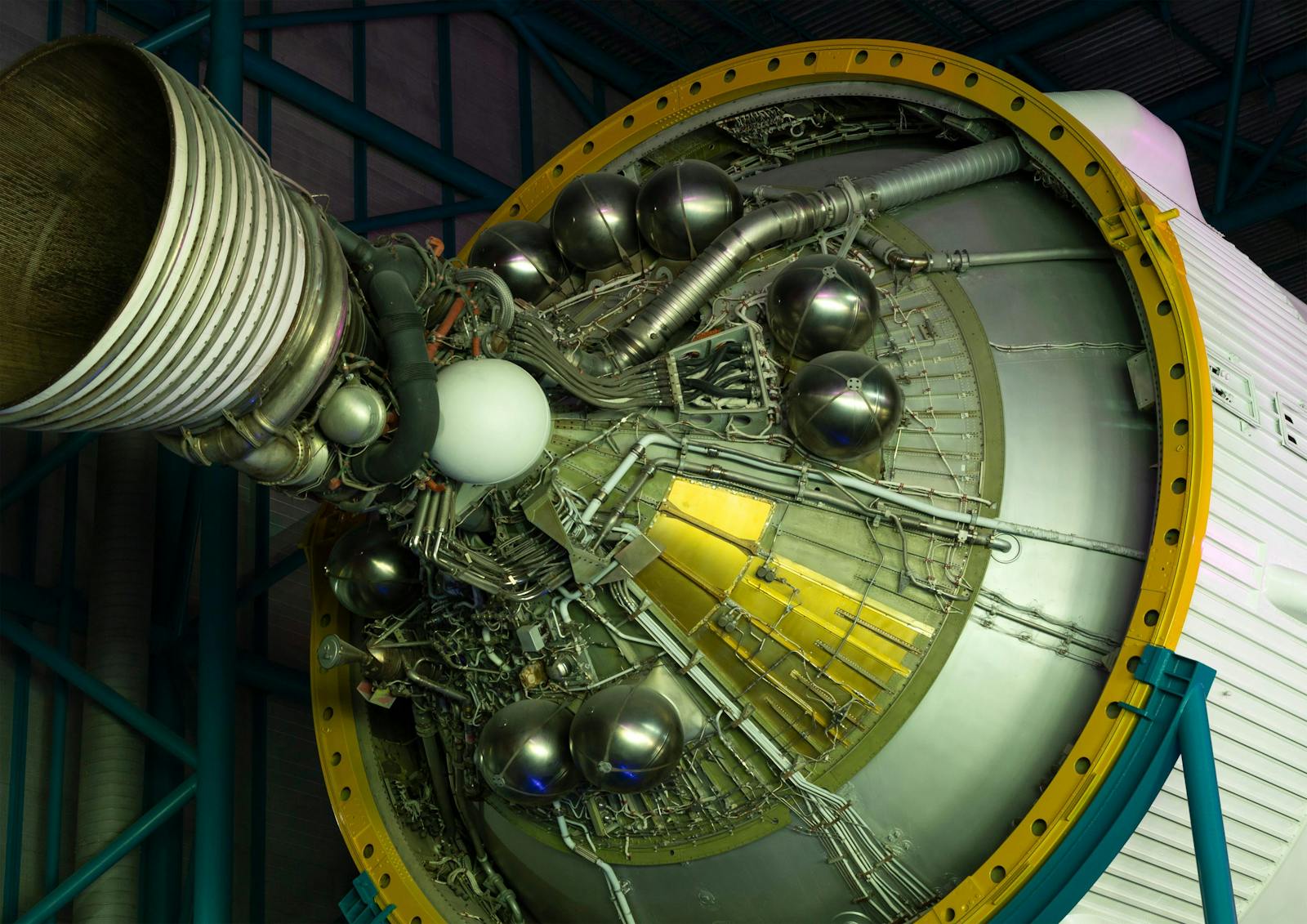
An aerospace systems analyst in Huntsville, Alabama, keeps a framed print of a 1960s-era nuclear thermal rocket concept on his office wall. He collects canceled programs the way some people collect stamps. NERVA. Prometheus. DRACO, a collaboration between NASA and the Department of Defense on nuclear propulsion, reportedly ended recently because of high experimentation costs, lower prices for conventional rocket fuel, and safety concerns. He has watched the pattern repeat: a president announces a bold Mars initiative, funding flows for a few years, political winds shift, the program dies. Some observers have characterized this pattern as a ‘Mars mirage’ — ambitious announcements followed by program cancellations.
But SR-1 is different from those earlier ghosts in at least one meaningful way. NASA is not starting from scratch. The agency is repurposing a power-and-propulsion system originally designed for Gateway, a lunar space station that was recently canceled. That’s pragmatic, not glamorous. And pragmatism, more than ambition, is what gets hardware into space. The development timeline NASA has reportedly laid out is aggressive, calling for hardware development to begin in 2027 with launch targeted for late 2028.
Those dates are aggressive enough to make nuclear engineers wince. Eighteen months from hardware development to a launch-ready system is the kind of schedule that works in PowerPoint presentations and rarely anywhere else. Surviving launch vibrations is one of the most significant engineering challenges; a nuclear reactor designed for the vacuum of space must first endure the violent shaking of a chemical rocket carrying it off the planet. Then there’s the cooling problem. In space, there is no air, no water, no convection. Heat can only leave a reactor through radiation, which is slow. These are solvable problems. They are also the kind of problems that add months, sometimes years, to timelines.
The reason this matters, the reason it’s more than a technical curiosity, sits with radiation biologists studying what deep-space cosmic radiation does to human tissue. The findings are grim. Beyond the protective shield of Earth’s magnetosphere, astronauts absorb radiation that damages DNA, increases cancer risk, and may cause cognitive decline. A round trip to Mars on conventional chemical propulsion could take the better part of a year in transit. Every day in deep space is a day of accumulating damage.
Philip Metzger, a spaceflight engineering researcher at the Florida Space Institute, has noted that improved propulsion technology could address radiation exposure concerns by reducing transit time to Mars. Nuclear electric propulsion can make spacecraft faster and more agile, shrinking the transit time and, with it, the window of exposure. Researchers studying radiation exposure have seen enough irradiated tissue samples to know that the difference between a six-month trip and a four-month trip is not a scheduling convenience. It is a medical intervention.
There is also a geopolitical dimension that the technical conversation often obscures. China has publicly discussed ambitions for crewed Mars missions and has been developing space capabilities. The fact that the Soviet Union successfully operated nuclear reactors in orbit while the United States managed limited success with SNAP-10A is a historical awkwardness that American space policy has never fully reckoned with. SR-1 is partly about Mars and partly about not ceding the next frontier to a strategic competitor. When national prestige enters the equation, funding tends to become more durable, which is one reason some observers allow themselves cautious optimism that this program might actually survive its first budget cycle.
The spacecraft itself will be uncrewed. This is an important detail that sometimes gets lost in the excitement of the Mars framing. SR-1 is a technology demonstrator, not a crewed mission. It needs to prove that a nuclear reactor can survive launch, activate in orbit, run its ion thrusters for months, and maintain stable operations across the vast distance between Earth and Mars. If it works, it opens a door. If it fails, it becomes another entry in the archive of canceled programs.
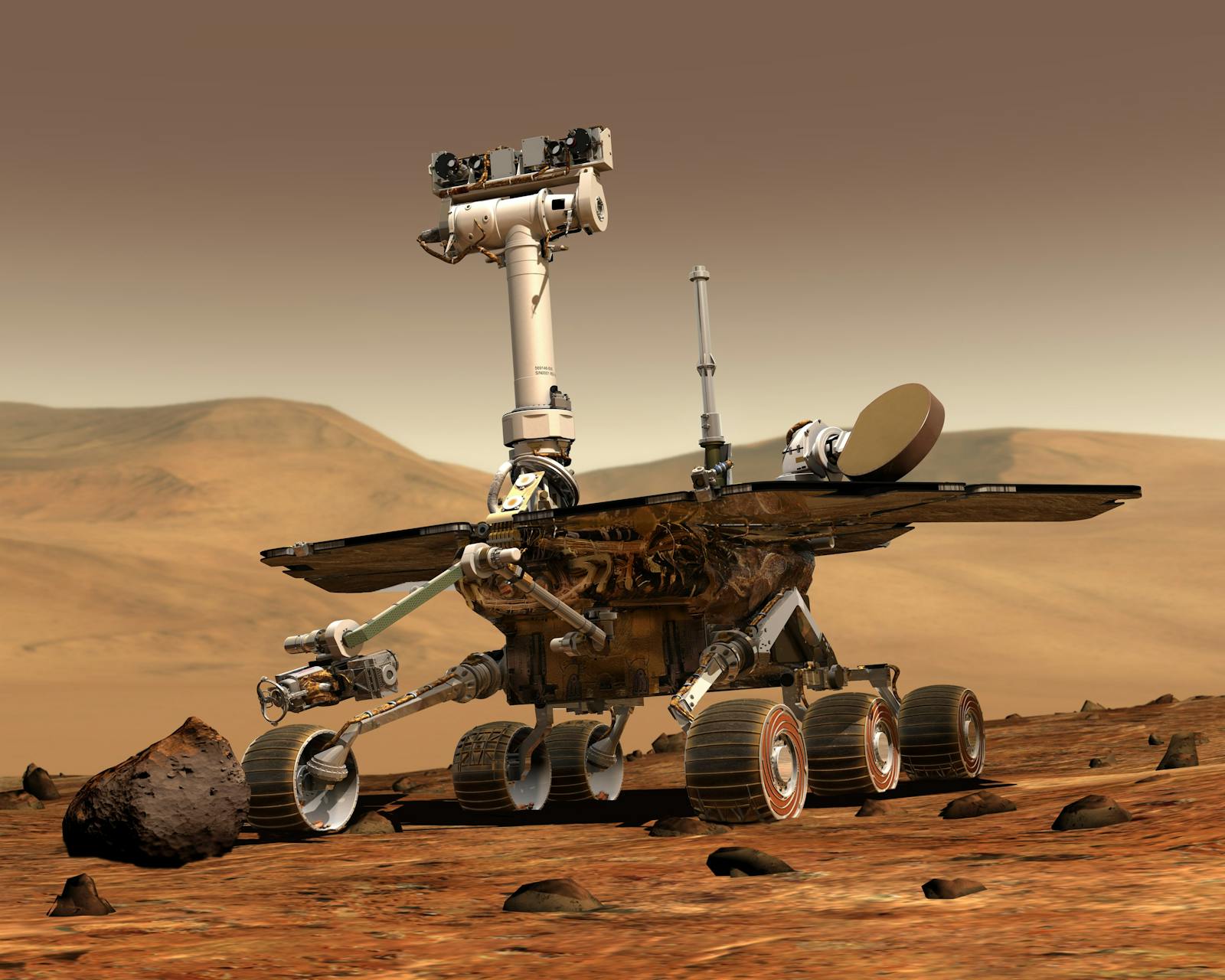
Space agencies have used nuclear material in space before, just not in reactors (aside from the Soviet program and America’s brief SNAP-10A experiment). Radioisotope thermoelectric generators, or RTGs, have powered some of humanity’s most successful missions. Both Voyager spacecraft, now in interstellar space, run on RTGs. So did Cassini, which orbited Saturn for years. But RTGs convert the heat from decaying plutonium into electricity at very low power levels. They are the flashlight batteries of space power. A fission reactor is a generator. The jump from one to the other is not incremental. It is categorical.
Lindsey Holmes, Vice President of Advanced Projects at Analytical Mechanics Associates, is among those who see the Gateway-derived hardware as a genuine accelerant. The power-and-propulsion element was already being engineered, already being tested. Repurposing it for a Mars-bound demonstrator is creative reuse, the kind of decision that happens when budgets are tight and political pressure is high. The broader Artemis program, with its own mix of ambition and compromise, has been a proving ground for this kind of institutional adaptation.
The technical obstacles — thermal management, vibration tolerance, radiation shielding, the gap between ground testing and deep-space performance — are real but not novel. Nuclear engineers have solved each of these problems individually, in labs, across decades. Ceramic composites, refractory metals, alloys engineered for extreme thermal gradients: the materials exist. The solutions are not theoretical. What killed previous programs was never that the engineering was impossible. It was that the institutional will collapsed before the engineering could be completed. The gap between a working solution on paper and a working solution bolted inside a spacecraft hurtling toward Mars has swallowed programs before, but it has swallowed them politically, not technically.
For people who have spent their careers in nuclear space propulsion, SR-1 represents something close to professional vindication. Metzger, Corbisiero, Holmes, and others have spent years arguing that nuclear is the only serious long-term propulsion technology for deep space. Solar panels lose effectiveness the farther you travel from the sun. Chemical rockets require enormous quantities of fuel that make spacecraft heavy and slow. Nuclear is, by the physics, the answer. It has been the answer since the 1950s. The question was always whether anyone would actually build it.
Now someone says they will. In 30 months.
The technology itself carries a strange kind of loneliness. Nuclear electric propulsion systems operate in silence. There is no roar, no flame. An ion thruster emits a faint blue glow as it accelerates charged particles to extraordinary speeds. The thrust is tiny, barely enough to move a sheet of paper on Earth. But in the frictionless vacuum of space, that tiny thrust accumulates. Day after day, week after week, the spacecraft accelerates. It is the opposite of the dramatic launches that make the evening news. It is patience made mechanical.
For those who have followed the gap between announcement and action in American policy, SR-1 tests whether spectacle can coexist with follow-through. The announcement was cinematic. Isaacman, a billionaire-turned-administrator with a flair for the dramatic, gave it the full treatment. But the work that follows is unglamorous: thermal modeling, vibration testing, radiation shielding assessments, supply chain management for exotic materials, regulatory approvals for launching nuclear material.
The geopolitical pressures that helped birth SR-1 are themselves a kind of bipartisan consensus hardening into action. Competition with China in space has become one of the few issues that both major American political parties treat with urgency. That consensus provides a buffer against the budget cycles that killed earlier nuclear propulsion programs. It does not guarantee success. But it changes the odds.
And this is why SR-1 will likely fly — not on Isaacman’s timeline, but fly nonetheless. Count what it has that its predecessors did not. One: existing hardware, inherited from Gateway, that compresses years of development into months. Two: a geopolitical rival that makes cancellation politically costly in a way that budget savings never offset. Three: a bipartisan consensus on space competition that insulates the program from the administration-to-administration whiplash that killed NERVA, Prometheus, and DRACO. None of those programs had all three. SR-1 does.
The 2028 launch date is almost certainly fiction. The engineering reality of thermal testing, vibration qualification, and nuclear launch certification will push the timeline right, probably by a year, possibly by two. But a slip is not a cancellation. The Albuquerque engineer running her thermal models, the Huntsville analyst cataloging dead programs, the radiation biologists counting exposure days — they have all seen the difference between a program that is late and a program that is dead. NERVA was dead. Prometheus was dead. SR-1 has the structural supports to survive being late.
The nuclear engineer finished her lunch, put her phone away, and went back to her thermal models. The numbers she runs today, the simulations of heat transfer in compact uranium reactors, are the same numbers she’s been running for years. What changed is that someone, somewhere, decided those numbers might finally matter. The reactor operating at extreme temperatures, the ion thrusters glowing blue in the dark, the slow and silent acceleration toward a planet no human has ever touched. For the first time in her career, the institution appears to be moving at something approaching the speed the physics has always permitted. Not because the humans got faster. Because the reasons to quit got smaller than the reasons to continue.