
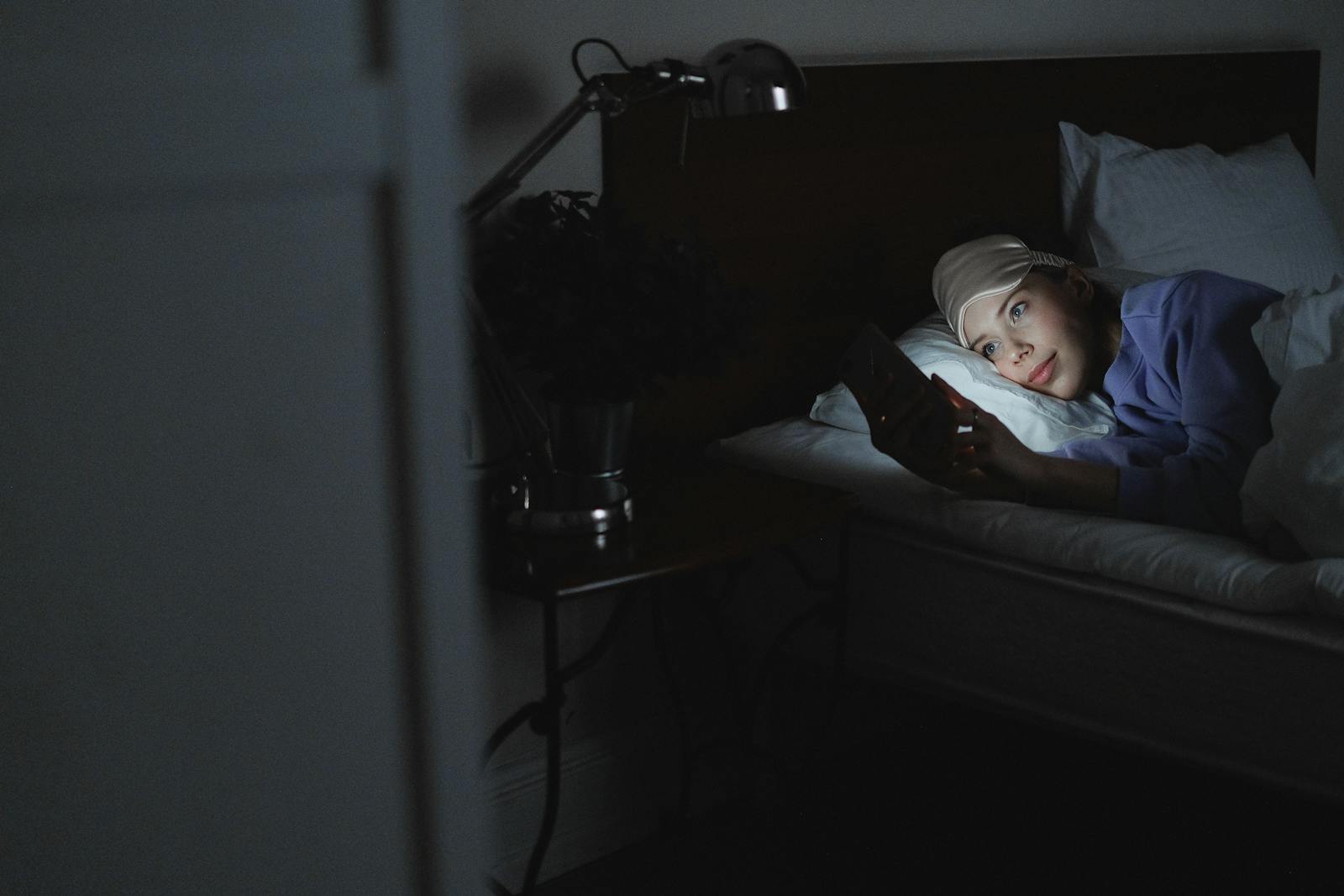
Nadia, a 38-year-old pediatric nurse in Columbus, Ohio, sets her alarm for 5:15 every morning. She packs two lunches, drives her daughter to before-school care, clocks in by 7, spends nine hours managing tiny humans in various states of crisis, picks up her daughter, makes dinner, supervises homework, runs a bath, reads a story, and collapses onto her bed around 9:30 p.m. She is exhausted. She knows she should sleep. Instead, she picks up her phone and scrolls for two hours straight. TikTok compilations she won’t remember. Reddit threads about celebrity feuds she doesn’t care about. News stories that make her chest tight. She’ll hate herself at 5:15. She does it anyway, every single night.
We’ve been told this behavior is a discipline problem. A dopamine hijack. A bad habit born from boredom and blue light. But a growing body of research tells a different story, one that reframes the 11 p.m. scroll session as something far more psychologically interesting. Researchers call it revenge bedtime procrastination, a term that originated on Chinese social media (報復性熬夜) and went viral globally because it named something millions of people recognized instantly: the deliberate sacrifice of sleep in order to reclaim a sense of freedom that the day refused to give you.
This is a form of protest. Quiet, private, and ultimately self-destructive, but protest nonetheless.
I’ve been thinking about this behavior through a lens I keep returning to in my work: the gap between what we’re told our problems are and what our problems actually feel like from the inside. When I tried following the new dietary guidelines for six weeks, I discovered the advice was structurally disconnected from the life I actually lived. Revenge bedtime procrastination reveals the same disconnect. The wellness advice says “put your phone down an hour before bed” as though the problem is the phone, when the phone is merely the instrument of something much deeper.
The concept gained formal academic traction through a 2018 study published in Frontiers in Psychology by Dr. Floor Kroese and colleagues at Utrecht University. Their research found that bedtime procrastination wasn’t strongly correlated with general procrastination tendencies at all. People who delayed sleep weren’t lazy or undisciplined across the board. They were, overwhelmingly, people who reported low levels of autonomy during their waking hours. The less control someone felt over their daytime schedule, the more likely they were to resist going to bed.
That distinction matters enormously. Laziness is a character flaw. Reclaiming stolen autonomy is a psychological need.
Marcus, 45, manages a warehouse distribution center outside of Atlanta. His days are dictated by shipment schedules, corporate mandates, and a regional VP who sends Slack messages at 6 a.m. and expects responses by 6:05. Marcus told me he doesn’t even enjoy what he’s looking at on his phone late at night. “It’s garbage,” he said. “I’m watching people I don’t know do things I don’t care about. But it’s the only time in my entire day where nobody is asking me for anything. Nobody needs a decision. Nobody needs a response. It’s mine.”
That word keeps appearing in conversations about this phenomenon. Mine.
Psychologists describe what Marcus is experiencing as a failure of what they call need fulfillment transfer. When core psychological needs (autonomy, competence, relatedness, as defined by Self-Determination Theory) go unmet during the day, people don’t just accept the deficit. They attempt to compensate during whatever scraps of unstructured time remain. For most working adults, those scraps exist only late at night, in the dark, after everyone else is asleep. The phone becomes the vehicle because it’s the most frictionless source of novel stimulation available. But the scrolling itself is a symptom. The cause is a day that left no room for the self.
As UC San Diego’s Dr. Ayelet Ruscio has explained, our brains are wired toward threat monitoring, which makes doomscrolling feel productive in the moment even when it’s damaging. But the revenge component adds a layer that pure neuroscience misses. People aren’t just falling into a dopamine trap. They’re actively choosing to stay awake as an assertion of agency.
Consider what the alternative looks like. Going to sleep “on time” means the day is truly over. You gave everything to your employer, your children, your partner, your obligations, and now you get nothing. You transition directly from serving others to unconsciousness and then wake up to serve again. Revenge bedtime procrastination is the psyche saying: No. I existed today too. I get something.
The cultural dimension here is impossible to ignore. The term emerged in China, where the 996 work culture (9 a.m. to 9 p.m., six days a week) has been widely documented and criticized. But the phenomenon crossed borders instantly because the experience of temporal poverty is global. A 2023 Gallup survey found that 44% of employed adults worldwide reported feeling significant daily stress. The American Time Use Survey consistently shows that leisure time for working parents has been shrinking for decades, with mothers reporting the steepest losses.
Theresa, a 51-year-old high school administrator in suburban Phoenix, fits the profile exactly. She’s part of the Gen X cohort I’ve written about as being financially and emotionally squeezed from every direction: aging parents, dependent children, stagnant wages, rising costs. Her days are consumed by other people’s emergencies. “I know the sleep hygiene rules,” she told me. “I’ve read every article. I still do it. Because if I go to sleep at 10 like I’m supposed to, I will have spent an entire day in which I did not make a single choice for myself. Not one.”
The counterargument is real, and it deserves honest engagement. Chronically sacrificing sleep is genuinely harmful. National Geographic recently reported on how doomscrolling rewires neural pathways, reinforcing anxiety loops and degrading the brain’s capacity for emotional regulation. Sleep deprivation compounds every other health risk. Nobody credible is arguing that scrolling until 1 a.m. is good for you. The wellness advocates aren’t wrong about the damage.
They’re wrong about the diagnosis.

When you misidentify a compensation behavior as a mere bad habit, you prescribe willpower where what’s needed is structural change. Telling Nadia to put her phone in another room before bed is like telling someone who stress-eats to just stop buying chips. It addresses the mechanics while ignoring the hunger. The “digital hygiene” framework treats the phone as the problem. But Nadia’s phone isn’t the problem. Her fourteen-hour day with zero unscheduled minutes is the problem. The phone is just where she goes to find the ghost of leisure.
There’s a concept in occupational psychology called effort-recovery theory, developed by Meijman and Mulder in the 1990s. It posits that people need adequate recovery periods after sustained effort in order to restore their functional capacities. When recovery is insufficient, strain accumulates. The theory was designed to explain burnout, but it maps perfectly onto revenge bedtime procrastination. The scrolling is a desperate, inadequate attempt at recovery that actually deepens the strain. People know this. They feel it happening in real time. And they still can’t stop because the need for something that is mine overrides the need for rest.
David, a 29-year-old software developer in Austin, described it to me with startling precision. “I’ve tried everything. Blue light glasses, screen time limits, leaving my phone in the kitchen. I just get up and go get it. It’s not about the content. It’s about the act of choosing to do something nobody told me to do.” David works remotely, which you’d think would offer more autonomy. Instead, he reports that the boundary collapse between work and home has made it worse. There is no commute, no physical threshold between obligation and freedom. The only reliable boundary is the one he creates by staying up past his own bedtime.
I keep returning to what I observed when I wrote about watching my father sit in the dark living room with the TV on mute. That piece was about purpose. This is its mirror image: the quiet rebellion of people who still have too much purpose imposed on them by everyone else, and none chosen for themselves. My father had empty hours and nothing to fill them with. Nadia, Marcus, Theresa, and David have overflowing hours and nothing left of themselves inside them.
The revenge in revenge bedtime procrastination points in two directions. The obvious one is outward: revenge against the job, the commute, the obligations, the systems that extract your daylight hours and leave you the dark ones. But there’s a subtler revenge that points inward, and I think it’s the one that hurts more. It’s revenge against the version of yourself that complies all day. The self that says yes, shows up, performs, manages, accommodates. Late-night scrolling lets you be the version who says no. Even if the only person you’re saying no to is yourself, and even if the cost is your own health.
That internal split is what makes this phenomenon so resistant to simple fixes. You can’t hack your way out of a need this fundamental. Habit stacking, phone curfews, sleep meditations: they all assume the problem lives at the level of behavior. But this operates at the level of identity. Who am I if my entire waking life belongs to someone else’s agenda?
The honest answer, the one nobody wants to sit with, is that most people can’t redesign their days. Nadia can’t work fewer hours and still pay rent. Marcus can’t ignore his regional VP. Theresa can’t stop being the person everyone depends on. The structural conditions that produce revenge bedtime procrastination are the same conditions that drive people to spend money they don’t have on a life that was never really theirs. The system doesn’t leave margins. So people carve them out of their sleep.
And maybe the first step isn’t fixing the behavior. Maybe it’s recognizing what the behavior is actually saying. Every night, millions of people choose exhaustion over the feeling of having been completely consumed. That’s not a failure of discipline. It’s a measure of how little room is left. The phone in the dark at midnight is a person saying: I was here today, too. I mattered. Give me ten more minutes to prove it, even if the proof costs me everything tomorrow.
The scroll isn’t the sickness. The scroll is the fever, telling you exactly where the infection lives.
Feature image by SHVETS production on Pexels