
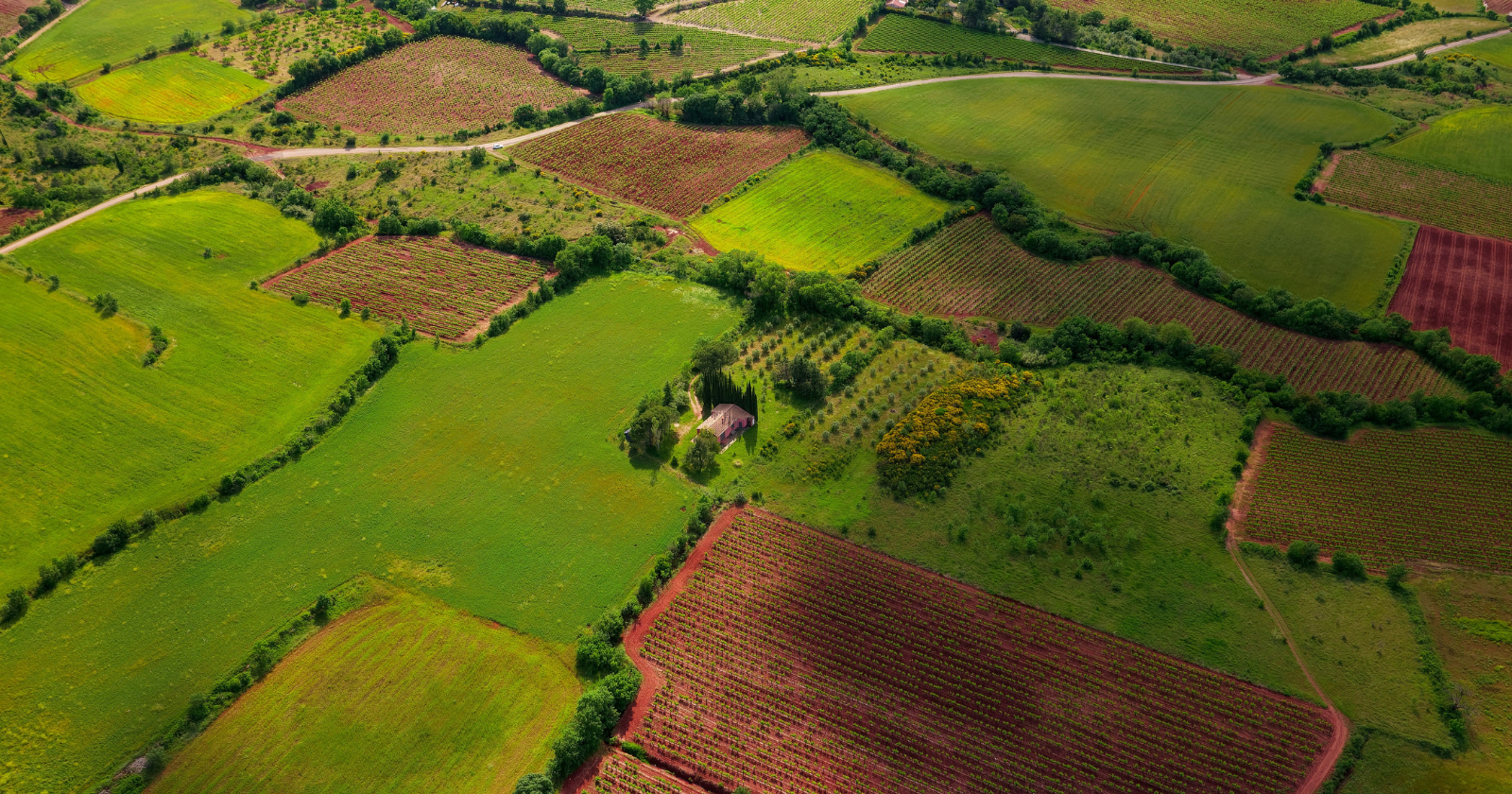
Editor’s note: This article was originally written by Justin Brown and has been updated in April 2026 to reflect the latest developments in digital marketing and media.
To learn more about our editorial approach, explore The Direct Message methodology.
On one side of the world, a Tasmanian dairy farmer watches the property next door sell to a fund she has never heard of, registered in a country she has never visited. On the other side, a portfolio manager in London or New York slides a presentation across a boardroom table showing how that same paddock fits into a net-zero carbon strategy.
Both are looking at the same piece of land. Neither is seeing what the other sees. One sees home. The other sees a line item under “alternative assets” and a hedge against a warming planet.
Tasmanian farmland is experiencing a hedge-fund buying spree, with locals fearing that climate investors, rather than tourists, are reshaping the island’s rural economy. This collision between global capital and local livelihood is accelerating. And the vocabulary surrounding it has been carefully chosen to make it feel inevitable, even virtuous.
Institutional investors are buying up Tasmanian farmland, leading to rising concerns about local buyers being priced out entirely. I grew up in a small town in Oregon where the nearest mall was two hours away. That distance gave me a lifelong skepticism of the stories corporations tell about what they are doing for communities, because I watched what happened when outside money arrived with good intentions and left with the profits. What is unfolding in Tasmania carries an eerily similar rhythm.
The Green Label on an Old Playbook
There is a deep contradiction at the heart of climate-driven farmland investment. The stated mission is environmental stewardship: sequester carbon, promote sustainable agriculture, contribute to net-zero targets. The actual mechanism is financial accumulation at scale, driven by the same logic that has always animated institutional land acquisition. Buy low, consolidate, extract returns, and exit when the numbers say so.
Tasmania’s appeal is straightforward. The island sits at a latitude increasingly favorable for agriculture as the planet warms. Reliable rainfall, clean water, and temperate conditions make it a climate resilience play. For hedge funds and institutional investors, it represents a physical asset that appreciates as climate anxiety grows. The more alarming the headlines, the more valuable the paddock.
What gets lost in the pitch deck is the human cost. When a fund acquires farmland at prices inflated beyond what any local operator can match, it does more than change ownership. It restructures rural economies. Families that have worked land for generations become tenants or leave entirely. Local supply chains built on relationships erode. Towns hollowed out by capital flight lose their social infrastructure: the school enrollment drops, the co-op consolidates, the pub closes.
During my time working with tech companies on growth strategy, I observed a parallel pattern in digital markets. When platforms frame aggressive user acquisition as “democratizing access” or “building community,” the language performs a specific function: it converts skeptics into spectators. The same behavioral mechanism operates here. Framing farmland acquisition as climate strategy neutralizes opposition before it organizes. Who wants to argue against saving the planet? The psychological framing is precise.
People consistently underestimate how much branding shapes their moral judgments. Call a land grab a “climate-resilient portfolio allocation” and resistance softens, because the vocabulary borrows authority from science and urgency from crisis.
The tension is real and unresolved. Two values collide: the urgent need for climate action and the equally urgent need to protect communities from displacement by capital. Acknowledging both without dismissing either is where honest conversation begins.
When Research Becomes a Sales Pitch
The noise surrounding institutional farmland investment is dense and well-funded. Academic research, ESG ratings, sustainability reports, and financial media all contribute to a narrative that positions farmland acquisition as a sophisticated, responsible investment strategy. And the research is genuine.
A study from Western Sydney University examining risk-adjusted performance of Australian farmland confirmed that institutional investors can achieve strong returns and enhance portfolio resilience by including farmland, which also offers potential contributions to net-zero carbon strategies. That finding is accurate. It is also incomplete in a way that serves a particular audience.
The study addresses the investor’s question: will this asset perform? It does not address the community’s question: what happens to us when it does? This is a recurring pattern in how financial research gets absorbed into public discourse. The methodology is sound, but the framing determines who benefits from the conclusion. When a finding about portfolio diversification becomes the justification for pricing out fourth-generation farmers, the research has been weaponized, regardless of the researchers’ intent.
Media coverage compounds the distortion. Stories about Tasmania’s farmland boom tend to toggle between two simplified frames: progress narrative (smart money flows to climate solutions) or crisis narrative (greedy funds destroy rural life). Both versions generate engagement. Neither captures the layered reality. The progress narrative ignores displacement. The crisis narrative ignores the genuine need for climate-adaptive agriculture. What emerges is a public conversation that oscillates between cheerleading and outrage, leaving the structural questions untouched.
On my morning runs through the Oakland hills before dawn, I often think through the data sets I have been working with, looking for the gap between what the numbers describe and what the people behind them experience. The gap in Tasmania’s story is significant. The financial data says farmland investment works. The community data, when anyone bothers to collect it, says the cost is being distributed unequally. Institutional capital absorbs the returns. Local communities absorb the disruption.
The Uncomfortable Clarity Beneath the Green Veneer
When we allow financial institutions to define what climate action looks like, we end up with a version of environmentalism that protects portfolios first and ecosystems second. True climate resilience requires that the people who live on the land have a stake in its future, not a lease agreement with an offshore fund.
This distinction matters enormously. Carbon offsets on a balance sheet are not the same as soil health maintained by a farmer who plans to hand the property to her children. Long-term stewardship and quarterly performance reporting operate on fundamentally different time horizons, and the land knows the difference even if the spreadsheet does not.
Rebuilding Investment Around Accountability, Not Extraction
The question worth asking is straightforward: can institutional capital flow into climate-adaptive agriculture without displacing the communities that make that agriculture possible? The answer requires structural innovation, not better branding.
Several models deserve attention. Community land trusts, where ownership is held collectively and leased to working farmers, prevent speculative flipping while still attracting investment. Cooperative investment structures allow institutional money to participate in farmland returns while giving local operators governance rights. Impact-linked financing, where returns are partially tied to measurable community outcomes, creates accountability mechanisms that pure profit-seeking cannot.
Tasmania’s government faces a choice. It can allow the market to sort itself out, which means watching institutional capital reshape the island’s rural character within a decade. Or it can implement frameworks that channel investment toward genuine climate adaptation while protecting local access to land. Foreign ownership registers, right-of-first-refusal policies for local buyers, and agricultural zoning protections are all available tools. None are radical. All require political will.
For investors who genuinely care about climate outcomes, the hard work begins with interrogating the vehicle, not the label. A fund that acquires Tasmanian farmland, leases it to industrial operators, and books carbon credits is doing something very different from a fund that partners with local farmers, invests in regenerative practices, and shares governance. Both might call themselves climate strategies. Only one earns the name.
The broader pattern here extends well beyond Tasmania. As climate anxiety intensifies, every asset class will be repackaged in green vocabulary. Farmland, water rights, forest offsets, renewable energy infrastructure: all will attract institutional capital dressed in the language of responsibility. The discipline required of investors, policymakers, and citizens alike is to look past the narrative and examine the structure. Who benefits? Who decides? Who stays, and who gets displaced?
The land itself does not care about branding. It responds to how it is treated. The question is whether we will build systems that treat both the land and the people on it as ends in themselves, or continue allowing financial engineering to call extraction by a more comfortable name.