
The word brand used to belong to companies. It sat on cereal boxes, tire sidewalls, and the sides of trucks. Somewhere between 2009 and 2015, it migrated onto people — not celebrities, not executives, ordinary people — and it did so quietly enough that most of them agreed to it without noticing they had. A schoolteacher in Ohio now has a bio, an aesthetic, and a niche. A plumber in Bristol has a content pillar strategy. A 14-year-old in Lagos has an engagement rate. The transfer was frictionless, which is what made it so consequential.
A cohort study published in JAMA Network Open in November 2025 found that a single week away from social media cut depressive symptoms by 24.8 percent among 373 young adults, alongside a 16.1 percent drop in anxiety and a 14.5 percent drop in insomnia. The study was conducted by researchers at Beth Israel Deaconess Medical Center, including psychiatrist John Torous, who directs the hospital’s digital psychiatry division and holds a faculty appointment at Harvard Medical School. The point wasn’t to prove people needed a break — it was to measure, using app-tracked data rather than guesswork, what a break actually does to a person’s baseline. The number itself is not really the interesting part.
What’s interesting is what a week without an audience gives back.
The platforms did not invent the desire to be seen. They industrialized it. They took a normal human wish — to matter to other people — and built a machine that measures it in real time, ranks it against strangers, and rewards a very specific kind of performance. Under those conditions, a private life is not something you lose in one dramatic moment. It is something you slowly stop building, because the incentives point elsewhere.
The picture is not limited to short interventions. A 2018 analysis of the UK Millennium Cohort Study, tracking more than 10,000 14-year-olds, found that heavier social media use was linked to higher depressive symptom scores, with the association markedly stronger for girls than for boys. Individually, effects like these are modest. The public health weight comes from the scale of exposure — nearly every teenager, not a select few — rather than the size of any one person’s harm.
What the mental health data captures is the visible tip. The quieter change is architectural. When every ordinary person becomes a small publisher of themselves, the concept of a backstage — the psychological room where you are not being watched, not composing, not editing — starts to shrink. Building on sociologist Erving Goffman’s framework of front stage and back stage behavior, the performance requires a place where the performance is dropped. Social media did not eliminate the back stage. It made it optional, and then it made opting into it feel like disappearing.
This shows up most clearly in people who barely post at all. Plenty of heavy phone-checkers never publish anything — they open the app dozens of times a day without posting once. But ask them how a promotion, a hike, or a fight with a sibling registered, and a familiar sequence shows up: a flicker of whether it’s postable, a decision not to post it, and a faint unresolved residue that the moment was never quite finished. That’s not performance. It’s rehearsal for a performance that never happens. The private moment still gets routed through the logic of the public one before it’s allowed to just be a moment.
This is the part that gets missed in the debate about screen time. The harm is not only in the hours spent scrolling. It is in the way the platform’s grammar seeps into moments when the phone is in the other room. The phenomenon of upward social comparison — the constant measurement of oneself against idealized portrayals — becomes a driver of low self-esteem and anxious symptoms. That measurement does not switch off when the app closes. It becomes a background process.
There is an economic layer here too, and it is more interesting than the moral one. When a person becomes a brand, they take on a small business’s obligations without a small business’s revenue: consistency of output, tone of voice, audience management, reputation risk. Choosing photos, drafting captions, replying to DMs from acquaintances who are barely more than strangers — these are unpaid hours, spent largely on behalf of an audience that is mostly people the poster already knows in person. It amounts to running unpaid PR for a company of one, where the shareholders are strangers whose approval has been quietly agreed to matter.
The platforms benefit from this arrangement in a way that gets undersold. Every ordinary person building a personal brand is producing free inventory, free engagement bait for other users, and free training data. The user is not the customer, and increasingly the user is not even the product. The user is the labor. This is a structural point about attention markets that DMNews has explored before in the context of how attention gets priced and mispriced depending on which metric you privilege.
The privacy consequence is where the argument gets uncomfortable. Privacy, in the older sense, meant the ability to keep information about yourself out of institutional hands. Personal-brand culture rewrote that definition. Now the loudest privacy concerns are about what corporations and governments do with data — legitimate concerns, and DMNews has covered the terrain from smart appliances quietly reporting home to the Supreme Court’s tentative handling of geofence warrants. Those matter. But the older, softer meaning of privacy — the right to have parts of yourself that no audience has access to, including the audience in your own head — has been almost entirely surrendered, and it happened without a court case, a treaty, or a debate.
People who step back from posting — not as a cleanse, not as a statement, just a quiet loss of interest — tend to describe a similar arc. The first stretch feels like withdrawal. Then, oddly, it can feel like grief, for an audience that was never really watching that closely. And then, often only months in, something less expected: a preference starts to shift back toward what a person actually likes, rather than what photographs well or comes with a good story attached. The professional opinion, the weekend plan, the outfit — all of it had been getting edited mid-formation, for an audience that was never actually asked to weigh in.
That pattern matches what the JAMA Network Open cohort found, in a form more useful than a percentage. A break does not just improve mood. It gives back a channel that had been colonized — the one where a preference forms before it gets packaged. NPR’s coverage of the study lays out the mental health case cleanly. The interior case is harder to measure, and probably matters more.
None of this is a call to delete anything. That framing has failed for a decade and will keep failing, because the platforms are woven into how people find work, keep in touch with family, and organize their social lives. Deletion is not the alternative. The alternative is a smaller, quieter refusal: to have opinions, preferences, weekends, and griefs that never get formatted for anyone. To let some parts of a life remain unpublished not as a strategy but as a default.
The personal-brand era’s real cost is not that it made people vain. Vanity is old. Its cost is that it made having an unwitnessed life feel like an oversight — a marketing failure, a missed opportunity, an act of self-neglect. That inversion is the thing worth noticing. A private life used to be the default state you built a public one on top of. Now the public one is the default, and the private one has to be actively defended.
The strangest part is how gently it happened. Nobody was forced. Nobody signed anything. People were offered a small dopamine reward for showing themselves, and over fifteen years, most of them accepted enough small rewards that they forgot there had ever been another way to live.
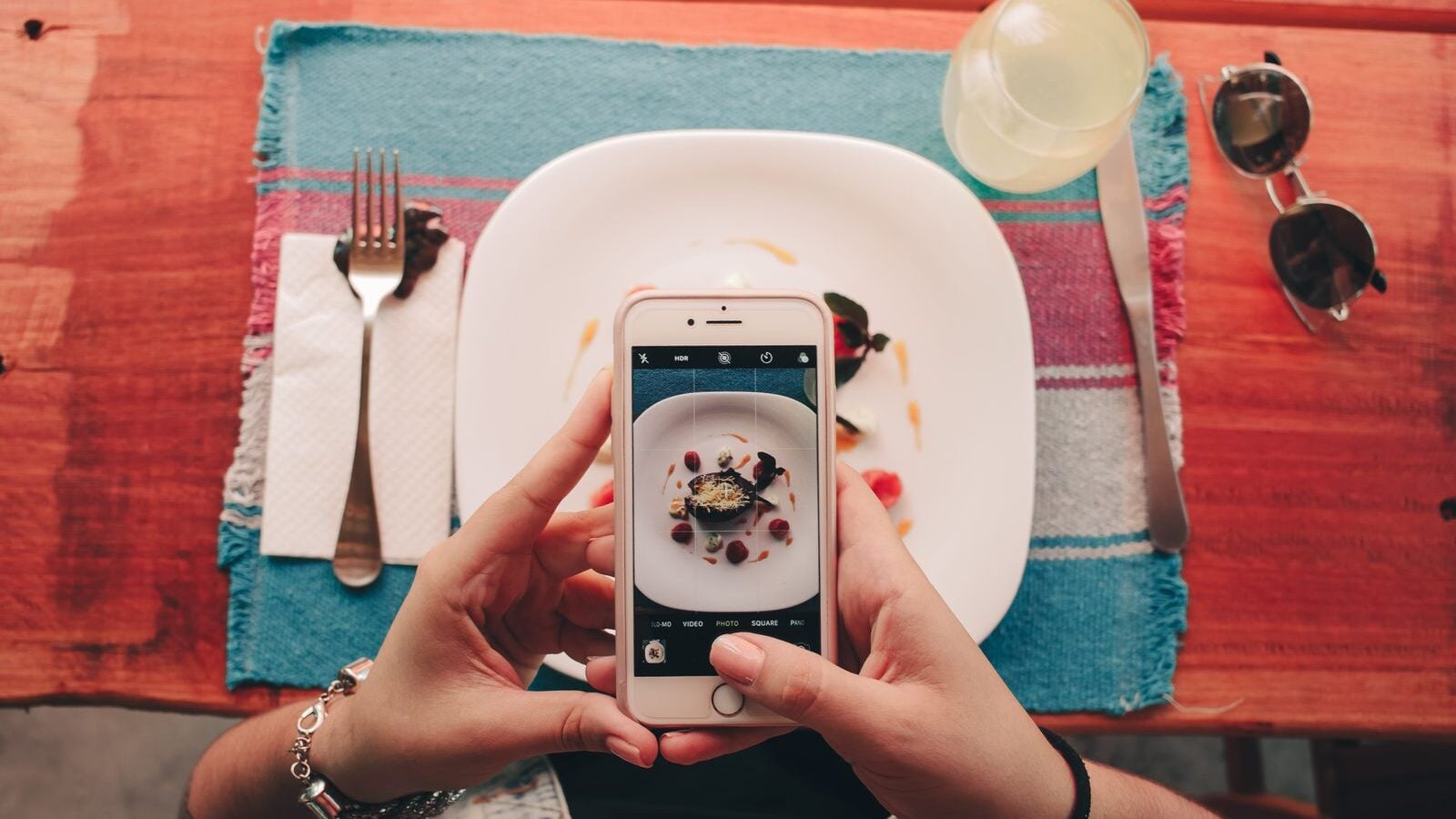
The way back is not dramatic. It is a slow reclamation of moments that do not get told. A meal without a photograph. An opinion held without being announced. A weekend that leaves no trace.
Somewhere, someone will delete the app for a fortnight and then reinstall it. At some point after that, they’ll have a meal, a walk, or a small win they don’t photograph — not as a rule, not as a cleanse, just a moment that quietly stays theirs. They may not be able to explain why that felt significant. It doesn’t need to be explained.