

Most people assume exhaustion comes from doing too much. From overwork, from overcommitting, from the sheer volume of tasks stacked against a finite number of hours. But there is a particular species of tired that has nothing to do with productivity and everything to do with contraction. It is the fatigue of a person who has spent years, sometimes decades, compressing who they are so that someone else never had to feel threatened by them.
Nadia, 47, a veterinarian in Portland, Oregon, describes it as feeling like she had been holding her breath for her entire marriage and only realized it after the divorce papers were signed. “I thought I was just tired from the kids, from work, from everything,” she says. But when her ex-husband moved out, the exhaustion didn’t lift. It deepened. Because what hit her wasn’t relief. It was the weight of recognizing how many thousands of small surrenders she had made over seventeen years. Opinions she hadn’t voiced. Accomplishments she had downplayed. Rooms she had entered already braced for the work of making herself less visible.
This kind of tired doesn’t respond to sleep. It doesn’t respond to vacations. It lives in the bones of people who learned, somewhere along the way, that the price of closeness was self-erasure.
The clinical language for the pattern is people-pleasing, though that term barely scratches the surface of what actually happens inside someone who has organized their entire personality around another person’s comfort. As Psychology Today’s analysis of people-pleasing patterns puts it, this behavior “is often rooted in the belief that your worth depends on how much you do for others.” Society reinforces the idea that self-sacrifice is a virtue, which makes it almost impossible for the person doing the shrinking to name what’s happening to them. They just know they’re tired. Bone-deep, soul-level tired.
And the people around them often call that tiredness something else. Laziness. Depression. A bad attitude.
Marcus, 53, a high school principal in Atlanta, spent most of his second marriage performing a careful calibration every morning before he even got out of bed. What mood was his wife in? Had she slept well? Was today going to be a day when he could mention that the gutters needed fixing, or was it a day when even that would be interpreted as a criticism of how she managed the house? He wasn’t afraid of her. That’s what he kept telling himself. He just knew that certain versions of himself caused friction, and so he had learned to edit in real time.
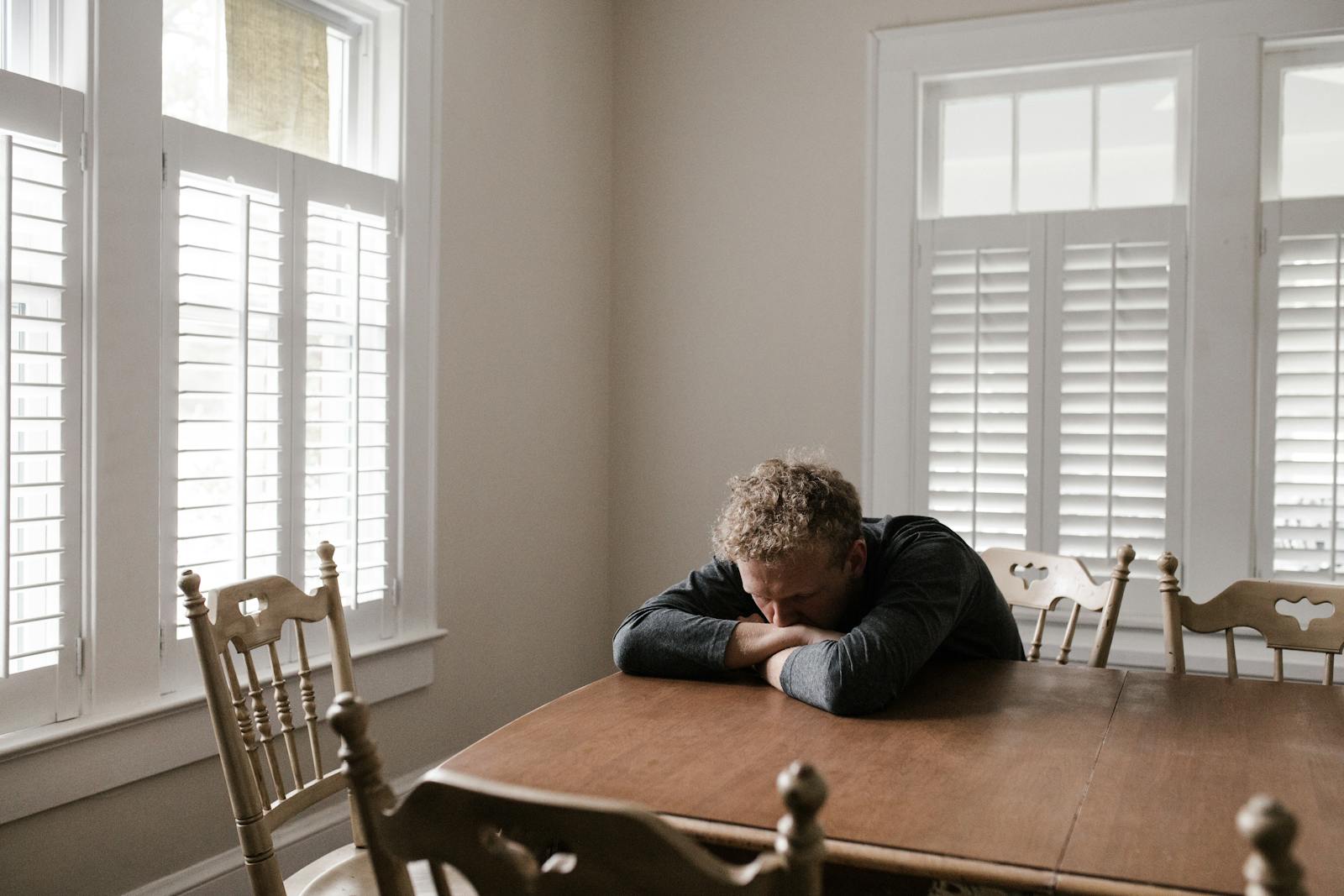
The editing is the part that costs the most. Not the single dramatic confrontation, not the big blowout fight, but the daily, invisible labor of monitoring yourself so that someone else never has to encounter the full force of who you are.
Research on self-esteem and its relationship to emotional outcomes has found that when people’s self-worth becomes contingent on external validation, failure in the domain that matters most to them produces sharp drops in state self-esteem, which in turn triggers powerful negative emotions. Studies have documented this pattern across cultures, noting that individuals whose self-concept depends on constant positive feedback from others experience greater drops in their self-esteem when encountering difficulties. For someone whose primary relationship requires them to stay small, every single day is a difficulty. Every day is a test they can fail by being too loud, too right, too ambitious, or too much.
The exhaustion accumulates like compound interest on a debt you didn’t know you were carrying.
Teresa, 39, a freelance graphic designer in Minneapolis, didn’t grow up with a word for what her father did. He never hit anyone. He rarely raised his voice. But he occupied every room like it was a stage built for him, and the family’s job was to be the audience. Her mother laughed at his jokes even when they weren’t funny. Teresa learned to bring home straight A’s and then act surprised when he took credit for her discipline. She learned to be good at things quietly, to accomplish without announcing, to win without celebrating. She carried this skill into her adult friendships, her work relationships, and eventually a six-year partnership with a man who seemed to need, on a molecular level, for her to be slightly less impressive than him.
“I didn’t think of it as making myself smaller,” Teresa says. “I thought of it as being a good partner.”
That confusion, between self-abandonment and generosity, is where the real damage lives. Clinical psychologists point out that many people-pleasers develop these habits in childhood, in environments “where your emotional well-being depended on keeping a parent happy.” The child learns to read rooms before they can read books. They learn to detect micro-shifts in a caregiver’s mood and to adjust their behavior preemptively. By the time they are adults, this vigilance feels so natural that they mistake it for personality. They say things like “I’m just easygoing” or “I don’t like conflict” without recognizing that ease and conflict-avoidance are two entirely different animals.
The easygoing person genuinely doesn’t mind where they eat dinner. The conflict-avoidant person has a strong preference but has learned that expressing it costs more than silence. The body keeps score either way.
There is a pattern that repeats across these stories, and it follows a predictable arc. First, the accommodation feels like love. Then it feels like responsibility. Then it feels like identity. And then it feels like nothing at all, which is when the tiredness becomes a permanent resident. Some people don’t recognize the script until their sixties, looking back and seeing the same dynamic playing out across three or four relationships, always with them in the same role.
Marcus eventually described his marriage to a therapist as a room where the thermostat was always set to his wife’s temperature. If she was cold, the heat went up. If she was hot, the windows opened. His own comfort was never a variable in the equation. And the strange thing, the thing that therapists see constantly, is that his wife didn’t consciously demand this. The arrangement had calcified over years of small capitulations until it became the architecture of the relationship itself.
The person with the bigger ego in these dynamics is often not a monster. They are frequently someone whose own anxiety about inadequacy requires constant buffering. They need to be the funniest person at the table, the one whose career gets discussed first, the one whose bad day reorganizes the entire household. They may not even know they’re doing it. And the person making themselves smaller may not know they’re doing it either. Which is precisely what makes the exhaustion so confusing. Both parties can look at the relationship and see something functional. But only one of them is paying for the function with pieces of themselves.
Research on self-esteem contingency helps explain why this payment is so expensive. When self-worth becomes tied to someone else’s approval, the emotional consequences of failure are amplified, because failure doesn’t just mean “I made a mistake.” It means “I am inadequate.” For the person who has organized their identity around making someone else comfortable, a spouse’s irritation isn’t just unpleasant. It registers as proof that they failed at the only job that matters. And so they try harder. They shrink further. The tiredness deepens.

People who present as fiercely independent are sometimes running the same program in reverse. They don’t make themselves small for one person. They make themselves small for everyone, preemptively, by refusing to need anything at all. Same exhaustion. Different mask.
Nadia, the veterinarian in Portland, spent two years after her divorce in a state she describes as “defrosting.” Opinions started surfacing that she didn’t recognize as her own, because she had suppressed them so long they felt foreign. She discovered she hated camping. She had gone camping every summer for fifteen years because her husband loved it. She discovered she had strong political views that she had softened into vague centrism because he got agitated when she disagreed. She discovered she was funny, actually funny, in a sharp, specific way she had never allowed herself to be because he was supposed to be the funny one.
The reclamation process looks different for everyone, but it almost always starts with a disorienting inventory. What you believed about your own history starts to shift. The stories you told about yourself, that you were easygoing, low-maintenance, adaptable, begin to look like cover stories for something else entirely.
Teresa stopped dating for a year. She told friends it was because she was focusing on her career, but the real reason was simpler and harder to say out loud: she didn’t trust herself not to do it again. She didn’t trust herself not to walk into a new relationship and start the familiar work of flattening herself to fit.
Psychology Today’s examination of people-pleasing as a survival mechanism describes how “a history of trauma can create the deep-seated belief that your safety depends on others’ happiness,” driving what it calls “compulsive caretaking” that makes it almost impossible to prioritize your own needs without feeling selfish or anxious. The word “compulsive” matters here. It separates the behavior from choice. Teresa wasn’t choosing to make herself smaller any more than someone with a phobia is choosing to be afraid. The pattern had been installed early and reinforced by every relationship that rewarded it.
Marcus left his marriage eventually, too. Not with a dramatic exit. With a quiet, clear sentence he practiced in his car for a week before saying it: “I don’t think you’ve ever actually met me.”
His wife was hurt. Confused. She said she knew him better than anyone. And in a certain sense, she did. She knew which coffee he liked, which side of the bed he slept on, what triggered his migraines. She knew the edited version of him with perfect accuracy. But the unedited version, the one with opinions that might challenge hers, ambitions that might outshine hers, needs that might inconvenience hers, that person had been in storage for so long that even Marcus wasn’t sure he existed anymore.
The outside world often misreads these situations entirely. Friends see a functional couple. Colleagues see a calm, agreeable person. Nobody checks in because nothing looks wrong. The performance is too convincing. And the performer is too good at their job.
When a woman stops pushing, stops planning, stops asking for more, the people around her often interpret it as contentment. When a man stops voicing his preferences and defaults to “whatever you want,” the people around him often interpret it as maturity. Both interpretations protect the observer from having to see what’s actually happening: someone disappearing in plain sight.
The specific kind of tired that Nadia, Marcus, and Teresa all describe isn’t the kind that comes from effort. It’s the kind that comes from restraint. From years of catching yourself mid-sentence. From rehearsing the acceptable version of your reaction before you allow yourself to react. From knowing exactly how big you’re allowed to be in a given room and adjusting your posture, your voice, your ideas, your ambitions to fit within that allotment.
It is the fatigue of a person who has been running a sophisticated emotional operation every waking hour, an operation so seamless that nobody, least of all the person they’ve been performing for, even notices it’s happening.
Recovery from this particular exhaustion doesn’t begin with rest. It begins with taking up space and not apologizing for it. It begins with saying something true that might cause friction and sitting with the friction instead of rushing to smooth it over. It begins with the terrifying, electric realization that the room was never too small. You were just convinced that someone else’s ego needed more of it than yours did.
The tiredness starts to lift not when you stop caring about other people, but when you stop believing that caring about yourself and caring about them are mutually exclusive propositions. Nadia described the first morning she woke up and didn’t scan for someone else’s mood before registering her own. She felt rested. Not because she had slept well. Because for the first time in years, she was the right size.