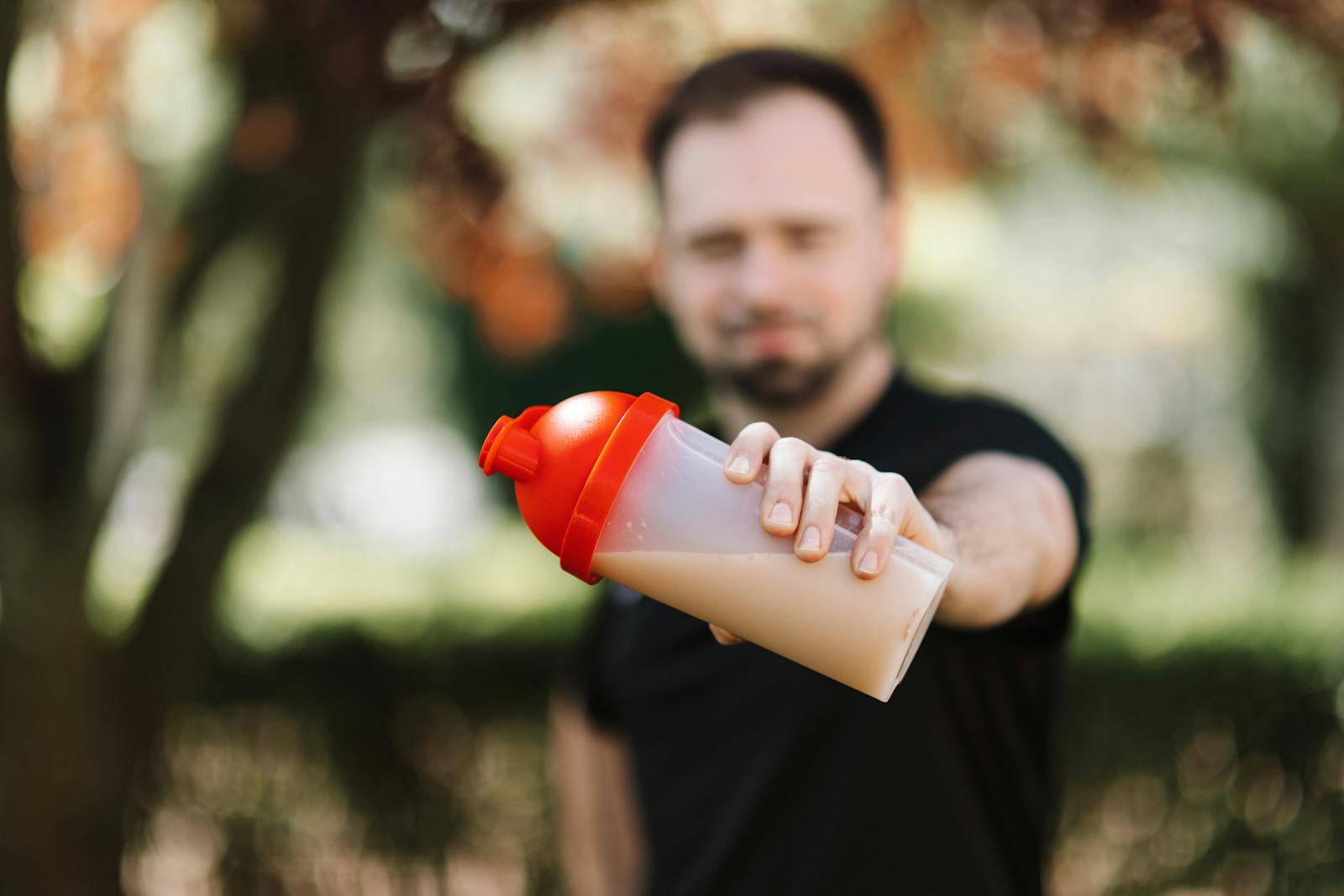
- Tension: Americans are spending billions chasing more protein despite the fact that fewer than 5% are actually deficient — suggesting the obsession is driven by something other than nutritional need.
- Noise: The wellness industry has turned protein into a moral framework where counting grams signals discipline and control, while the real drivers — anxiety, body insecurity, and the need for certainty — go unexamined.
- Direct Message: The protein panic isn’t about nutrition. It’s about the unbearable discomfort of not being able to control what happens to your body, and the very human impulse to find something countable to cling to when everything else feels uncertain.
To learn more about our editorial approach, explore The Direct Message methodology.
Last Tuesday, Nora Reyes — a 34-year-old graphic designer in Austin — stood in the protein aisle at Whole Foods for eleven minutes. She counted. Her cart already held Greek yogurt, a bag of collagen peptides, and two cans of bone broth. She was holding a $6 protein bar, reading the label for the third time, doing math in her head. Had she hit 120 grams today? Was it 130 she was supposed to aim for? She couldn’t remember which podcast had given her the number, only that falling short felt vaguely dangerous — like she was dissolving from the inside out.
Nora isn’t a bodybuilder. She doesn’t have a medical condition. She runs a couple of times a week and does Pilates on Saturdays. But somewhere in the last two years, protein became the thing she couldn’t stop tracking — the nutrient that carried the weight of every anxiety she had about her body, her aging, her discipline.
She’s not alone. And the strangest part is: she was never deficient in the first place.
The average American adult consumes roughly 100 grams of protein per day — well above the Recommended Dietary Allowance of 0.8 grams per kilogram of body weight, which for most people lands between 50 and 65 grams. A 2022 analysis published in the American Journal of Clinical Nutrition found that fewer than 5% of U.S. adults fail to meet this threshold. True protein deficiency in developed countries is rare, associated almost exclusively with severe food insecurity, eating disorders, or specific medical conditions. The problem most Americans face isn’t too little protein. It’s too much noise about protein.
And yet the market tells a completely different story. The global protein supplement industry is projected to surpass $32 billion by 2028. Protein has infiltrated cereal, coffee, chips, ice cream, water. Protein water. What was once a macronutrient became a marketing category, and what was once a marketing category became a moral framework — one where eating enough protein signals discipline, optimization, control.

Derek Hahn, a 47-year-old civil engineer in Minneapolis, started tracking his protein intake religiously in 2021, after his doctor told him his cholesterol was slightly elevated. The doctor didn’t mention protein. He mentioned exercise and fiber. But Derek went home, fell into a YouTube spiral, and emerged convinced that his real problem was muscle loss — sarcopenia, a term he’d never heard before that week and now couldn’t stop saying. Within a month, he was spending $200 a month on whey isolate, casein powder, and pre-made shakes. His cholesterol didn’t change. His grocery bill did.
Researchers have a term for the way certain health behaviors become proxies for deeper emotional needs: health identity coupling. It’s when a specific practice — counting protein, fasting, cold plunging — stops being about the physical outcome and starts being about who you believe you are when you do it. The behavior becomes a character trait. Skipping it becomes a moral failing. As we’ve explored before in looking at the mental habits that sustain anxiety even after productive days, the pattern is remarkably consistent: the brain finds something measurable to fixate on, and the fixation itself becomes the source of comfort — not the outcome.
The protein obsession fits this pattern almost too neatly. Protein is countable. It’s stackable. Every meal becomes a score you can win or lose. In a world where most health advice is contradictory and confusing — Is seed oil bad? Should I eat carbs after 7 p.m.? Is oat milk inflammatory now? — protein is the one thing everyone seems to agree on. It feels safe. And safety, when you’re anxious, is the most addictive substance there is.
Lila Chen, a 29-year-old software developer in Portland, told me she realized her protein fixation had crossed a line when she turned down dinner at her best friend’s house because she couldn’t verify the protein content of what was being served. “I told myself it was about fitness goals,” she said. “But I hadn’t actually changed my workouts in months. I was just terrified of losing control over something.” Lila had grown up in a household where food was tightly monitored — her mother counted calories out loud at every meal. The protein tracking felt different on the surface. Underneath, it was the same architecture of anxiety wearing a different label.
This is the part that rarely gets discussed in the wellness space: much of what looks like health optimization is actually anxiety management dressed in activewear. The protein obsession isn’t really about protein. It’s about the feeling that your body is a problem to be solved, and that if you just get the inputs right — the precise grams, the perfect timing, the optimal ratio — you’ll finally feel like you’re enough. It echoes something we touched on in a piece about people who were never praised as children — that internal pattern where every good thing feels provisional, like it could be revoked if you stop earning it.

The fitness and supplement industries understand this intimately. They don’t sell protein. They sell the elimination of doubt. Every ad features someone who looks certain — certain in their body, their routine, their next meal. The implicit message isn’t “you need more protein.” It’s “you’re falling behind, and this is the easiest gap to close.” A 2020 study in the journal Appetite found that exposure to “high-protein” food labeling increased both purchase intent and the perceived healthfulness of products — even when those products contained more sugar and more calories than their standard counterparts. The word “protein” has become a health halo so powerful it overrides actual nutritional content.
And the cultural moment has amplified all of it. The rise of GLP-1 medications has reshaped how millions of people think about appetite, body composition, and what counts as effort. As a recent piece on Ozempic and voluntary exercise explored, the conversation around weight and health is shifting in ways that are genuinely new — and genuinely disorienting. When the rules change that fast, people cling harder to the rules that feel stable. Protein, with its simple arithmetic and universal endorsement, becomes an anchor.
Meanwhile, the things that actually move the needle for most people’s health — consistent sleep, basic movement, time outside, human connection — are maddeningly unquantifiable. You can’t put “walked in the park and felt 15% less dread” into a tracking app. Though, funny enough, one person who started birdwatching on a therapist’s advice found measurable improvements in memory, focus, and spatial awareness within six months — no supplements required.
Derek eventually cut his supplement spending in half. Not because he read a study. Because his daughter, who’s twelve, asked him why he always seemed stressed at dinner. “She said I was more worried about what was on my plate than what she was telling me about her day,” he said. “And she was right.”
Nora put the protein bar back on the shelf. Not that day — a few weeks later, after she noticed she’d started waking up at 3 a.m. thinking about meal prep. She didn’t stop eating protein. She stopped treating it like the one thing standing between her and collapse.
Lila went to her friend’s dinner. The host made pasta with a simple red sauce. There was bread. There was wine. The protein content was probably unremarkable. The evening wasn’t.
The thing about anxiety is that it always needs a vehicle — some concrete, countable thing to ride inside so it doesn’t have to announce itself as what it actually is. For a while, it was steps. Then it was screen time. Now it’s grams of protein. The vehicle changes. The engine doesn’t. And no amount of whey isolate has ever, in the history of human supplementation, cured the feeling that you are not doing enough to deserve the body you live in.
Protein is fine. Protein is necessary. But the urgency — the breathless, panicked, am-I-getting-enough urgency that has turned a macronutrient into a national anxiety disorder — that isn’t about nutrition. It never was. It’s about the unbearable discomfort of not being able to control what happens to you, and the very human impulse to find something — anything — that lets you believe you can.
As anyone who’s felt that familiar Sunday-evening dread knows, the body keeps sending signals. The question is whether we listen to what they’re actually saying — or just add another scoop of powder and call it progress.
Feature image by www.kaboompics.com on Pexels