
- Tension: Millions of men over 55 are surrounded by people who love them — and still can’t get their emotional needs across because every sincere feeling exits their mouth disguised as a joke.
- Noise: We frame the male loneliness epidemic as a lack of relationships, but the quieter crisis is men who have friends and family and still can’t communicate what they need because humor-as-deflection is the only mode they were ever trained in.
- Direct Message: The tragedy isn’t that nobody’s listening — it’s that these men have spent a lifetime ensuring people hear the laugh and never the ache underneath it. Recovery starts with one unfunny sentence spoken without a safety net.
To learn more about our editorial approach, explore The Direct Message methodology.
Last Thanksgiving, Gary — a 58-year-old retired electrician in Scranton — told his daughter he’d love it if she visited more often. Except that’s not what he actually said. What he said was: “Well, I guess the old man’s not dead yet, so you might as well swing by before I am, ha ha.” His daughter, Megan, laughed. She told him he was terrible. He laughed too. And then they both moved on, and nothing changed, and Gary spent another Sunday watching football alone in a house that used to have four people in it.
Megan told me this story six months later, her voice tight with something between guilt and confusion. “I didn’t realize he was asking me for something,” she said. “I thought he was just being Dad.”
He was being Dad. That’s exactly the problem.
There’s a communication pattern so common among men over 55 that it’s practically invisible — the emotional request disguised as a joke. The need for closeness wrapped in self-deprecation. The plea for help delivered as a punchline. Psychologists sometimes call this indirect bid deflection — a term borrowed from John Gottman’s research on emotional bids in relationships — and it describes the moment when someone reaches out for connection but immediately undercuts the reach so they can’t be seen trying. It’s not a quirk. It’s not charming. And it’s quietly devastating an entire generation of men who are aging into isolation not because nobody cares, but because nobody can hear them asking.
Consider what’s happening beneath the joke. When Gary says “before I’m dead, ha ha,” he’s performing a psychological sleight of hand — expressing loneliness while simultaneously providing his daughter with a socially acceptable way to ignore it. The humor functions as an escape hatch. If she doesn’t respond to the real message, he hasn’t been rejected. He told a joke, and she laughed. Transaction complete. Dignity preserved.
But dignity and connection don’t live in the same room when one of them requires a disguise.
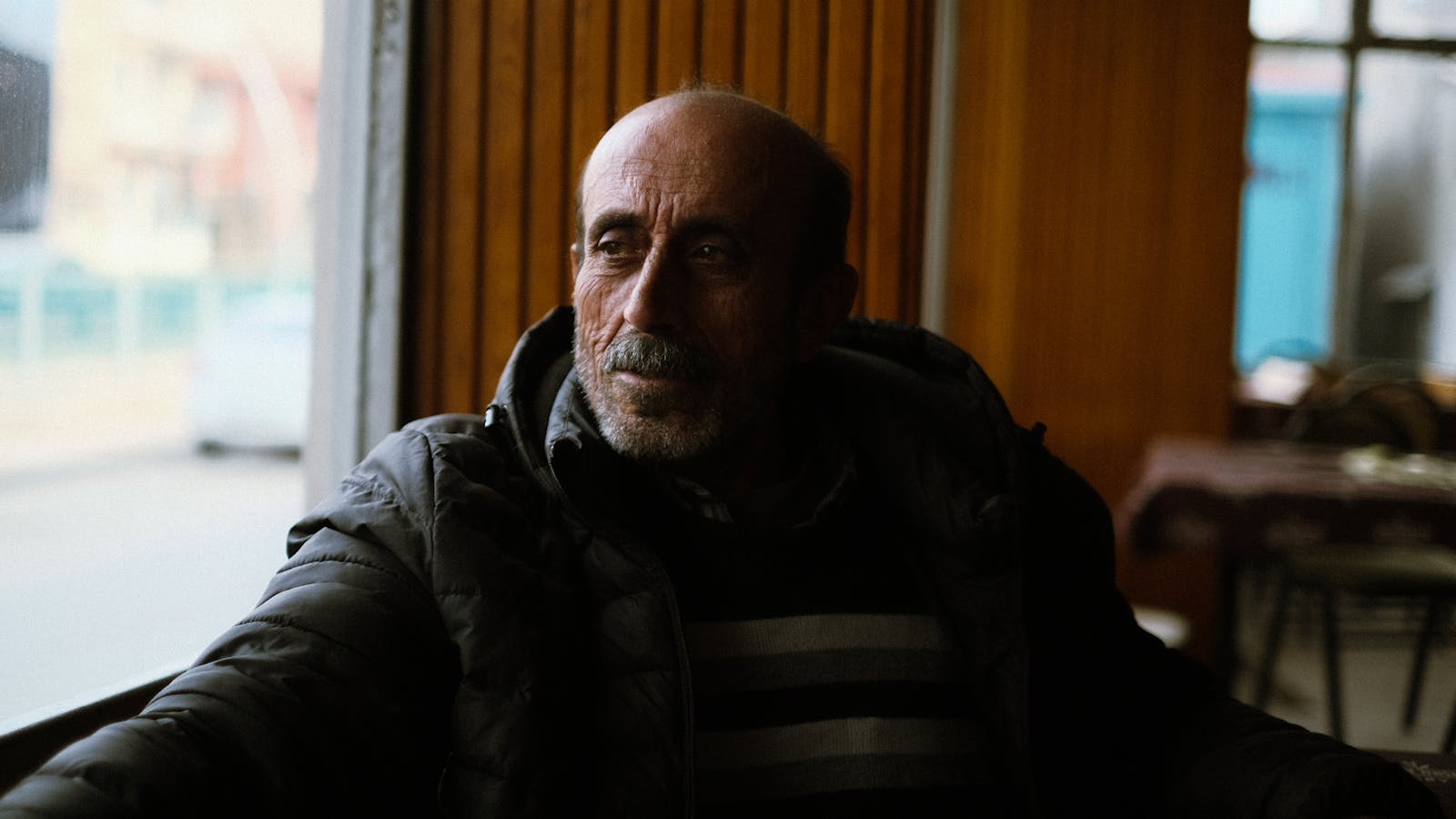
I’ve been thinking about this pattern since reading a 2023 American Psychological Association report on masculinity norms and mental health outcomes, which found that men who rigidly adhere to traditional masculine norms — particularly emotional stoicism and self-reliance — are significantly less likely to seek help for depression, loneliness, or grief. The data isn’t new. What struck me was a specific finding about men aged 55-75: they were the demographic most likely to report having someone they could talk to and least likely to have actually talked to that person about anything emotionally substantive in the past year.
They have the relationships. They just can’t use them.
Tom, a 61-year-old logistics manager in Cincinnati, described his friendship with his college roommate, Phil, as “the best friendship of my life.” They talk every couple of weeks. When I asked what they talk about, Tom listed: sports, Phil’s truck, a restaurant Phil tried, sports again. When I asked if he’d ever told Phil he was struggling after his wife’s breast cancer diagnosis last year, Tom paused. “We mentioned it,” he said. “I said something like, ‘Well, at least she’ll get out of cooking for a while.’” Phil laughed. They moved on.
Tom’s wife is in remission now. He never told Phil how terrified he was. “He would’ve listened,” Tom admitted. “I just — I don’t know how to bring that stuff up without making it weird.”
Making it weird. That phrase — or its cousins, “making it a thing,” “being dramatic,” “getting heavy” — is the lock on the door. As we explored in a piece about why some friendships fade without conflict, relationships don’t always end with a fight. Sometimes they end because both people silently agree to never go deeper than the surface can hold. For men of this generation, the surface was the entire contract.
The roots are almost boringly predictable. Boys raised in the 1960s and ’70s inherited an emotional vocabulary that ran about four words deep: fine, tired, hungry, angry. Everything else got coded as weakness or — worse — femininity. A 2018 meta-analysis published in the Journal of Counseling Psychology examining 78 studies on conformity to masculine norms found that emotional restriction was the single strongest predictor of negative mental health outcomes — stronger than risk-taking, stronger than dominance, stronger than any other traditionally masculine trait.
These men didn’t choose emotional suppression. They were trained in it the way you train someone in a trade — through repetition, modeling, and the quiet punishment of anyone who deviated. And now, at 55 or 62 or 71, they find themselves holding needs they were never given the language for, so they do the only thing the system taught them: they make it funny.
Denise, a 56-year-old therapist in Portland who specializes in men’s mental health, told me that humor-as-deflection is one of the first patterns she addresses with older male clients. “The joke is the tell,” she said. “When a man over 55 makes a self-deprecating joke about being forgotten, or useless, or ‘just an old man,’ I hear the request underneath. But his wife might not. His kids might not. His friends definitely won’t — because they’re doing the same thing.”

That last point is critical. The pattern isn’t just individual — it’s collective. When every man in the friend group communicates needs through humor, no one is equipped to receive a genuine bid for connection, because no one has ever modeled what that looks like. It’s a closed loop. As We wrote about the friends we lose not because they left but because we stopped being real with them, the erosion is mutual and consensual. Everyone agrees — without ever saying so — that the jokes are the conversation.
And the costs are staggering. The loneliness epidemic among older men has been well documented, but we keep framing it as a lack of relationships — men don’t have friends, men don’t join groups, men don’t reach out. That framing misses the quieter crisis: men who do have friends, do have families, do pick up the phone — and still can’t get their needs across because every sincere feeling exits their mouth wearing a costume.
There’s a concept in communication theory called plausible deniability of vulnerability — the ability to express something emotionally true while maintaining a credible claim that you weren’t being serious. It’s the adult version of a child saying “I was just kidding” after getting hurt. And for men of this generation, it’s not a strategy. It’s the only available mode.
I keep thinking about something Denise said that I can’t shake. She told me about a client — Raymond, 67, a retired high school principal in Tucson — who came to therapy after his wife of 38 years told him she felt like she’d been “married to a press conference” for four decades. “He charms everyone,” she’d said. “He makes everyone laugh. But I have no idea what he actually needs from me, and I don’t think he does either.”
Raymond sat with that for three sessions before he said anything substantive. And when he finally did, it wasn’t a breakthrough moment from a movie. He said, quietly, without any joke at all: “I think I’d like my sons to call me more. Not because anything’s wrong. Just because I miss hearing their voices.”
Denise said it was the hardest sentence he’d ever spoken.
That’s not a metaphor. That’s the actual difficulty level. For a man who spent 67 years learning that directness about emotional needs is dangerous — that it invites rejection, ridicule, or the worst fate of all, being perceived as needy — saying “I miss hearing their voices” requires the kind of courage that looks nothing like courage from the outside. It looks like a man sitting in a chair saying a simple sentence. Which is exactly why we so often mistake the surface signal for the deeper reality. Simple doesn’t mean easy. Quiet doesn’t mean painless.
We talk a lot about teaching young men emotional literacy — and we should. But there are millions of men right now, today, in their late fifties and sixties and seventies, who are sitting across from people who love them and performing a one-man comedy show because it’s the only way they know how to say I need you.
The tragedy isn’t that nobody’s listening. Plenty of people are listening. The tragedy is that the men who most need to be heard have spent a lifetime making absolutely sure that what people hear is the laugh — never the ache underneath it. And by the time someone finally catches the real frequency, the silence on the other side of the joke has often lasted so long it feels permanent.
It doesn’t have to be. But it requires something no joke can deliver — the willingness to be unfunny, for once, in the presence of someone who matters. To say I miss you without adding ha ha. To let the sentence land without a safety net.
Raymond’s sons call him every Sunday now. He asked them to. Without a punchline. He told Denise it was the most terrifying thing he’d done since Vietnam.
She believed him.
Feature image by The Humantra on Pexels