
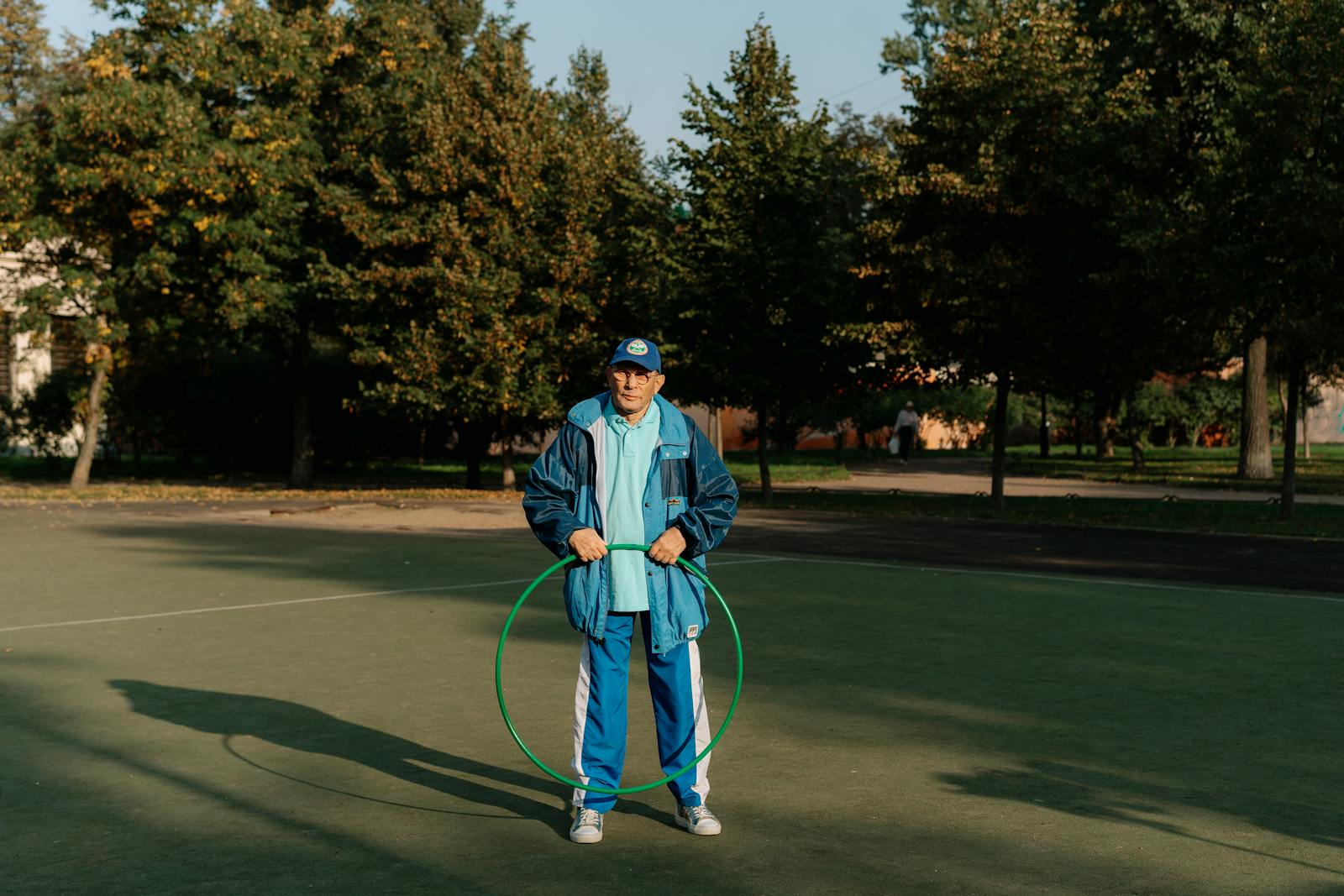
Gerald Whitfield turned sixty-three on a Tuesday in March, retired on a Friday in April, and by August his daughter barely recognized him. She told me this over coffee in a Portland bakery, her voice carrying that particular strain of someone trying to understand something that doesn’t make logical sense. “He was sharp, Dad was sharp,” she said. “He’d manage forty-person teams, remember everyone’s kid’s name, negotiate contracts in three time zones. Four months later he’s sitting in his recliner at eleven a.m., struggling to remember what day it is. He looked like he’d aged a decade.”
His doctor ran bloodwork. Thyroid, fine. Vitamin levels, normal. Cardiac panel, unremarkable. Gerald hadn’t developed a disease. He’d lost something the lab work couldn’t measure.
He’d lost the experience of being needed.
We talk about retirement decline as though it’s a medical mystery, a problem of sedentary bodies and insufficient supplements. And physical health matters, certainly. But the retirees who seem to collapse almost overnight, who shuffle where they once strode, who lose the clarity in their eyes within a single calendar year, are usually experiencing something far more specific than physical decay. They’re experiencing what psychologists call “role loss” at a velocity the human brain was never built to absorb.
Consider how Gerald spent the last thirty-one years of his life. Every morning, people waited for him. Decisions required his input. Colleagues texted him questions at 7 a.m. Clients needed his judgment. Subordinates needed his approval. His calendar was a monument to the fact that, without him, things would stall or break. Then on that Friday in April, all of it vanished. The phone stopped buzzing. The emails thinned to a trickle, then stopped. Nobody needed anything from him. He was, for the first time in three decades, entirely optional.

The psychological architecture here is more brutal than most people realize. Abraham Maslow’s hierarchy of needs is famous, but researchers have increasingly argued that Maslow missed something foundational: the need to be needed. Psychologist Adam Grant and others have explored what they term “prosocial motivation,” the deep human drive to feel that your effort matters to someone beyond yourself. When that drive is suddenly severed, the fallout isn’t just emotional. It’s cognitive, physical, neurological.
Diane Cho, a 67-year-old former school principal in Sacramento, described her first year of retirement as “falling off a cliff nobody told me was there.” For twenty-two years, teachers brought her problems. Parents called her with concerns. Students waved at her in hallways. She shaped outcomes for hundreds of people daily. When she retired, the school hired a replacement within weeks. “I drove past the building in October,” she told me. “The lights were on. Everyone was inside. It was like I’d never existed.”
Diane gained twenty pounds in five months. Her blood pressure spiked. She started forgetting words mid-sentence, something that had never happened before. Her husband thought she might be showing early signs of dementia. She wasn’t. She was showing the signs of a nervous system that no longer had a reason to stay sharp.
This connects to something we explored in a piece about how the brain structurally changes within months when retirees lack a social identity outside of work. The research is unsettling: the prefrontal cortex, responsible for planning, decision-making, and social engagement, begins to atrophy when it’s no longer regularly activated by meaningful interpersonal demands. Your brain doesn’t just miss being needed. It starts physically reorganizing around the absence.
The cultural narrative around retirement makes this worse. We frame the transition as liberation. “You’ve earned it,” people say. “Time to relax.” The retirement party is champagne and laughter. The gold watch. The speech about finally doing whatever you want. Nobody mentions that “whatever you want” can become a terrifying vacuum when you’ve spent decades organizing your entire identity around being the person other people rely on.
Marcus DeLeon, a 58-year-old firefighter in Albuquerque who took early retirement after a knee injury, put it bluntly: “They gave me a plaque that said ‘Thank you for your service.’ Then I went home, and the house was quiet, and I realized I had no idea who I was if nobody was in danger.” Marcus started drinking by noon within three months. His wife found him crying in the garage one night, not out of sadness exactly, but from a disorientation so profound it manifested as grief. He was mourning his own relevance.
A 2019 study published in Social Science & Medicine found that retirees who reported feeling “unneeded” had a 20% higher risk of developing depressive symptoms and a measurably faster rate of cognitive decline compared to retirees who maintained caregiving roles, volunteer commitments, or mentorship relationships. The variable wasn’t activity. Plenty of the declining retirees were active: they golfed, traveled, read. The variable was whether anyone was counting on them.

This distinction matters enormously. We often prescribe hobbies as the antidote to retirement malaise. “Pick up painting. Join a book club. Learn pickleball.” And hobbies help with boredom. But boredom isn’t what ages people a decade in twelve months. What ages them is the evaporation of what I’d call “relational weight,” the felt sense that your presence in the world creates a gravitational pull on others. That people would notice, and not just emotionally but functionally, if you disappeared.
As a recent piece on the psychological collapse of men who built their identity around being needed explored, this crisis has a particular edge for people who never developed reciprocal relationships outside of professional contexts. If your spouse didn’t need your professional judgment, if your friends were really colleagues, if your children had long since stopped needing daily guidance, then retirement doesn’t just remove your job. It removes every relationship that made you feel like a load-bearing wall in someone else’s life.
Gerald’s daughter told me something that stayed with me. She said her father finally started to come back to himself, slowly, when she asked him to pick up her son from school three days a week. “It wasn’t therapy,” she said. “It wasn’t a hobby. It was a six-year-old who needed his grandfather to show up at 3:15 or he’d be standing alone in the pickup line.” Within two months, Gerald was sharper. He started meal-prepping for the family. He rejoined his neighborhood association, this time volunteering to coordinate block parties. His posture changed. His eyes changed.
The transformation wasn’t miraculous. It was mechanical. His brain re-engaged because someone was depending on it.
We’ve written about how the silence of early retirement can become its own crisis, and about the retirement crisis that has nothing to do with money. But there’s something even more fundamental underneath all of it. The body follows the story the mind tells itself. And when the story shifts from “I am essential” to “I am optional,” the body listens. It listens with terrifying obedience.
Diane eventually started tutoring ESL students at her local library. Marcus began mentoring at-risk teens through a firefighter outreach program. Neither of them described these choices as hobbies or even as volunteering. They described them as survival. “I needed someone to need me,” Diane said. “That sounds pathetic when you say it out loud. But it kept me alive.”
It doesn’t sound pathetic at all. It sounds like the most honest description of human wiring anyone has ever offered. We are not built to exist in comfort. We are built to exist in consequence. The body doesn’t ask whether you’re relaxed or entertained. It asks a more primitive question: does your continued functioning matter to anyone? And when the answer becomes no, it begins the quiet, efficient process of shutting down.
The retirees who age a decade in a year aren’t failing at retirement. They’re responding, with devastating biological accuracy, to the signal that they are no longer necessary. The antidote was never a better financial plan or a longer bucket list. It was always, only, another human being who needed them to show up.
Feature image by cottonbro studio on Pexels