
This article was published in 2026 and references a historical event from 2017, included here for context and accuracy.
To learn more about our editorial approach, explore The Direct Message methodology.
Australia has always had a geography problem when marketing to American travelers. It sits at the far edge of the imagination — known, admired, and perpetually postponed.
Distance creates a particular kind of friction: the destination sounds exciting in the abstract, but the logistics feel overwhelming enough to push it down the list indefinitely. Getting someone to book a flight to Sydney requires more than visibility. It requires making the journey feel emotionally accessible before it feels logistically possible.
That was the challenge Tourism Australia and Virgin Australia faced in 2017 when they partnered to reach American audiences through native advertising.
What they did then anticipated something the travel industry has been slowly relearning ever since: that where and how you show up matters as much as what you say.
The gap between attention and trust
In June 2017, Tourism Australia launched the “This Time Tomorrow” campaign in partnership with Oath, the digital media company.
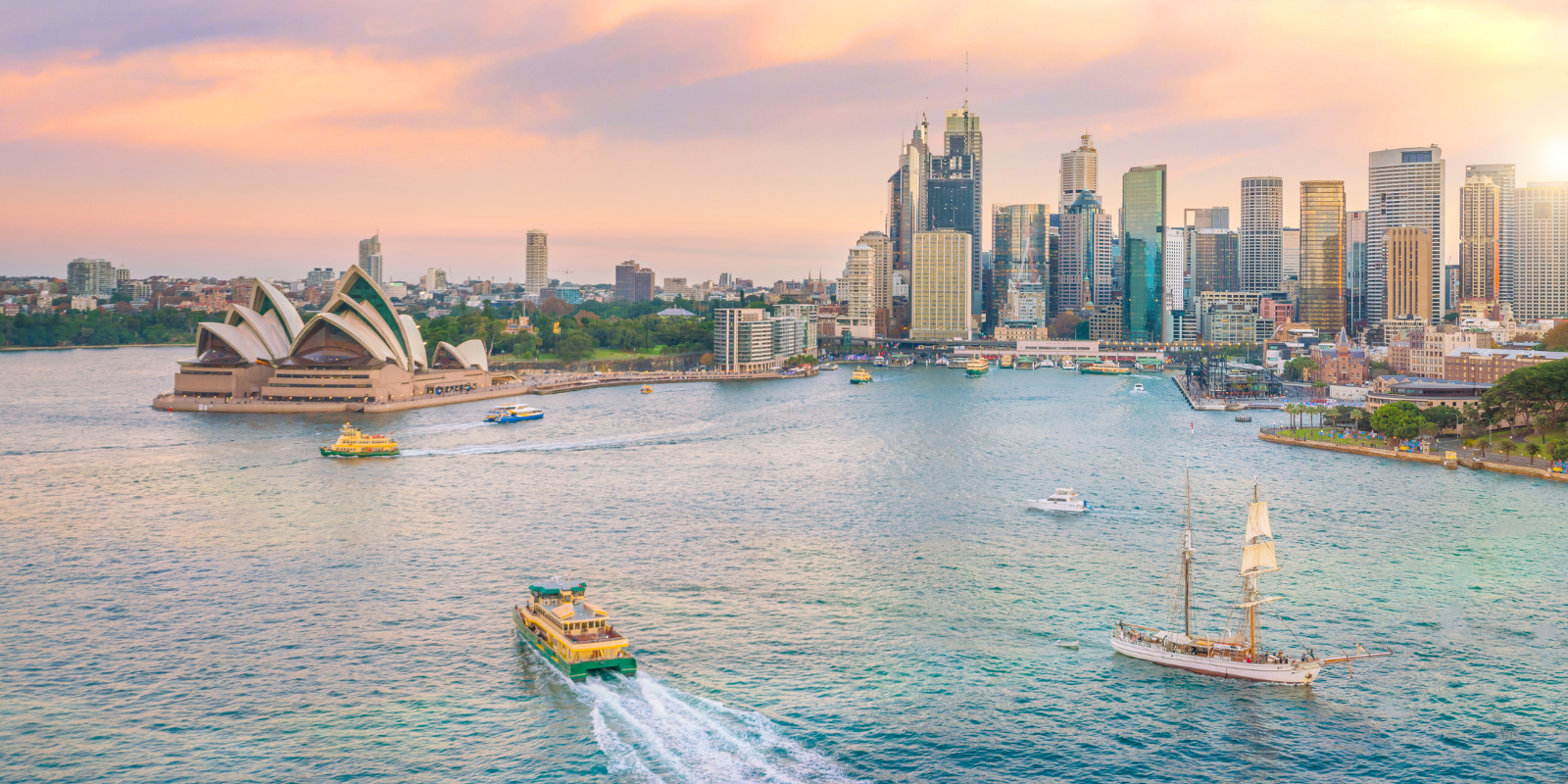
The campaign used native advertising distributed across Yahoo’s Gemini platform, running alongside television, search, social, and display efforts. The creative approach leaned on immersive imagery and carousel formats that invited users to click through destination experiences — showing potential travelers what Australia could look like “this time tomorrow.”
The logic was straightforward: when travel content is placed inside an environment where a curious traveler already lives, it stops feeling like advertising and starts feeling like a discovery.
This is the tension that travel marketers have wrestled with long before 2017 and continue to wrestle with today. The U.S. travel industry spent an estimated $7.24 billion on digital advertising in 2024, a number that reflects the pressure to stay visible across every channel simultaneously.
But volume and relevance are different things. A traveler scrolling through destination content on a publisher they trust is in a fundamentally different state of mind than one served a pre-roll ad before a YouTube video they wanted to watch for something else entirely.
The first encounter invites consideration. The second interrupts it.
The insight from the Tourism Australia campaign was embedded in how it was structured. Rather than broadcasting a message at travelers, it placed content inside the environments where travel consideration already happened organically. That distinction — between reaching people and reaching people in the right context — is one the industry still struggles to act on consistently.
Where the industry keeps getting distracted
Since 2017, the native advertising market has expanded dramatically. The global native advertising market was valued at $111 billion in 2024 and is projected to reach nearly $401 billion by 2035.
That growth has also brought noise — a proliferation of sponsored content that technically qualifies as native but delivers none of the contextual relevance the format was built around.
The metrics conversation has not helped. Travel marketers continue to optimize for click-through rates and impression volume rather than the harder-to-measure indicators of genuine engagement: time spent, return visits, downstream booking intent.
When campaigns are evaluated primarily by reach, the pressure is always toward scale over fit. Budgets flow to whatever platform offers the biggest audience, regardless of whether that audience is in a receptive state of mind.
There is also a fragmentation problem. The channel landscape in 2026 looks nothing like it did in 2017. TikTok, connected TV, podcast mid-rolls, and AI-generated search results have all carved off pieces of traveler attention. Each platform requires its own creative approach, its own pacing, its own definition of what “native” actually means.
Brands chasing presence across all of them simultaneously often end up with diluted messaging and no clear sense of where their content actually belongs.
The quote from Courtney McKlveen, Head of U.S. Field Sales at Oath during the 2017 campaign, identified the core problem with unusual precision for its time: “Consumers look to brands where they can trust the content. A marketer needs to determine where to position… it needs to be relevant to them when aligning with brand solidarity.”
That sentence describes a discipline — not a tactic. It requires knowing your audience well enough to understand which environments carry authority for them, and having the restraint to concentrate there rather than everywhere.
Most brands have not developed that discipline. They have developed distribution.
What the engagement data is actually telling us
Trust is not a byproduct of being present. It is a result of being present in the right place, with content that earns its spot.
A 2024 study found that a single-point increase in brand trust correlates with a 33% increase in consumer purchase intent — a relationship that holds across verticals and demographic groups.
For travel brands, where the purchase decision involves significant time, money, and planning, the trust gap between a relevant native placement and an intrusive display ad is not marginal. It shapes whether consideration ever begins.
The Tourism Australia campaign understood this at a structural level. The choice to use carousel formats was not purely aesthetic — it extended the interaction, invited the user to direct their own exploration, and made the engagement feel voluntary rather than imposed.
That voluntary quality is what separates content that builds trust from content that depletes it.
Precision over presence
The lesson from 2017 that most travel marketers have yet to fully absorb is that native advertising is a placement philosophy before it is a creative format.
It begins with the question of where your audience already goes to be in the mindset you want to reach them in — and then works backward to the content and format that belongs there.
For Tourism Australia, that meant identifying American travelers in environments where travel discovery was already happening, then delivering content that matched both the visual language and the emotional register of those spaces. The campaign did not try to intercept travelers at every possible touchpoint. It concentrated on the moments when the audience was already leaning in.
That approach is harder to execute in a fragmented media landscape. It requires resisting the gravitational pull of reach metrics and the comfort of omnipresence. It requires genuine knowledge of which environments your audience trusts and the discipline to invest deeply in a few of them rather than thinly across all of them.
Industry observers tracking native advertising trends have consistently identified trust and contextual quality as the primary differentiators between campaigns that build lasting brand relationships and those that simply generate impressions. The brands seeing the strongest returns from native are not the ones with the widest distribution — they are the ones that have figured out where their content has permission to exist.
Australia is still a long flight from most American cities. The geography has not changed. What can change is whether a potential traveler encounters a destination through content that makes the journey feel possible — or through an ad that makes them feel like a target.